
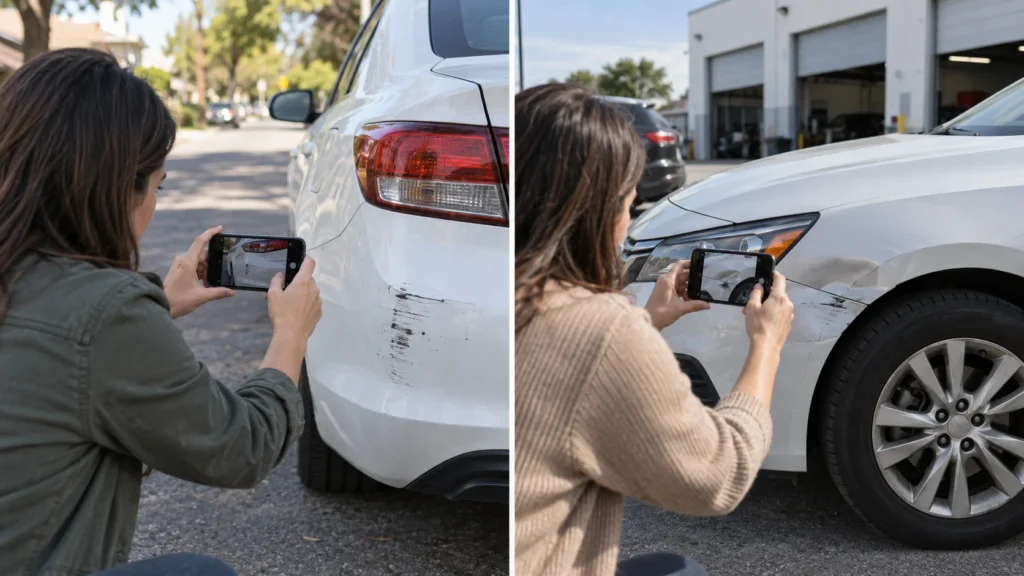
Two accidents, two deductibles is a common outcome when your car is damaged in separate events. If collision or comprehensive coverage applies to both losses, each claim can have its own deductible. What matters is the cause and date of each loss, not whether the damage is repaired during one shop visit.
The key is whether the damage came from one occurrence or separate events. Below, we explain how insurers usually evaluate that question, what happens when earlier damage was not repaired, and when a deductible may later be recovered.
Quick Summary
- Deductibles normally apply per covered occurrence.
- Two unrelated accidents commonly mean two deductibles.
- One continuous chain-reaction event may be one occurrence, depending on policy language and facts.
- Never describe separate accidents as one loss.
Two Accidents, Two Deductibles: Why It Happens
A deductible is the part of a covered loss assigned to you before the insurer pays its share. CPA’s deductible guide explains the basic calculation. When a later event causes new damage, the carrier generally evaluates a new claim and deductible.
One invoice does not merge two losses. The shop can repair both damage areas together, but the estimates and insurance payments should remain allocated to the correct claim numbers.
One Occurrence or Two?
Crashes on different days are normally separate. A rapid sequence may require closer review. If one impact pushes a car into another object, the carrier may consider whether the damage came from one continuous event. If the driver leaves and later strikes something else, the second cause is much easier to identify as a new occurrence.
- Record dates, locations, photos, and damage areas.
- Identify what existed before the second loss.
- Ask for separate written estimates.
- Request the insurer’s occurrence explanation if the result is disputed.
What If the First Damage Was Not Repaired?
Pre-existing damage is not paid twice. The second adjuster may separate old damage from new damage. Unrepaired damage can also affect the vehicle’s value if the second crash becomes a total loss. Keep the first estimate and dated photos.
If the first loss costs less than its deductible, see what happens when damage is below the deductible. It does not automatically become part of the next claim.
Can Either Deductible Be Recovered?
If another driver caused a loss, your insurer may seek reimbursement after paying under your policy. This is subrogation. The California Department of Insurance accident guide explains that the carrier may pursue the responsible party. A recovered deductible may be returned in whole or part, but recovery is not guaranteed.
Practical Steps
- Photograph both losses before repairs.
- Give accurate dates and causes.
- Ask which coverage and deductible apply to each claim.
- Compare each carrier estimate with the shop estimate.
- Keep claim numbers and payments separate.
Use CPA’s claims guide for the broader process. For payment logistics, read who receives the deductible.
Examples of Separate and Continuous Events
Imagine a driver backs into a post on Monday and is rear-ended on Friday. Even if both areas are repaired the following week, the causes, dates, and damage patterns are distinct. Collision coverage may apply to each claim, with a deductible applied to each covered occurrence.
Now consider a driver who is struck from behind and pushed into the vehicle ahead without regaining control. The impacts happen within one continuous chain. The insurer will review policy language and facts to decide whether there is one occurrence. A few seconds between impacts does not automatically answer the question; control, causation, and intervening events matter.
When Different Coverages Apply
Two losses can involve different deductibles. A hailstorm may fall under comprehensive with a $250 deductible, while a later collision may use a $1,000 collision deductible. The declarations page should list each amount. If glass coverage has a special deductible or waiver, that provision may change only the glass portion of a qualifying claim.
A deductible generally applies to repairs to your own vehicle under collision or comprehensive coverage. It is not simply a fee charged whenever an accident is reported. If you make only a liability claim for damage you caused to someone else’s car, the personal auto liability portion commonly has no deductible, subject to the actual policy.
Documentation When Damage Overlaps
Overlapping damage is the difficult edge case. A second impact to the same bumper can make it hard to assign repair operations. Give both adjusters the first photos and estimate. Ask the shop to identify which parts were already damaged, which damage is new, and whether the second event changed the repair method. The insurer may inspect paint transfer, deformation, rust, or prior photographs.
- Do not repair or discard parts before required inspections.
- Do not move costs between claims to avoid a deductible.
- Ask for a written allocation if the estimates overlap.
- Review whether each claim payment subtracts the correct deductible.
If the insurer disagrees with your account, respond with dates and evidence rather than estimates about what “must” have happened. A clear record also helps if subrogation later recovers money from one responsible driver but not the other.
Ask how rental costs are assigned when both claims affect drivability. One carrier may consider the car unusable because of the first loss, while the second loss adds repair days. Rental limits, waiting periods, and shop scheduling can complicate allocation. Obtain written authorization before assuming both claims will extend the rental period. The same caution applies to towing and storage charges: keep invoices tied to the event that caused each expense.
Conclusion
Two accidents can mean two deductibles when they are separate covered occurrences. Accurate dates, photos, estimates, and claim records help the insurer assign each repair to the correct loss and apply the right deductible.
Related
FAQ
Can both accidents be repaired at once?
Yes. The shop can repair both losses during the same visit while the insurer keeps each claim and its damage separately documented.
Does liability coverage have a deductible?
Personal auto liability typically does not impose a deductible on damage paid to others, but the actual policy and any applicable state rules should be checked.
Can a deductible be waived?
Sometimes, but only when the policy, applicable state rule, or insurer procedure allows it. A deductible should not be assumed to disappear simply because another driver caused the accident.