
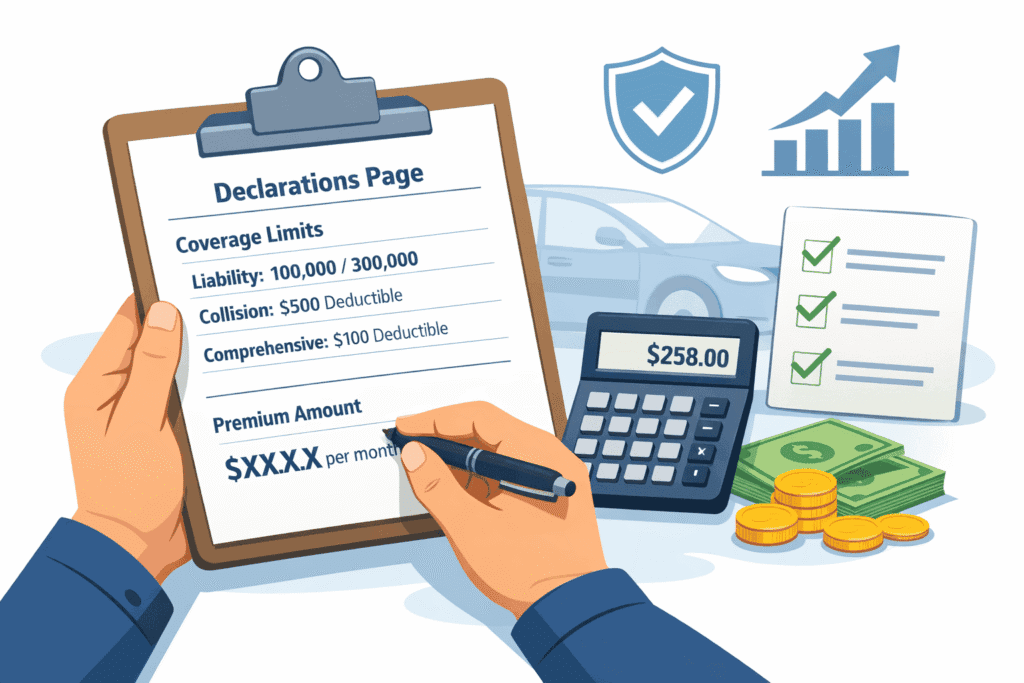
How coverage limits affect car insurance cost is one of the most important pricing questions drivers ask. Many people understand that adding coverage can raise a premium, but fewer understand that the size of the limits can matter too. In simple terms, higher limits can mean the insurer may have to pay more if a serious loss happens, and that can affect what you pay.
For official context, NAIC describes common coverage types and limits drivers compare.
That does not mean every limit change creates a dramatic premium jump. In practice, the effect depends on which limit you change, how much protection you already carry, where you live, and how the insurer rates that level of risk. Some limit increases change the price more noticeably than others.
If you want the broader pricing foundation first, start with what affects car insurance cost. This guide focuses on the narrower question: how limits change the price, when that effect may matter more, and what to review before lowering protection just to save money.
Quick Summary
- Coverage limits are the maximum amounts the insurer may pay for covered losses.
- Higher limits often cost more because they can increase the insurer’s financial exposure.
- The price difference is not always as large as drivers expect, but it varies.
- Lower limits may reduce premium while also reducing protection in a serious claim.
- Liability limits are especially important because large injury or property claims can exceed low limits quickly.
- Before changing limits, compare the premium change to the protection you would be giving up.
What coverage limits mean in simple terms
Coverage limits are the maximum amounts your policy may pay for a covered loss. This matters most in liability coverage, where the claim can involve another person’s injuries, vehicle damage, or other property damage after an at-fault accident.
For example, if you carry lower liability limits, the policy may stop paying once those limits are reached. If you carry higher limits, the insurer may have to pay more before that cap is reached. That extra financial exposure is one reason pricing can change when limits change.
If limits still feel abstract, this guide on car insurance policy limits helps explain how they work and where to find them on the policy.
How higher limits can raise what you pay
In general, higher limits can raise premium because the insurer may be taking on a bigger possible payout. That is especially true in liability coverage, where medical bills, legal exposure, and repair costs can become expensive quickly after a serious accident.
But the relationship is not always linear. A small jump in limits does not always create a huge jump in premium, and the difference between one limit level and the next may be smaller than drivers expect. In other cases, the increase can feel more noticeable, especially when broader protection is layered on top of other cost factors such as vehicle type, ZIP code, prior claims, or a higher-risk driver profile.
The National Association of Insurance Commissioners notes that insurers generally offer different liability limit options and that choosing higher limits may not always produce a large premium increase. The actual difference still depends on the insurer, state, driver, and policy. See the NAIC Consumer’s Guide to Auto Insurance.
That is why this is not just a “more coverage equals much more money” question. In practice, it is a tradeoff question. You are balancing monthly premium against how much financial protection the policy may provide if a large covered claim happens.
When the limit decision matters more in real life
The choice matters more when the possible loss could be large. Low limits can feel fine when nothing happens. The problem appears when the claim is bigger than expected.
- A multi-vehicle crash can create more property damage than a driver expects.
- An injury claim can become expensive quickly, even after what looked like a moderate accident.
- A newer vehicle or damaged structure can increase the property side of a claim.
- A low premium may not feel like a good value if the protection is too thin when a real loss happens.
Many drivers focus on saving money now and only later realize that low limits were the main reason the policy was cheaper. That does not mean higher limits are automatically right for everyone. It means the price difference only makes sense when compared to the amount of protection being changed.
What to consider before lowering your limits
If you are thinking about lowering limits to cut premium, review the decision in a practical order instead of reacting only to the monthly number.
- Check how much the premium would actually change.
- Compare that savings to the amount of protection you would be giving up.
- Think about the kinds of losses that would be hardest to absorb out of pocket.
- Review whether the policy is already stripped down in other ways, such as very high deductibles or limited optional coverages.
- Make sure you are not confusing limits with deductibles, since they affect cost in different ways.
This last point matters more than many people think. Limits affect the insurer’s maximum payout, while deductibles affect what you pay first on certain claims. If you want to compare those two pricing levers more clearly, this guide on higher deductible, lower premium helps show why they are related but not interchangeable.
Common misunderstandings
“Lower limits are always the smartest way to save.”
Not necessarily. They may reduce premium, but they also reduce the maximum protection available in a serious covered claim.
“Raising limits always creates a dramatic price increase.”
No. The difference may be smaller than expected, although pricing varies by insurer, state, and driver.
“Limits and deductibles are the same.”
No. Limits cap what the insurer may pay, while a deductible is an amount you may pay first on certain covered claims.
Conclusion
Higher coverage limits may raise car insurance cost because they increase the amount an insurer could pay after a serious covered loss. The increase is not always dramatic, so compare the actual premium difference with the protection being added or removed before changing the policy.
Related
- What Affects Car Insurance Cost? 11 Key Factors
- Car Insurance Policy Limits: What They Mean and How They Work
- Higher Deductible Lower Premium: 9 Clear Facts
FAQ
Do higher liability limits always cost more?
Often yes, but not always by a dramatic amount. The difference depends on the policy, driver profile, vehicle, location, and insurer rating approach.
Can lower limits make car insurance much cheaper?
Sometimes, but the savings may be smaller than expected. What matters is whether the lower price is worth the reduction in financial protection.
Are coverage limits more important than deductibles?
They matter in different ways. Limits affect the maximum the policy may pay, while deductibles usually affect what you pay first on certain covered losses.
Should I lower my limits to save money?
That depends on your risk tolerance, budget, and the size of the premium change. The safest approach is to compare the savings to the protection you would be giving up.