
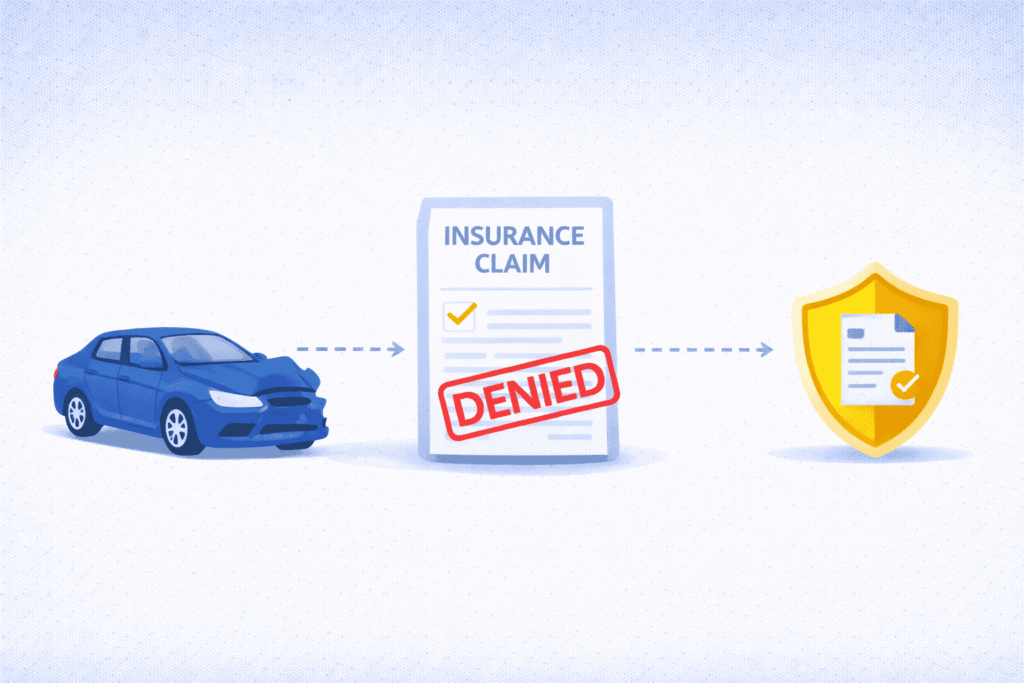
Deny insurance claim decisions can be confusing—especially after an accident or sudden vehicle damage. Most drivers expect their policy to help cover the loss, but a claim can be denied even when the policy is active. In many cases, the denial is tied to policy limits, coverage exclusions, missing information, or claim rules that were not met.
The short answer is yes: an insurance company can deny a claim under certain conditions. However, the decision should follow the written terms of your policy and the insurer’s legal duties under your state’s insurance laws. A denial should not be random. It should be supported by specific policy language, documented facts, or both. If you want a quick “where to find what” guide, start with the declarations page (Dec Page).
In this guide, you will learn why insurers deny claims, the most common reasons a company may deny insurance claim payment, how claim investigations work, and what steps you can take to review the decision and respond clearly.
Deny insurance claim: when can it happen?
A deny insurance claim decision happens when the insurer concludes that the reported loss does not meet the policy’s coverage requirements. Car insurance is a legal contract. It explains what is covered, what is excluded, and what you must do to qualify for payment.
Most policies spell out:
- Which types of losses are covered (collision, theft, weather, injuries, liability, etc.)
- Exclusions (events or damage the policy will not pay for)
- Limits and deductibles (how much the policy can pay and what you pay first)
- Claim rules (“duties after a loss”), like reporting, cooperation, and documentation
If the claim does not fit those terms, the insurer may deny it. For example, if you only have liability coverage and your own vehicle is damaged in a crash, your policy may not pay to repair your car. Liability coverage typically pays for damage you cause to others, not damage to your own vehicle. For a clear side-by-side comparison, see Liability vs Full Coverage.
How the car insurance claim review process works
Knowing the claim review process helps explain why an insurer may deny insurance claim payment. When you file a claim, the insurer generally does the following:
- The accident or damage is reported and a claim number is created.
- The insurer confirms policy status, coverages, limits, and deductibles.
- An investigation may take place (photos, statements, reports, inspection, estimate).
- The facts are compared to the policy language and exclusions.
- A decision is made: approval, partial approval, or denial.
If the claim is denied, insurers typically provide a reason. That explanation should point to policy language (such as an exclusion) and the key facts used to reach the decision. Specific notice requirements can vary by state.
Deny insurance claim: common reasons for a denial
There are several common reasons why a company may deny insurance claim payment. Some are coverage-related (the policy does not apply), and others are process-related (the claim file lacks required proof or policy conditions were not met).
1) Lack of the right coverage
If your policy does not include the type of coverage needed, the insurer may deny payment for that loss. For example, theft, vandalism, and hail damage are typically handled under comprehensive coverage. If you do not carry comprehensive, the insurer may deny the claim for those events. For a simple breakdown, see Collision vs Comprehensive Insurance.
2) Policy not active on the loss date (lapse or cancellation)
If premiums were not paid and the policy was not active when the accident happened, coverage may not apply. Even a short lapse can matter, depending on timing and state rules.
3) Exclusions in the policy
Insurance policies include exclusions—situations the policy does not cover. Examples may include:
- Intentional damage
- Certain types of commercial or delivery use (depending on the policy)
- Mechanical breakdown not caused by a covered event
What to do if you get a deny insurance claim decision
If your claim is denied, take a step-by-step approach. Many issues come down to missing paperwork or unclear facts, and some denials can be corrected with better documentation.
- Read the denial letter carefully. Identify the exact reason and the policy section cited.
- Confirm the policy was active on the loss date and that the correct vehicle and drivers are listed.
- Collect supporting documents (photos, estimates, receipts, report numbers, timeline of events).
- Ask for review if you believe the policy language was applied incorrectly or key facts were missed. If you want a step-by-step guide, see How to Dispute an Insurance Claim Decision.
Conclusion
A deny insurance claim decision can be frustrating, but it is usually tied to specific policy terms, exclusions, claim requirements, or missing documentation. Insurers review claims based on written contracts and state rules, and they should be able to explain the reason for a denial.
Important to Know
Car Policy Answers is an independent educational website. We do not sell insurance, provide quotes, or recommend insurance companies.
This article is intended for general educational purposes only. Insurance laws and claim procedures vary by state, and the facts of a claim matter.