
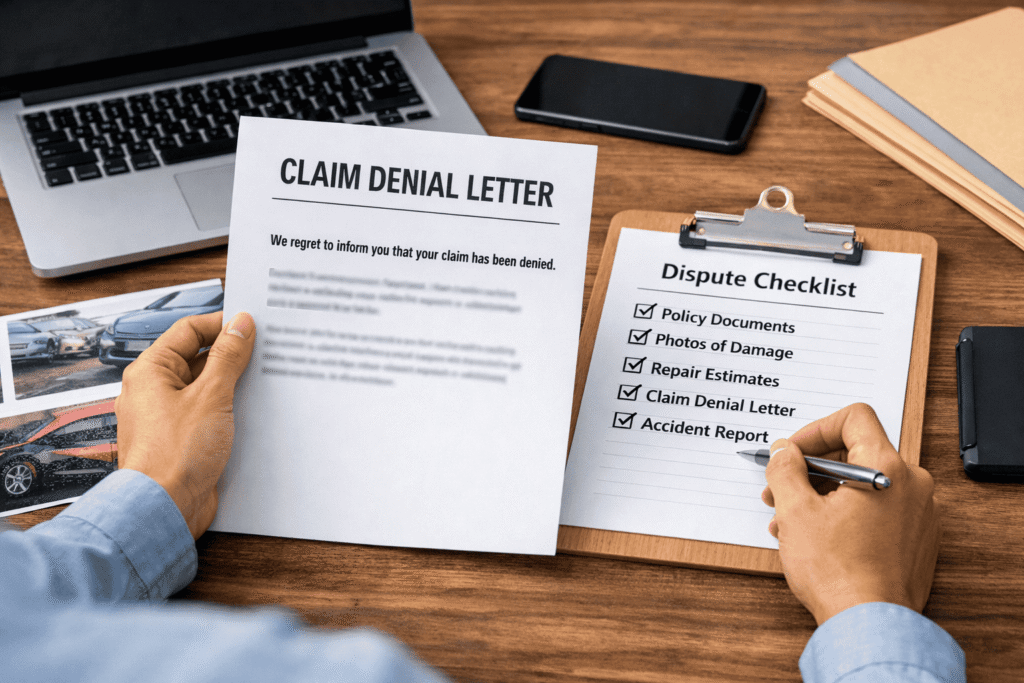
Dispute insurance claim decisions can feel confusing and stressful. Maybe your claim was denied (see common reasons insurers deny claims), the payment seems too low, or the insurer says the damage is not covered. In many cases, you are not stuck with the first answer. Most insurers have a process for reviewing decisions, and you can ask for a closer look.
Disputing a claim is not about arguing. It is about sharing clear facts, showing supporting documents, and asking the insurer to explain how the decision matches the policy. Sometimes the decision changes after new information is reviewed. Other times, you learn why the decision stands and what options you still have.
This article explains how to challenge an insurance claim decision step by step, in plain language.
What it means to dispute an insurance claim
A claim dispute is a formal request to review an insurance decision. You might dispute:
- A denial (the insurer says the claim is not covered)
- A partial denial (some damage is covered, other damage is not)
- A settlement amount (you think the payment is too low)
- A fault or liability decision (who caused the accident)
- A repair method (repair vs. total loss, or the parts and labor used)
A dispute is different from reporting a claim. The claim has already been decided. A dispute asks the insurer to re-check the facts, the policy language, or both.
Example: Your car was damaged in a storm. The insurer says it is “wear and tear,” not storm damage. If you have photos showing new dents and records showing hail in your area at that time, you can submit that evidence and request a review.
How to dispute an insurance claim decision step by step
Disputes usually go faster and smoother when they are organized. Here is a practical step-by-step approach you can follow.
1) Read the decision carefully
- Look for the exact reason the insurer gave (denied, excluded, not enough proof, limits, deductible, missed deadlines, and so on).
- Identify what part you disagree with (coverage, cause of damage, estimate amount, timeline, liability).
2) Request the explanation in writing
If you received a phone call, ask for a written decision letter or email. You can also request:
- The specific policy section used to decide the claim
- Any photos, estimates, or notes the decision relied on
- A clear summary of what would be needed to change the decision (if anything)
3) Review your policy basics
Focus on the parts that usually control claim outcomes:
- Coverage type (liability, collision, comprehensive, medical payments, uninsured motorist)
- Exclusions (what the policy does not cover)
- Limits (maximum the policy can pay)
- Deductible (what you pay before coverage applies)
- Duties after a loss (deadlines and required cooperation)
4) Gather strong supporting documents
You want facts, not opinions. Helpful items often include:
- Photos and videos (with dates if possible)
- Repair estimates from licensed shops
- Tow invoices, rental receipts, and storage bills (if relevant)
- Police report number or copy (if there was one)
- Witness contact information (if available)
- Medical records and itemized bills (for injury claims)
- Emails, letters, or claim notes from the insurer
- A timeline you write: date, time, place, what happened, what you did next
When you request a claim review, clear documentation matters more than long explanations. Pick the strongest items and label them so an adjuster can review them quickly.
5) Ask for a reinspection or a supplemental review
If the issue is the amount or scope of damage, request:
- A reinspection by an adjuster, or
- A supplemental estimate (common when hidden damage is found after teardown)
Supplements are common in auto repairs. A shop may not see all damage until parts are removed. If new damage is related to the same event, it may be added to the claim.
6) Submit your dispute clearly
Use a short, structured message so it is easy to process:
If you don’t have your policy number handy, your car insurance declarations page (dec page) usually lists it along with your coverages, limits, and deductibles.
- Claim number and policy number
- Decision date
- What you disagree with (1–2 sentences)
- What you want reviewed (coverage, estimate line items, liability)
- A list of attached evidence
- A request for a written response by a reasonable date
Keep your tone calm and factual. If you can quote the policy section you believe applies, include it. That helps focus the review on the actual coverage language.
7) Escalate inside the insurer if needed
If the initial adjuster cannot resolve it, you can ask for:
- A supervisor review
- The insurer’s internal claims review or appeals team (names vary)
- A different adjuster or specialty unit (for complex losses)
8) Consider outside options (when appropriate)
If you still cannot reach a fair outcome, options may include (depending on your state and your policy):
- Filing a complaint with your state department of insurance
- Mediation, arbitration, or appraisal (if your policy includes it)
- Getting legal advice for serious disputes, especially injuries or large losses
Because insurance rules vary by state, it can also help to understand the basics of state requirements: Is Car Insurance Required by Law in the U.S.?
A complaint often triggers a review of whether the insurer followed rules and explained the decision clearly. It does not automatically guarantee a payout, but it can help move communication forward.
Main types of insurance claim disputes
Disputes often fall into a few common categories. Knowing which type you have helps you choose the right evidence and requests.
Denial disputes: disputing coverage decisions
Common reasons insurers deny claims include:
- The policy was not active on the loss date
- The coverage type does not apply (for example, no comprehensive coverage for non-collision damage)
- An exclusion applies (for example, intentional damage, certain business use, or racing)
- Late reporting that affected investigation (rules vary by state and the facts)
If you’re not sure which coverage applies, this guide can help: Collision vs Comprehensive Insurance.
What helps most:
- Proof the policy was active
- Proof the loss happened as described
- Evidence connecting the event to the damage (photos, reports, expert notes)
Settlement amount disputes (payment seems too low)
This is common with vehicle repairs and total losses. The disagreement is often about what was included in the estimate or how value was calculated.
For repair estimate disputes, the disagreement may be about labor hours, part type, paint work, or whether damage is related to the loss.
For total loss value disputes, the disagreement may be about vehicle condition, mileage, trim level, options, or comparable vehicles used.
What helps most:
- A detailed shop estimate that explains line items
- Photos showing condition before the loss (if available)
- Maintenance records and recent work receipts
- Documentation of features/options that affect value
Liability or fault disputes (who caused the accident)
Liability decisions affect who pays and may affect deductibles. These disputes are usually evidence-driven.
What helps most:
- Police report (when available)
- Witness statements
- Dashcam footage
- Photos of the scene, lane markings, and vehicle angles
- A simple diagram of what happened
Coverage coordination disputes (multiple policies)
Sometimes more than one policy could apply, such as two drivers with two insurers, a borrowed vehicle, a rental car situation, or a rideshare claim. These disputes can involve questions about who pays first.
What helps most:
- Copies of both policies (or declaration pages)
- The rental contract or rideshare trip records
- Written statements from both insurers about their positions
Appraisal clause disputes (value disagreements)
Some auto policies include an appraisal clause for disputes about the value of a vehicle. This is a formal process that may involve independent appraisers and an umpire.
What helps most:
- Confirming whether your policy includes appraisal
- Understanding what costs you may be responsible for in the process
- Strong documentation of the vehicle’s condition and features
What can affect outcomes when you dispute a claim
Even when two people have similar claims, outcomes can differ. These factors often influence insurance decisions and reviews:
- Policy language and state rules
Insurance is regulated by states. Deadlines, required notices, and dispute options can vary. - Evidence quality
Clear photos, consistent timelines, and professional estimates carry more weight than general statements. - Cause of loss
Some disputes come down to whether damage is from a covered event (like a sudden accident) or an uncovered condition (like wear, corrosion, or prior damage). - Documentation timing
Prompt reporting and early photos can reduce questions about when damage happened. - Repair shop findings
Hidden damage may not be visible until repairs begin. This is why supplemental estimates are common. - Communication records
Keeping notes of calls and saving emails helps you stay consistent and accurate. - Your deductible and limits
Sometimes the issue is not denial, but a deductible or limit reducing the payment.
Common questions and misunderstandings
Does disputing a claim mean I’m suing the insurance company?
No. A dispute usually starts as an internal review. Lawsuits are a separate step and are not required for most disputes.
Can I dispute a claim if I already accepted payment?
Sometimes, yes. It depends on what you signed or agreed to. If you signed a final release, your options may be limited. If it was a partial payment while damage is still being evaluated, a supplement may still be possible.
How long do I have to dispute a decision?
It depends on your policy and state rules. Do not wait. Ask the insurer about deadlines and get answers in writing when possible.
Should I get my own repair estimate?
Often, it helps. A second estimate can identify missing damage or line items. Make sure the shop explains why the added items are needed.
What if the insurer says the damage is “pre-existing”?
Ask what evidence supports that conclusion. Provide photos, maintenance records, or prior inspection notes if you have them.
Will a complaint to the state insurance department force the insurer to pay?
A complaint usually prompts a review of whether rules were followed and whether the insurer explains its decision clearly. It does not guarantee a payout, but it can help move communication forward.
What should I include in a dispute letter?
Keep it short and factual:
- Claim number and policy number
- Decision date and the specific issue
- A clear request (reinspection, supervisor review, reconsideration)
- A list of attached evidence
If you appeal a claim decision, keep everything organized and in writing. Ask what policy language was used, submit only the most relevant documents, and request a clear written response.
Important to Know
Car Policy Answers is an independent educational website. We do not sell insurance, provide quotes, or recommend insurance companies.
This article is for general educational purposes only. Insurance rules and dispute options can vary by state, and the facts of a claim matter.