
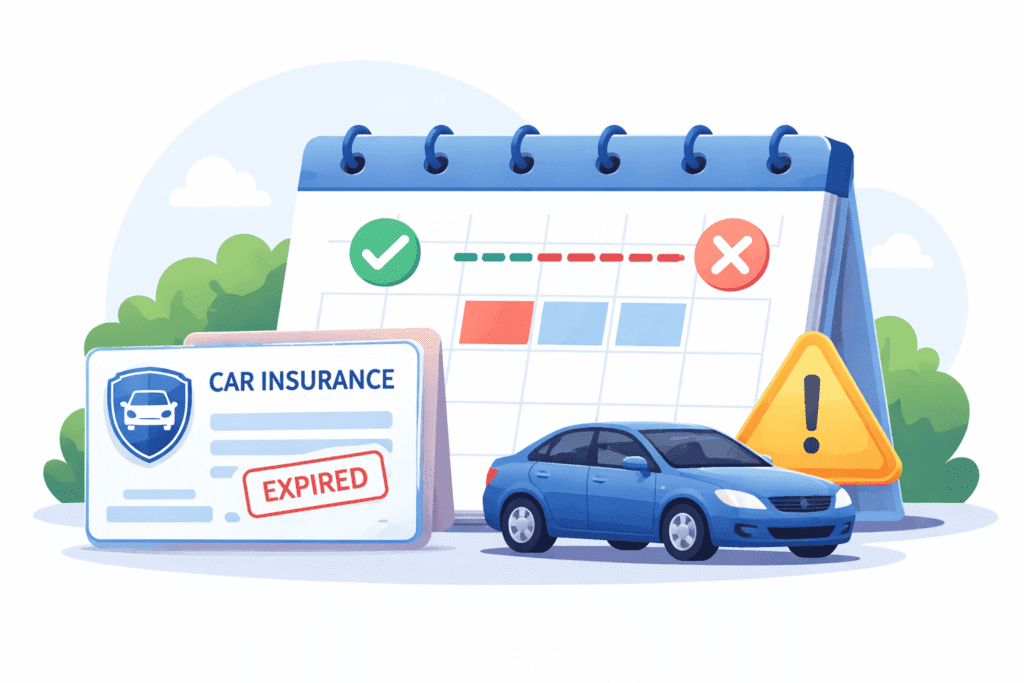
A lapse in car insurance means your policy ended before a new policy started or before your old one was properly reinstated. If you plan to switch car insurance mid-policy, confirm the replacement effective time before canceling the old coverage. In simple terms, even a one-day gap can matter.
Many drivers do not plan for a lapse. It can happen after a missed payment, a failed autopay charge, a cancellation request made at the wrong time, or a delay when switching to a new policy. What matters most is whether you had any period where your car was still being driven, parked on the street, financed, or registered without active coverage.
This guide explains what a lapse means, why it happens, what problems it can cause, and what to check before you restart coverage. If you want a quick refresher on terms you may see in your paperwork, it also helps to review common car insurance policy terms before making changes.
Quick Summary
- A lapse happens when your insurance stops and there is no active replacement in place.
- It often starts with nonpayment, a policy change, or a poorly timed switch between insurers.
- During the gap, you may have no coverage for accidents, damage, or liability claims.
- A lapse can also create registration, lender, or proof-of-insurance problems, depending on your situation and state rules.
- When restarting coverage, confirm the exact effective date, your limits, deductible, and any documents showing reinstatement or new coverage.
What a lapse in car insurance means in practice
The idea is simple: your old policy stopped, and there was no active policy covering the car for some period of time. That does not always mean the lapse lasted weeks. Sometimes it is just a day or two. Even so, a short gap can still be important if something happens during that window.
For example, if your policy ended at 12:01 a.m. on Monday and your new one did not begin until Tuesday morning, Monday may count as uncovered time. If you drove, parked the car in public, or had a financed vehicle during that gap, the practical risk is real.
Some drivers confuse a lapse with a policy rewrite, a cancellation, or a nonrenewal. Those are related ideas, but the key issue here is the same: was there any time when active coverage was not in force? If yes, that period may be treated as a lapse.
Common causes of a lapse in car insurance
A lapse usually starts with an administrative issue, not a major decision. Common examples include:
- Missing a payment or having autopay fail
- Changing bank cards and forgetting to update billing
- Moving and missing mailed notices
- Canceling a policy before the new one is active
- Assuming a car insurance grace period is longer than it really is
- Letting a policy end while the car is still registered or financed
One common mistake happens during policy changes. A driver wants to switch coverage, cancels the old policy, and assumes the new one starts immediately. If the effective date is later than expected, a gap appears. That is also why timing matters when asking, can you cancel car insurance anytime.
What usually happens after a lapse
The biggest problem is straightforward: if something happens during the gap, there may be no active policy to respond. That can affect damage to your own car, liability for injuries or property damage, and even basic proof-of-insurance questions after a traffic stop or registration review.
A lapse can also affect cost later. Insurers often look at continuous coverage history as part of the risk picture, so restarting coverage after a gap may change the price you are offered. That does not mean every lapse leads to the same result, but it is one reason many drivers later end up researching what affects car insurance cost.
If you keep driving during the gap, the risk gets more serious. Depending on your state and circumstances, driving without active insurance can lead to fines, registration issues, or out-of-pocket losses after a crash. For a broader look at that side of the problem, see Driving Without Insurance: 10 Things That Can Happen.
How a lapse can look in real life
Imagine a driver misses a payment notice during a busy month. The policy cancels for nonpayment. Two days later, the driver backs into another car in a parking lot. The surprise is not just the accident. It is learning the policy was no longer active at the time.
Another example is a switch between insurers. A new policy is purchased, but the effective date is next week. The old policy is canceled today because the driver wants to avoid overlap. The car is still being used daily, so the gap becomes a practical problem, not just a paperwork detail.
A lapse can also matter even when the car is not being driven much. If the vehicle is financed, leased, or still registered, coverage requirements may still apply. This is one reason it is worth checking the full situation, not only whether the car left the driveway.
For official context, California DMV explains insurance requirements, Texas DOI advises keeping proof of insurance, and NAIC encourages consumers to understand auto coverage.
Conclusion
A lapse in car insurance means there was a break between active policies or between cancellation and reinstatement. The biggest concern is what happens during that gap, especially if you still drive, park, finance, or register the vehicle. The longer-term issue is that restarting coverage may not look exactly like your old policy and can affect what you pay later.
Before moving on, review the effective date, your declarations page, your deductible, and any notices tied to the lapse. That small check can prevent bigger problems later.
Related
- Driving Without Insurance: 10 Things That Can Happen
- Cancel Car Insurance: Can You Do It Anytime?
- What Affects Car Insurance Cost? 11 Key Factors
FAQ
Is a one-day gap considered a lapse?
It can be. If your old policy ended before the new one started, even a short break may count as a lapse.
Can a canceled policy be reinstated after a lapse?
Sometimes, yes. It depends on the reason for cancellation, timing, and the insurer’s reinstatement rules. In other cases, you may need a new policy instead.
Will a lapse make car insurance more expensive?
It may. A gap in continuous coverage can affect how risk is evaluated, but the impact varies by insurer, state, and your overall profile.