
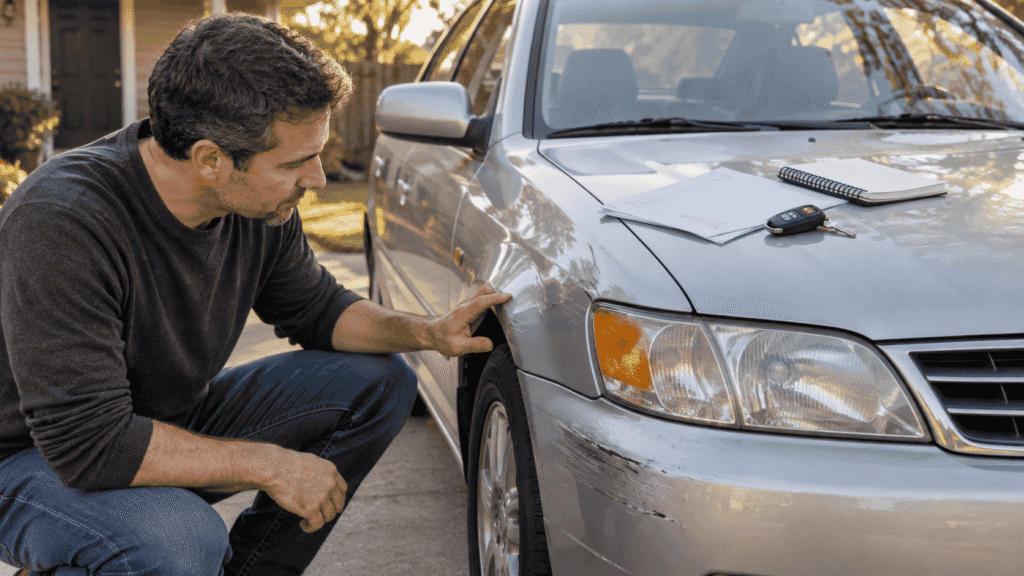
Is collision car insurance worth it? It may be worth considering when your car still has enough value that a crash repair or total loss would be hard to pay for yourself. It may be less useful when the car’s value is low compared with the collision premium and deductible.
No single rule fits every driver. The decision depends on vehicle value, deductible, premium, loan or lease requirements, accident exposure, and whether you could repair or replace the car without the coverage.
Quick Summary
- Collision may help repair or replace your own car after a crash with another car or object.
- Vehicle actual cash value matters because claim payments are usually limited by what the car is worth.
- The deductible can make smaller collision claims less useful.
- Financed or leased vehicles may require collision coverage.
- Dropping collision is different from dropping legally required liability insurance.
Is Collision Car Insurance Worth It? Start With What It Protects
Collision coverage is usually for damage to your own vehicle after impact with another vehicle or object, or after the car overturns. It is separate from comprehensive coverage, which handles many non-collision losses, and separate from liability coverage, which usually protects other people when you cause damage or injuries.
The NAIC describes collision as optional coverage for physical damage from colliding with an object, such as another car or a tree. If you want the coverage definition first, see what collision car insurance is and what it covers. For the broader policy distinction, CPA’s guide to liability vs full coverage explains how these pieces fit together.
Compare Vehicle Value With The Deductible
The most important number is not what you paid for the car years ago. It is what the car is worth now. Collision coverage usually pays based on covered repair cost or actual cash value, depending on the loss and policy terms.
The California Department of Insurance explains that a physical damage claim under a standard auto policy generally pays the lesser of the cost to repair the vehicle or the vehicle’s actual cash value. That matters when repair costs approach the car’s value.
Next, subtract the deductible in your mind. If a car is worth a modest amount and the deductible is high, the remaining financial protection may be limited. CPA’s car insurance deductible guide explains why the amount you choose can change the practical value of a claim.
Think About Total Loss Risk
Collision can matter most after a serious crash, especially if the vehicle would be expensive to repair or replace. If repair costs are too high compared with the car’s value, the insurer may decide the vehicle is a total loss rather than approving repairs.
The Oregon Division of Financial Regulation notes that if repair costs exceed a vehicle’s value, it will likely be totaled. CPA’s guide to total loss in car insurance explains how that decision can affect payment, title, and next steps.
Review The Premium Without Using A Fake Cutoff
Premium matters because collision is paid for before any claim happens. But a simple percentage cutoff can be misleading. Two drivers with the same car value may make different decisions because one has savings, one relies on the car for work, and one has a much higher deductible.
A better framework is to ask three questions: What would I save by dropping collision? What would I lose if the car were damaged tomorrow? Could I pay for repairs or replacement without disrupting essential needs? If you are mainly adjusting price, CPA’s guide to higher deductible lower premium explains the tradeoff without treating it as automatic savings.
Check Loan Or Lease Requirements
If the car is financed or leased, collision may be required by the contract. The Washington Office of the Insurance Commissioner explains that lenders commonly require comprehensive and collision coverage for financed or leased vehicles.
Do not drop collision on a financed or leased car until you read the agreement or ask the lender what is required. If coverage lapses or is removed, the lender may protect its own interest in ways that do not necessarily protect your broader financial position. Once the loan is fully paid and the lien is released, see what changes with insurance after paying off a car before deciding whether to keep or remove collision coverage.
Consider Your Real Accident Exposure
Collision may feel more valuable if you drive often, commute in heavy traffic, park on narrow streets, drive in winter conditions, or depend on the car for work, school, childcare, or medical appointments. It may feel less valuable if the car is rarely driven and easy for you to replace.
Also think about the claims process itself. If a crash happens, collision can let you work through your own insurer even when fault questions or recovery from another driver take time. CPA’s guide to the car insurance claims process explains the basic steps after a loss.
Conclusion
Is collision car insurance worth it? It may be when the car’s value, repair risk, deductible, premium, and your financial cushion make crash protection useful. It may be less useful when the car is worth little compared with the deductible and premium, and you could handle repair or replacement yourself.
Before changing coverage, check your declarations page, loan or lease agreement, deductible, actual cash value estimate, and the role the car plays in your daily life. Keep required liability coverage separate from this optional physical damage decision.
Related
FAQ
Should I drop collision on an old car?
Maybe, but compare the car’s current value, deductible, premium, and your ability to pay for repair or replacement yourself.
Is collision worth it if my car is paid off?
It depends. Once the car is paid off, a lender may no longer require collision, but the coverage may still help if a crash would be hard to absorb.
Can I drop collision but keep liability?
Often yes if no lender or lease requires collision. Liability is a separate coverage and is legally required in most states.
Does collision pay if someone else caused the crash?
It may, if you carry collision and use your own policy. Your insurer may later seek recovery from the at-fault party, depending on the facts and state rules.