
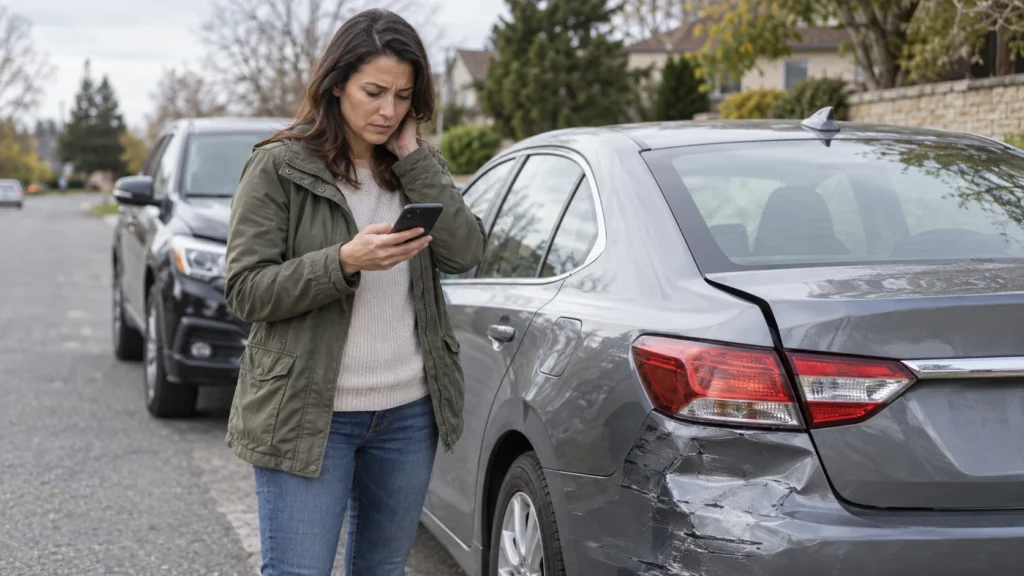
Can car insurance go up after a not-at-fault accident? Yes, it can in some situations, although a nonfault finding may protect you from an at-fault surcharge in certain states. State law, the insurer’s approved rating plan, claim history, discounts, and broader renewal changes can all affect the final price.
Quick Summary
- A not-at-fault accident does not always increase premium.
- Some states restrict how nonfault claims can affect rates.
- Your total price can still change because of broader rate increases or lost discounts.
- Ask the insurer to explain exactly what changed at renewal.
Why Car Insurance Can Go Up After a Not-at-Fault Accident
Insurance pricing is regulated by states. Insurers use filed rating plans that may distinguish fault, payout, claim type, driving history, and claim frequency. The NAIC consumer guide explains that many risk and coverage factors can affect auto insurance premium.
A Higher Renewal Is Not Always an Accident Surcharge
Repair costs, local claim trends, coverage changes, mileage, address, and statewide rate filings can change a renewal. CPA’s guide to what affects car insurance cost provides the wider context. Losing a claim-free discount is also different from receiving an accident surcharge, even though both can increase the bill.
Does Filing With Your Own Insurer Matter?
If you use collision coverage, your carrier may pay promptly, subtract the deductible, and later seek recovery from the responsible party or insurer. That creates a claim record even though you were not responsible. Filing with the other driver’s insurer may avoid a collision payment under your own policy, but it can take longer and does not guarantee a different future price.
If someone hit you, review whether a deductible applies when someone else caused the accident. A later recovery may affect both the claim record and whether some or all of the deductible is returned.
What to Check at Renewal
- Compare coverages, limits, vehicles, drivers, and discounts.
- Ask whether the accident is coded as not at fault.
- Ask whether a surcharge was applied or a discount ended.
- Request correction of inaccurate claim information.
- Contact the state regulator if the explanation conflicts with applicable state rules.
The California Department of Insurance auto guide is one example of state-specific consumer information. Use your own state’s regulator because protections and rating rules differ.
Can the Insurer Nonrenew Instead?
Nonrenewal rules are separate from pricing. A carrier must follow applicable notice and eligibility requirements. CPA explains this in car insurance nonrenewal after a claim. One not-at-fault accident does not create the same outcome in every state or with every insurer.
Keep Evidence of Fault
Save the police report, photographs, witness information, claim decision, and insurer correspondence. Fault decisions can change as evidence develops. CPA’s rights after a car accident guide explains practical documentation steps.
Three Common Renewal Scenarios
In the first scenario, the carrier records a rear-end loss as not at fault, pays nothing, and makes no accident-related pricing change. The renewal can still rise because the insurer received approval for a broader rate change. Comparing only the old and new totals would not reveal that distinction.
In the second scenario, the insurer pays collision damage and later recovers from the other driver’s carrier. The claim remains in the history, but the recovery and fault coding may affect how it is treated. Ask whether the record shows zero percent fault and whether subrogation has closed.
In the third scenario, no surcharge is added, but an accident-free discount disappears under the policy’s eligibility rules. The practical result is a higher price. Request the renewal discount list and prior declarations page so you can identify what changed.
State-Law Differences to Check
Some states restrict surcharges for accidents in which the insured was not responsible. Definitions and exceptions vary. A state may distinguish a claim paid under collision, a PIP claim in a no-fault system, damage caused by an uninsured driver, or an accident above a payment threshold. Do not rely on a national list without checking the current rule and approved rating plan in your state.
“No-fault state” does not mean nobody is assigned fault for premium purposes. No-fault laws mainly describe how certain injury benefits are paid. Property-damage liability and insurance rating can follow different rules.
How to Question a Renewal Constructively
- Ask for the exact accident date and fault status in the carrier’s record.
- Compare every discount on the old and new declarations pages.
- Confirm that drivers, vehicles, mileage, garaging address, limits, and deductibles are unchanged.
- Ask whether the increase reflects an individual surcharge, territory change, or general rate revision.
- Correct factual errors through the carrier’s documented process and keep proof of submission.
If the carrier cannot explain the change, the state insurance department can describe applicable rating and notice rules. It generally cannot promise a particular premium, but it can review whether filed rules and consumer protections were followed.
Reporting Versus Filing a Paid Claim
Drivers sometimes ask whether they should avoid reporting a minor not-at-fault accident. Policy duties may require prompt notice, especially when injuries, hidden damage, or another party are involved. Reporting an incident is not necessarily the same as receiving a claim payment, but both can appear in claim records. Ask how the carrier categorizes an inquiry, a report-only file, and a paid claim.
Paying for damage privately also has risks. Injuries can appear later, repair estimates can grow after teardown, and an informal agreement may not prevent another party from making a claim. Preserve photographs and contact information even if no immediate payment is requested.
What Comparison Shopping Can and Cannot Show
Quotes from other carriers can show current alternatives, but they do not prove the existing insurer applied the accident incorrectly. Make sure every quote uses the same drivers, vehicles, limits, deductibles, mileage, and optional coverages. A lower quote with reduced protection is not a like-for-like comparison. Answer accident and claim questions accurately because an omitted loss can be discovered during underwriting and change the quoted price.
Conclusion
Car insurance can go up after a not-at-fault accident, but the accident may not be the only reason for the increase. Ask whether the renewal reflects a surcharge, lost discount, changed rating factor, claim-history treatment, or a broader rate adjustment.
Related
FAQ
Does reporting a not-at-fault accident automatically raise rates?
No. The pricing result depends on state rules, the insurer’s rating plan, claim history, discounts, and other renewal factors.
How long can a claim affect car insurance rates?
Lookback periods and rating rules vary by state and insurer. Ask which period applies to the claim and how the insurer is using it.
Can incorrect fault information be disputed?
Yes. Send the insurer supporting evidence and request that inaccurate fault information be reviewed and corrected in writing.