
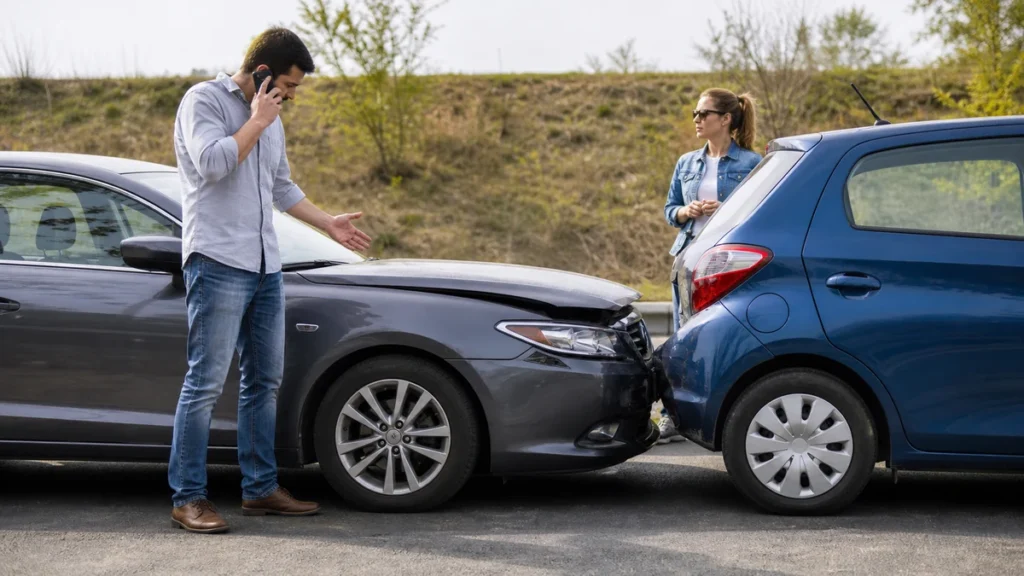
You may have to pay a deductible if someone hits you and you use your own collision coverage to repair the car. If the other driver’s insurer accepts responsibility and pays your repair directly, you usually do not pay your own collision deductible for that third-party claim.
The hard part is timing. The other insurer may still be investigating fault, the other driver may be uninsured or underinsured, or you may need your car repaired before liability is settled. In those cases, your deductible may be paid up front and possibly reimbursed later, but reimbursement is not guaranteed.
Quick Summary
- If the at-fault driver’s insurer pays you directly, your own collision deductible usually is not the main issue.
- If you use your own collision coverage, your deductible usually applies even when you believe the other driver caused the crash.
- Your insurer may try to recover its payment and your deductible through subrogation.
- Deductible reimbursement can be full, partial, delayed, or unavailable depending on recovery, fault, state rules, and policy terms.
- UMPD, hit-and-run rules, and shared-fault rules vary by state and policy.
When the other driver’s insurer pays directly
If the other driver’s insurer accepts fault and agrees to pay for your vehicle damage, the claim is usually handled under that driver’s liability coverage rather than your collision coverage. Texas Department of Insurance consumer materials explain that Texas drivers generally do not pay a deductible on a claim against another driver’s insurer, while using their own coverage may involve one.
This path can avoid an upfront deductible, but payment may take longer while liability is reviewed. For the broader file flow, see the car insurance claims process.
When your own collision coverage requires a deductible
Collision coverage is the part of the policy that can pay for damage to your car after a crash with another vehicle or object. The NAIC describes collision as coverage for damage to your car from a collision with another car, an object, a pothole, or flipping over.
If you choose to use your collision coverage first, your deductible usually applies. That can be true even if the other driver appears to be at fault. The reason is practical: your insurer is paying under your policy before it has recovered money from the responsible driver or insurer. If you need the basic deductible concept first, start with what a car insurance deductible means.
How deductible reimbursement can happen
After your insurer pays a covered collision claim, it may pursue the responsible party through subrogation. The Washington Office of the Insurance Commissioner describes subrogation as the process where your insurer seeks reimbursement from the at-fault party or that party’s insurer after paying your claim.
If recovery succeeds, your deductible may be returned. The refund can be full or partial, and it may take time. If the other driver has no coverage, has low limits, disputes fault, cannot be found, or shares only part of the blame, your deductible may not come back in full.
What if fault is still being investigated?
When fault is unclear, you can wait for the other insurer’s liability decision or use your own collision coverage if you have it. Waiting may avoid an upfront deductible but delay repairs; collision can move repairs sooner but may require you to pay the deductible first. If you are unsure how that payment works in practice, see who you pay the car insurance deductible to in repair, total-loss, and third-party claims.
Shared fault may reduce or prevent recovery depending on state rules. Keep photos, estimates, messages, and reports organized, as you would for documents that support a car insurance claim.
Uninsured drivers, UMPD, and hit-and-run claims
If the other driver has no insurance or cannot be identified, uninsured motorist property damage may matter. UMPD is not available in every state, and when it exists, deductibles, limits, hit-and-run rules, and vehicle-damage rules can differ by state and policy. A broader overview is in UMPD coverage.
California Department of Insurance materials describe uninsured motorist property damage as coverage that may pay for damage to your car caused by an identified uninsured driver, subject to California limits and policy rules. That is a California-specific example, not a national rule. If UMPD is unavailable or does not apply, collision may be the coverage you use for a hit-and-run or uninsured-driver crash.
What if the damage is close to the deductible?
If repair costs are below your collision deductible, your own coverage may produce no payment. If the damage is well above the deductible, collision may help move repairs forward while your insurer pursues recovery. For small repairs, see car damage less than deductible.
Also consider liability, injuries, rental needs, lender rules, and hidden damage. Ask the insurers whether the claim is being handled as first-party, third-party, collision, UMPD, or is still under liability review.
Simple examples
Example 1: You wait for the other insurer
Another driver rear-ends you and their insurer accepts liability. You wait for direct payment, so your collision deductible does not apply.
Example 2: You use collision first
You use collision so repairs can begin and pay your deductible. Your insurer later attempts recovery, and you may get some or all of it back.
Example 3: Fault is disputed
Fault is disputed. If you use collision and fault is later shared, deductible recovery may be partial or unavailable.
Checklist before choosing which claim to open
- Ask whether the other insurer has accepted liability in writing.
- Confirm your collision deductible and whether you have UMPD.
- Ask your insurer how deductible recovery works after subrogation.
- Compare repair cost with the deductible before filing a small claim.
- Save photos, estimates, police information, and claim messages.
- Ask whether fault is still disputed or shared.
Conclusion
You do not automatically avoid a deductible just because someone else hit you. If the other driver’s insurer accepts responsibility and pays directly, your collision deductible may not come into play. If you use your own collision coverage first, you may pay the deductible and wait to see whether your insurer can recover it. UMPD, hit-and-run claims, shared fault, and state rules can change the answer, so confirm the claim path before choosing.
Related
FAQ
Do you pay a deductible if someone hits you?
You may pay a deductible if you use your own collision coverage. If the other driver’s insurer accepts responsibility and pays directly, your own collision deductible usually does not apply to that third-party claim.
Will you get your deductible back after subrogation?
Maybe. If your insurer recovers money from the responsible driver or insurer, your deductible may be reimbursed fully or partly. Recovery is not guaranteed.
Should you wait for the other driver’s insurance?
Waiting can avoid paying your deductible up front, but it may delay repairs. Using your own collision coverage can be faster if you can handle the deductible and the claim fits your policy.
Does hit-and-run damage use collision or UMPD?
It depends on your state and policy. Some drivers use collision. Some policies or states may allow UMPD, but availability, deductibles, and hit-and-run rules vary.
What happens if both drivers share fault?
Deductible recovery may be reduced or denied depending on state fault rules, policy terms, and how the insurers resolve liability.