
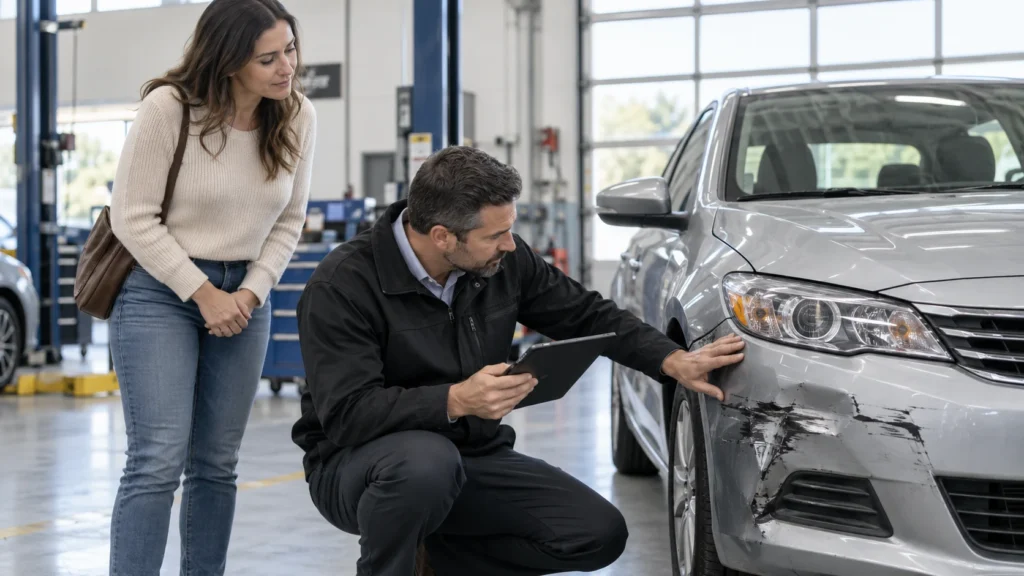
A car inspection before repairs is common in many physical-damage claims. An insurer may ask to inspect the vehicle before paying the claim or agreeing to additional covered repair costs. The inspection helps document the damage, connect it to the reported event, and prepare an estimate.
Do not assume that an inspection requires you to use the insurer’s preferred repair shop. Inspection, coverage review, estimating, and choosing a shop are separate parts of the car insurance claims process.
Quick Summary
- An insurer may inspect damage in person or through photos and video.
- Preserve evidence before permanent repairs when it is safe to do so.
- Take reasonable emergency steps to prevent further damage.
- An initial estimate can change when a shop finds hidden damage.
- Inspection rules and claim deadlines vary by state and policy.
How a Car Inspection Before Repairs Usually Works
The insurer needs enough information to evaluate coverage and the amount of loss. An adjuster or appraiser may photograph damage, identify affected parts, review prior damage, measure the impact area, and write an initial repair estimate.
The California Department of Insurance explains that a qualified adjuster or appraiser usually inspects vehicle damage and prepares an estimate. If a repair shop later finds more damage, the insurer may reinspect it. That is a useful process example, not a universal deadline for every state.
An inspection does not by itself decide every coverage question. The company may still review the policy, date of loss, cause of damage, deductible, exclusions, and who is responsible.
In-Person Inspection, Photo Estimate, or Shop Estimate
A minor loss may begin with photos uploaded through an app or claim portal. More complex damage may require an appraiser to see the vehicle at your home, storage location, or repair shop. The insurer may also consider a shop’s estimate.
Ask what the inspection will cover, where it can occur, and whether the vehicle must remain available afterward. A car inspection before repairs may happen at your home, a storage facility, or a repair shop, depending on the claim process. If the car is unsafe to drive, say so. Do not drive it simply to satisfy an appointment; ask about towing, mobile inspection, or a shop inspection.
Can You Choose the Repair Shop?
Inspection does not automatically give the insurer control over your repair facility. State rules differ, but consumers commonly retain a choice of shop. CPA’s guide explains what to check when you choose your own repair shop.
Your choice can still affect logistics. A shop and insurer may disagree about labor rates, repair methods, parts, or the scope of damage. Resolve estimate differences before authorizing work when possible, and ask who would be responsible for any amount the insurer does not approve.
What to Do Before Permanent Repairs Begin
- Report the claim promptly and ask about inspection requirements.
- Photograph every damaged area and the full vehicle.
- Save towing, storage, and emergency-repair receipts.
- Protect the vehicle from rain, theft, or additional damage.
- Do not discard damaged parts until the insurer and shop agree they are no longer needed.
Safety comes first. Temporary steps such as covering a broken window or moving a car out of traffic can be reasonable. Document the condition before and after emergency work, and notify the adjuster.
What If the Shop Finds Hidden Damage?
An initial visual inspection cannot reveal every bent bracket, sensor problem, or damage behind a bumper cover. The shop may prepare a supplemental repair estimate after disassembly.
The insurer may request photographs, measurements, invoices, scan results, or a reinspection before agreeing to the added work. The Mississippi Insurance Department describes this kind of inspection before supplemental repairs are approved. Keep the shop and adjuster communicating before the additional work proceeds.
If the Inspection Is Delayed
Ask for the expected inspection date and any missing information in writing. Continue reasonable loss-prevention steps, track storage charges, and tell the insurer if delay is increasing costs. Do not assume silence authorizes permanent repairs.
If the delay appears unreasonable, use the insurer’s escalation process and keep a timeline. Your state insurance department can explain claim-handling rules and complaint options, but it does not guarantee that a disputed repair item is covered.
What the Inspection Report Should Help Clarify
After the inspection, ask for the estimate or a clear explanation of the next step. Check whether it identifies visible damage, labor operations, parts, deductible, and any items still under review. An estimate is not always a final repair plan, especially before the shop removes damaged panels.
If the shop disagrees, have it mark the exact operations, parts, scans, or measurements that are missing. A focused comparison is more useful than a general statement that the estimate is too low. Keep approval questions between the shop and adjuster documented, and do not authorize disputed additional work until you understand who may owe the difference.
Conclusion
An insurer may inspect your car before repairs to document damage and estimate the covered loss. Preserve evidence, address immediate safety needs, confirm the process in writing, and coordinate any hidden-damage supplement before additional repair work actually begins on the vehicle. Inspection should clarify the claim; it does not erase your need to review coverage or understand the repair estimate.
Related
- Repair Estimate Higher Than Insurance Estimate
- What Is a Supplemental Repair Estimate?
- Can Car Insurance Require Aftermarket Parts?
FAQ
Can photos replace an in-person inspection?
Sometimes. It depends on the damage, claim process, policy, and applicable state rules.
Can I make emergency repairs first?
Reasonable steps to protect people and prevent further damage may be necessary. Photograph the damage, keep receipts, and notify the insurer promptly.
Does an inspection mean the claim is approved?
No. The insurer may still review coverage, cause, deductible, exclusions, and the amount of loss.
What if hidden damage appears during repair?
The shop may submit a supplement, and the insurer may request documentation or a reinspection before approving added work.