
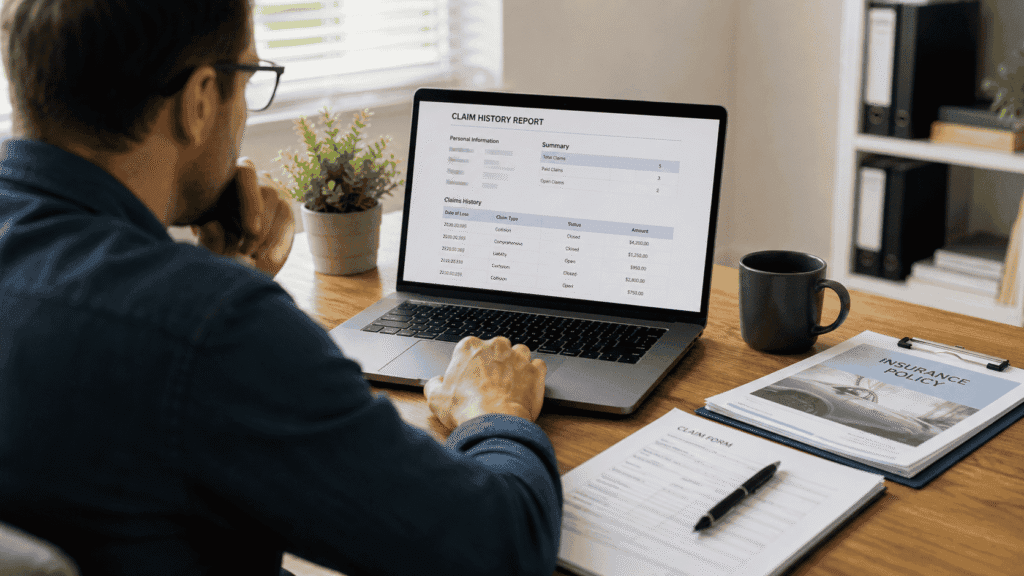
A CLUE report for car insurance is a consumer report that contains certain insurance claim history information. Insurers may use this information when evaluating an application, renewal, or insurance risk, but a CLUE report should not be treated as the only factor that determines your premium.
If you are trying to understand a quote, renewal, or claim-history issue, reviewing your CLUE report can help. It should be compared with your own insurance records, including your car insurance declarations page, claim letters, and policy documents.
Quick Summary
- CLUE stands for Comprehensive Loss Underwriting Exchange.
- A CLUE Auto report may contain up to seven years of personal automobile claim history.
- Insurers may use claim history when evaluating insurance risk and underwriting.
- A CLUE report is different from your motor vehicle or driving record.
- You can request your LexisNexis consumer disclosure and review it for incorrect information.
- If an entry is inaccurate, you can dispute it with supporting documentation.
What Is a CLUE Report for Car Insurance?
LexisNexis Risk Solutions describes C.L.U.E. Auto as a claim-history information exchange used by the auto insurance industry. According to LexisNexis, it can contain up to seven years of personal automobile claim information and may return information about drivers, vehicles, policies, and reported claims.
The report may contain items such as a date of loss, vehicle information, type of claim, insurer information, and other claim-related data reported to the system. The exact information shown depends on what has been reported and successfully matched to the consumer or vehicle. If you are unsure whether simply contacting your insurer could create a claim record, see whether you can ask your insurer a question without opening a claim.
Is a CLUE Report the Same as a Driving Record?
No. A CLUE report and a driving record are different sources of information. A motor vehicle record generally focuses on information maintained through motor vehicle agencies, such as license status and certain violations. A CLUE report focuses on insurance claim history.
Both types of information may be relevant during insurance underwriting, but they serve different purposes. Understanding that distinction can prevent confusion when an insurer refers to prior claims versus driving-history information.
How Can a CLUE Report Affect Car Insurance?
Prior claim history may be one factor an insurer considers when evaluating risk. LexisNexis states that C.L.U.E. Auto provides insurers with prior claims information to support underwriting and rating decisions.
That does not mean every claim produces the same result. A claim does not automatically mean a specific premium increase, cancellation, nonrenewal, or denial. Insurance outcomes can depend on the type and timing of the loss, state rules, the insurer’s approved rating methods, drivers, vehicle, location, coverage choices, and other factors. If you are concerned about the renewal side specifically, see how car insurance nonrenewal after a claim may work.
Our guide to what affects car insurance cost explains why claim history should be viewed as only one part of the larger pricing picture.
Why CLUE Report Accuracy Matters
Incorrect claim information can create problems during underwriting or renewal. For example, a report could contain an entry associated with the wrong person or vehicle, an incorrect loss date, duplicate information, or details that do not match your own claim records.
This is one reason it helps to read your car insurance policy and keep claim documents. Compare names, vehicles, policy periods, dates, and claim information rather than relying on memory alone.
If your premium changed around the same time, avoid assuming the CLUE report was necessarily the only cause. Our article on an insurance rate increase explains other reasons a car insurance price may change.
How to Request Your LexisNexis Consumer Report
LexisNexis provides an official Consumer Disclosure Request portal. The company states that consumers can request access to information LexisNexis Risk Solutions maintains about them in accordance with the Fair Credit Reporting Act.
The request process requires identifying information so LexisNexis can match the correct consumer file. Follow the current instructions on the portal and save any confirmation information you receive.
What Should You Check When the Report Arrives?
- Personal information: check your name and identifying information.
- Vehicles: confirm that listed vehicles belong or belonged to you.
- Loss dates: compare dates with your own claim records.
- Claim information: review the type of loss and other reported details.
- Duplicates: check whether the same event appears more than once.
- Ownership periods: question losses associated with a vehicle before or after you owned it.
Compare questionable entries with repair invoices, claim letters, settlement documents, police reports, or other records you already have. The goal is to identify a specific factual problem rather than simply disagreeing with the existence of accurate claim history.
How to Dispute Incorrect CLUE Information
If you believe information in your LexisNexis file is incorrect, identify the specific entry and provide documentation supporting the correction. LexisNexis provides consumer support for disputes involving information in its files.
Keep the dispute focused. Include the relevant claim date, vehicle, insurer, or reference number and explain what is incorrect. Save copies of your submission and any response you receive.
The Federal Trade Commission explains that the Fair Credit Reporting Act applies when insurers use consumer reports for underwriting. If an insurer takes an adverse action based partly or completely on information in a consumer report, the consumer must receive information about the reporting company and rights to obtain and dispute the report.
What If an Insurer Says a Consumer Report Affected Its Decision?
Read any notice carefully. The FTC explains that an adverse action in insurance can include situations such as insurance being denied, rates being increased, or a policy being terminated when the decision is based partly or completely on information from a consumer report.
The notice should help identify the consumer reporting agency involved. If information appears incorrect, request the report and dispute the specific data rather than asking the reporting company to change an insurer’s independent underwriting decision.
Conclusion
A CLUE report for car insurance can be important because it may contain claim history used during insurance underwriting and rating. It is not a simple switch that guarantees a particular premium or eligibility result, but incorrect information can still matter.
If you need to understand your claim history, request your consumer disclosure, compare it with your own insurance records, and dispute specific inaccuracies with documentation. The goal is not to remove accurate claims. It is to make sure the information associated with you is accurate.
Related
Frequently Asked Questions
Is a CLUE report the same as a driving record?
No. A CLUE report focuses on insurance claim history, while a driving record generally contains motor vehicle and license-related information.
Can I request my own CLUE report?
Yes. LexisNexis provides a consumer disclosure request process for consumers who want to review information maintained about them.
Does every claim on a CLUE report raise car insurance rates?
No. There is no single national rule that every claim produces the same pricing result. Claim type, state rules, insurer rating methods, and other factors can matter.
What should I do if my CLUE report is wrong?
Identify the specific incorrect entry and dispute it through LexisNexis with supporting documentation. Keep copies of the information you submit and any response.