
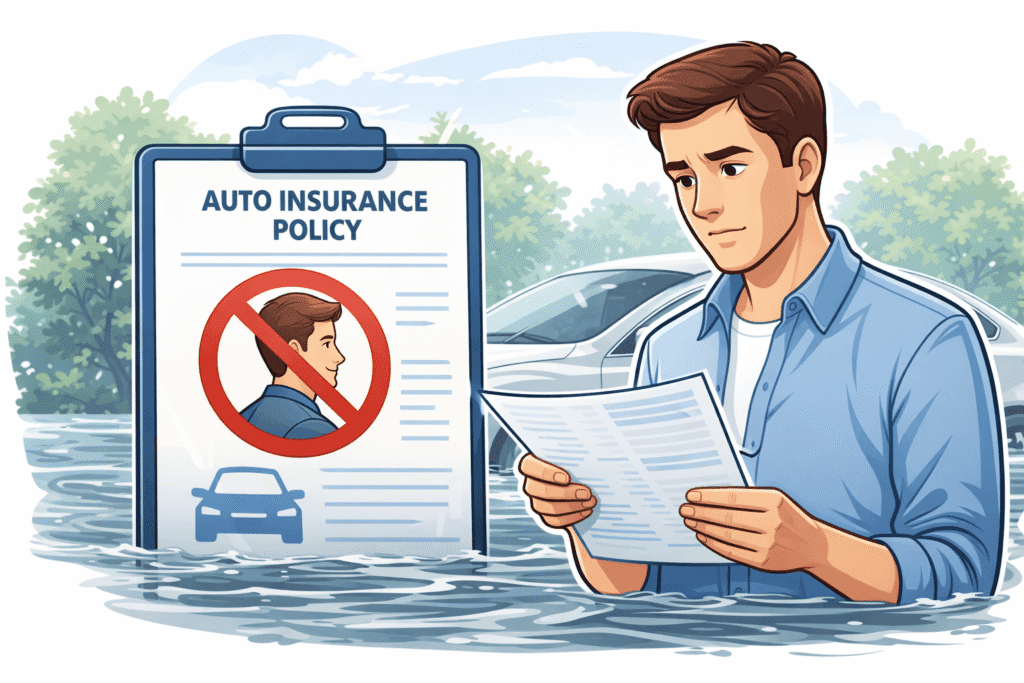
If you see excluded driver car insurance on your policy, it usually means one specific person is not covered to drive the insured vehicle. The restriction is more than a paperwork detail: it can decide whether a claim is paid, limited, or denied after an accident.
An excluded driver is usually named in the policy or in a separate endorsement. State rules and policy forms vary, so the exact wording matters. For the broader driver-role foundation, start with named insured vs. listed driver, then compare that role language with any exclusion attached to your policy.
Quick Summary
- An excluded driver is usually a named person removed from coverage when driving the insured vehicle.
- Permission from the policyholder usually does not override a written exclusion.
- An excluded driver is different from someone who is simply not listed on the policy.
- Before agreeing, confirm who is excluded, which coverages are affected, and whether your household can keep that person from using the car.
What an excluded driver means
An excluded driver is a person the insurance policy specifically removes from coverage. The policy may stay active for the vehicle and other covered drivers, but not for that named individual when they are behind the wheel. The Texas Department of Insurance glossary defines a named driver exclusion as a policy provision or endorsement that excludes drivers by name from coverage.
This is different from simply forgetting to list someone. Review what happens if a household driver is not listed for disclosure and regular-use issues. An excluded driver, by contrast, is usually identified directly, making the restriction intentional and explicit.
How excluded driver status works in real life
Excluded driver status matters most when the excluded person actually uses the car. If a loss happens, the insurer may check whether that person was specifically named, whether they were driving, and what the endorsement says about liability, physical damage, uninsured motorist, medical payments, or other coverages.
That is why the declarations page and endorsement should be read together. Some exclusions appear by endorsement; others may be referenced in policy documents. The California Department of Insurance advises drivers to read their policy before letting others drive because some drivers might be excluded, meaning the policy will not cover accidents while they are driving.
Permission alone is usually not enough. A policy may provide limited permissive-use coverage for occasional borrowers, but an excluded driver has already been singled out as outside the policy’s protection.
Why insurers use excluded driver endorsements
Insurers may use excluded driver endorsements when one household driver creates underwriting concern. Common triggers include a recent suspension, repeated accidents, serious violations, licensing problems, or claims history. In some situations, excluding that person may be presented as an alternative to a higher premium, nonrenewal pressure, or a different underwriting decision.
Rules are state-specific. For example, Florida’s named driver exclusion statute says a private passenger motor vehicle policy may exclude certain coverages for claims tied to an identified individual when the person is named on the declarations page or by endorsement and the named insured consents in writing. That kind of requirement is why verbal assumptions are not enough; the written policy controls.
When excluded driver problems usually happen
Problems usually begin when a household treats the exclusion casually. A short errand, emergency trip, or “just this once” use can still trigger the exclusion if the named person was driving at the time of the loss.
- The excluded driver borrows the car and causes an accident.
- The family forgets the exclusion was added at renewal.
- The policyholder assumes household permission restores coverage.
- The excluded person still has regular access to the keys or vehicle.
For that reason, it helps to review how to read a car insurance policy before agreeing to any endorsement that changes who may drive.
What to check before agreeing to an exclusion
Before signing or accepting an excluded driver endorsement, confirm exactly who is excluded by name, whether the restriction applies to all use of the insured vehicle, which coverages are affected, and whether the excluded person lives in your household or has regular access to the car.
Also ask what happens in an emergency and whether the exclusion is tied to renewal, eligibility, or price. If cost is part of the decision, compare the tradeoff with what affects car insurance cost, because driver history, claims, and household risk can all influence pricing.
Conclusion
Excluded driver car insurance usually means one named person is not covered when driving the insured vehicle. The safest approach is to read the endorsement, compare it with your real household driving pattern, and make sure everyone understands who can and cannot use the car.
If the excluded person may still need access to the vehicle, resolve that before a loss happens. Once there is an accident, the written exclusion may control even when the trip seemed harmless.
Related
- Named Insured vs Listed Driver: What’s the Difference?
- Car Insurance Declarations Page (Dec Page)
- What Affects Car Insurance Cost? 11 Key Factors
FAQ
What does excluded driver mean on an insurance policy?
It usually means a named person is not covered when driving the insured vehicle.
Can an excluded driver still be covered if I gave permission?
Usually, permission alone does not override an exclusion. The policy wording still controls.
Why would an insurer ask for an excluded driver?
Often because of underwriting concerns tied to that driver’s record, claims, licensing status, or household risk.
Does excluding a driver affect premium?
It can. Driver status and household risk may influence pricing and renewal decisions, although the exact result varies by policy and insurer.
Is an excluded driver the same as a driver who is just not listed?
No. An excluded driver is usually identified directly in the policy as not covered, which is different from simple non-listing.