A plain language insurance policy is generally written to make the policy easier to read and understand. It may use clearer wording, shorter sentences, better headings, and simpler organization, but it does not automatically change your coverage, exclusions, limits, deductibles, or how a claim is decided.
For another official reference, NAIC consumer materials encourage drivers to understand auto policy terms before relying on coverage.
For official context, California DOI consumer guidance emphasizes reviewing the actual policy coverage and exclusions.
That matters because many drivers assume a document that feels easier to read must also be easier to use after a claim. Sometimes it is easier to understand, but the same limits, exclusions, deductibles, and conditions can still apply. If you want the broader foundation first, start with how to read a car insurance policy.
This guide explains what a plain language insurance policy means, what it can change, what it does not change, and what you should still review before relying on the wording alone.
Quick Summary
- Plain language usually means the policy is written in a clearer, easier-to-read way.
- It does not automatically mean more coverage or fewer exclusions.
- Clearer wording can make it easier to find definitions, duties, limits, and restrictions.
- You still need to review the declarations page, endorsements, exclusions, and policy limits.
- A readable policy can reduce confusion, but it does not replace careful review.
What Does a Plain Language Insurance Policy Mean?
A plain language insurance policy is designed to make insurance wording easier for ordinary readers to follow. It may use shorter sentences, clearer headings, more direct explanations, and better organization than traditional or highly technical policy forms.
That may include common words where possible, a definitions section, labeled sections, and a layout that helps readers move through the contract more easily. But the most important point is this: plain language is about clarity, not about automatically changing the underlying effect of the policy.
As one state example, the New York Department of Financial Services uses insurance policy readability standards that consider reading ease, visible section titles, and the avoidance of unnecessarily long or obscure wording. These standards focus on how a policy is written and presented, not on whether it provides broader coverage. See the DFS insurance policy readability certification.
A plain language policy does not automatically mean more coverage, fewer restrictions, faster payment, or a better claim result. In most cases, it means the same kinds of rules are explained in a more readable way.
How it can help in real life
A clearer document can help drivers find the main answers faster. Imagine someone opens the policy after a parking lot accident, a cracked windshield, or a hail claim. A plain language format may make it easier to find what the policy says about covered damage, the deductible, and what the driver must do after a loss.
That can help in practical ways such as:
- finding the section that explains what each coverage does
- spotting exclusions before assuming something is covered
- understanding deadlines or duties after a loss
- locating deductible and limit language more quickly
- seeing whether endorsements changed the base policy
For example, a driver may read a simple explanation of comprehensive coverage and feel more confident, but the real answer still depends on the actual declarations page, deductibles, and exclusions attached to the policy. That is why a readable document helps, but it does not remove the need to check details.
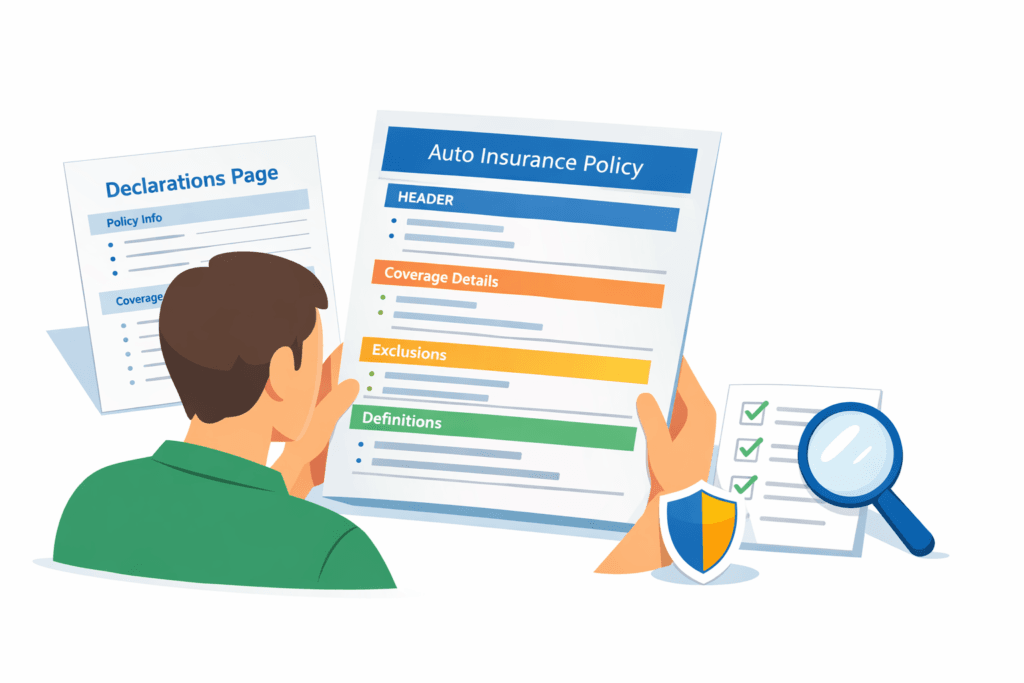
This is also where the declarations page matters. Even if the policy booklet uses plain language, the declarations page usually shows the actual coverages, limits, deductibles, listed vehicles, drivers, and policy dates that apply to your policy.
How to tell whether plain language actually helps
A policy that uses plain language should feel easier to follow, but there are a few signs that show whether the clarity is actually helping. One sign is whether you can quickly find the definitions, major coverages, exclusions, and policy conditions without jumping back and forth across the document.
Another sign is whether the document separates general explanations from the details that apply specifically to your policy. A readable policy should still make it easy to connect the main wording to your declarations page, endorsements, deductibles, limits, and listed drivers. If the layout feels cleaner but you still cannot tell what applies to your own car and policy term, the wording may be simpler without being much more useful.
In real life, the most helpful policy is not just the one with easier sentences. It is the one that lets you answer practical questions without guessing, such as: What coverages do I actually have? What is my deductible? Which exclusions matter most? Did an endorsement change anything important?
What to review before relying on it
If your policy says it uses plain language, that is helpful, but it should not be the last step. A short checklist works better:
- Start with the declarations page to confirm your actual coverages and deductibles.
- Read the definitions section before assuming a word means the everyday thing you expect.
- Review exclusions and conditions, even if the wording feels simple.
- Check car insurance endorsements to see whether the original policy was changed.
- Look at limits, deductibles, and duties after a loss in the sections that apply to your coverage.
A practical next step is to make a one-page coverage snapshot for yourself. Write down your main coverages, deductibles, major limits, and any exclusions or endorsements you already know matter. That makes the policy easier to use later, especially when something unexpected happens.
Conclusion
A plain language insurance policy is usually easier to read, but it is not automatically broader, friendlier, or more generous. Its main benefit is helping drivers understand the document faster and with less confusion.
The safest way to use that clarity is simple: treat it as a tool, not a guarantee. Read the declarations page, check the limits and exclusions, and confirm whether endorsements changed anything important. Clear wording helps, but the actual policy details still control.
Related
- How to Read a Car Insurance Policy: Sections Made Simple
- What Is a Car Insurance Declarations Page?
- Car Insurance Policy Limits: What They Mean and How They Work
FAQ
Does plain language mean the policy covers more?
No. It usually means the wording is clearer, not that the coverage is broader.
Can a plain language policy still deny a claim?
Yes. Claim outcomes still depend on the facts of the loss and the actual policy terms, including exclusions, limits, deductibles, and conditions.
Should I still read the declarations page?
Yes. The declarations page usually shows the actual coverages, limits, deductibles, vehicles, drivers, and dates that apply to your policy.