
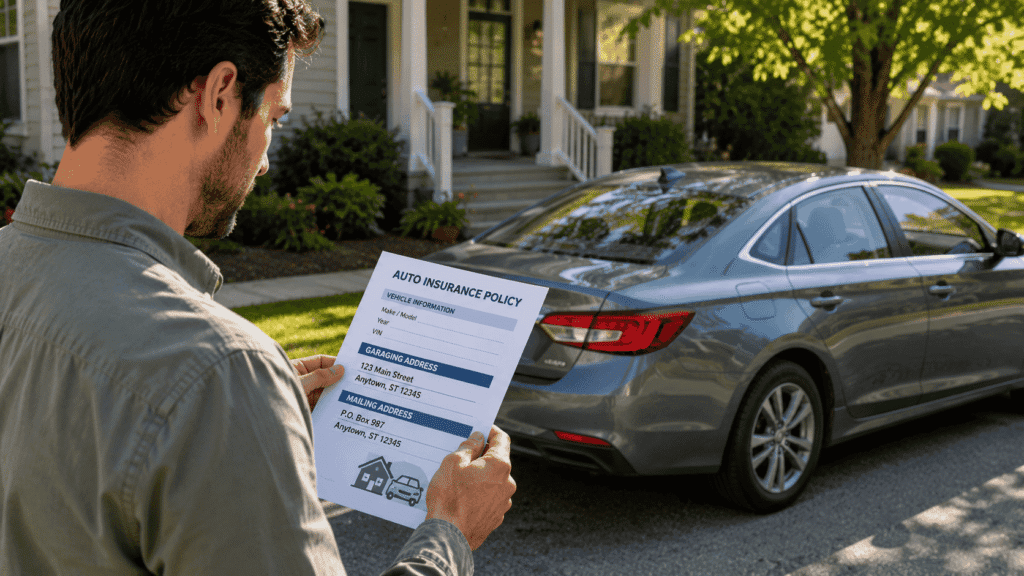
A garaging address on car insurance is the location where the insured vehicle is primarily kept when it is not being used. For most drivers, that is their home address, but the garaging address and mailing address do not always have to be the same.
“Garaging” does not mean the car must sit inside a physical garage. The key is where the vehicle is normally kept. Because location can affect underwriting and rating, keep that address accurate and see what affects car insurance cost for the broader pricing picture.
Quick Summary
- The garaging address is the location where the vehicle is primarily kept when it is not being driven.
- It usually matches your home address, but legitimate situations can make the addresses different.
- “Garaging” does not mean the vehicle must be parked inside a physical garage.
- Location can affect how an insurer evaluates and prices auto insurance risk.
- A mailing address is mainly for correspondence and is not necessarily the same as the vehicle’s garaging location.
- If the vehicle’s primary location changes, tell the insurer and ask how the policy information should be updated.
What Is a Garaging Address on Car Insurance?
Think of the garaging address as the place where the car normally “lives.” The National Association of Insurance Commissioners lists where you live and garage your car as a factor that can affect auto insurance premiums.
Location is only one rating factor. Driving record, claims history, vehicle type, mileage, coverage choices, deductibles, and other permitted factors may also affect price.
Is a garaging address the same as a mailing address?
Not necessarily. The two addresses answer different questions.
- Garaging address: Where is this vehicle primarily kept?
- Mailing address: Where should policy correspondence, notices, or other mail be sent?
For many households, both addresses are the same. If they are not, give the insurer accurate information and check your car insurance declarations page for the policy-specific details associated with the vehicle.
Why does the garaging address matter?
Geography can matter because claim patterns, traffic, theft exposure, weather, and repair conditions vary by location. The California Department of Insurance includes the ZIP code of a vehicle’s garaging address among vehicle-related data collected for private passenger auto insurance.
A move does not automatically make insurance more expensive or cheaper. Location interacts with other rating factors and applicable state rules.
Can your garaging address be different from where you live?
It can be. The important point is to describe where the vehicle is actually kept rather than choosing an address for convenience. Common situations include:
- A student takes a vehicle to college while keeping a permanent residence elsewhere.
- A driver temporarily relocates for work.
- A household splits time between two homes.
- Different vehicles in a household are regularly kept at different locations.
- A vehicle is normally stored at a location different from the owner’s mailing address.
In an unusual situation, explain where the vehicle is normally kept and ask how the policy should show that location.
What happens if the garaging address is wrong?
An outdated address and deliberately false information are not the same. The New Jersey Department of Banking and Insurance has published enforcement actions involving false or misleading statements about where insured vehicles were garaged.
Consequences depend on the facts, state rules, policy, and insurer. An incorrect address does not automatically mean every claim will be denied, but it can become important if the information affected underwriting or pricing. See whether a wrong garaging address can affect a car insurance claim. If you discover inaccurate information, correct it and ask whether any other policy details need to change.
When should you update the garaging address?
Review the garaging address whenever the vehicle’s normal location changes in a meaningful way.
- You move to a new home.
- The vehicle moves with a student to college.
- You begin keeping the car at a second residence for an extended period.
- A household vehicle starts being kept primarily at another person’s residence.
- The car moves to another state for more than a short trip or vacation.
A move across state lines can affect more than price because insurance requirements and policy rules differ. Contact the insurer instead of assuming an address change is the only update needed. If you recently moved, review how to change your car insurance address after moving and which policy details should be updated.
How to check the address on your policy
Start with the policy documents. Do not assume the mailing address shown on a document is automatically the vehicle’s garaging address.
- Review the declarations page for the insured vehicle and policy address information.
- Confirm which address the insurer has associated with the vehicle.
- Check that listed drivers, vehicle use, and estimated mileage are also current.
- If you recently moved, ask whether the change affects your premium or policy requirements.
- If the vehicle regularly stays at more than one location, explain the situation rather than choosing an address based on price.
For a broader review, see how to read a car insurance policy.
Simple examples
Example 1: You live in an apartment and park outside every night. The apartment address can still be the garaging location; a physical garage is not required.
Example 2: You receive mail at a P.O. box but keep the vehicle at home. The mailing and garaging addresses serve different purposes.
Example 3: A family vehicle goes with a student to college for an extended period. Tell the insurer where the car will actually be kept and ask how the policy should reflect it.
Conclusion
A garaging address on car insurance is where the insured vehicle is primarily kept. It usually matches the driver’s home but can legitimately differ from a mailing address or permanent residence.
Accuracy matters because location can affect underwriting and pricing. If the vehicle’s normal location changes, tell the insurer and review the related policy details instead of guessing which address to use.
Related
- What Affects Car Insurance Cost? 11 Key Factors
- What Is a Car Insurance Declarations Page?
- How to Read a Car Insurance Policy: Sections Made Simple
FAQ
Does garaging address mean I need to park in a garage?
No. Garaging address refers to the location where the vehicle is primarily kept. The car may be parked in a driveway, parking lot, on the street, or in a physical garage.
Can my mailing address and garaging address be different?
Yes, they can be different when the circumstances are legitimate. The mailing address is used for correspondence, while the garaging address identifies where the vehicle is primarily kept.
Does changing my garaging address change my insurance rate?
It can. Location is one factor insurers may use in rating, but the final premium depends on multiple factors and applicable state rules. A move can increase, decrease, or have little effect on the total premium.
What address should a college student use for car insurance?
It depends on where the vehicle is actually kept and how the insurer handles students living away from home. Tell the insurer where the car will normally be located during the school year and ask how that should be reflected on the policy.
Should I update my insurer if I move temporarily?
If the vehicle’s normal location is changing for an extended period, tell the insurer. The company can explain whether the garaging address or other policy information needs to change for that situation.