
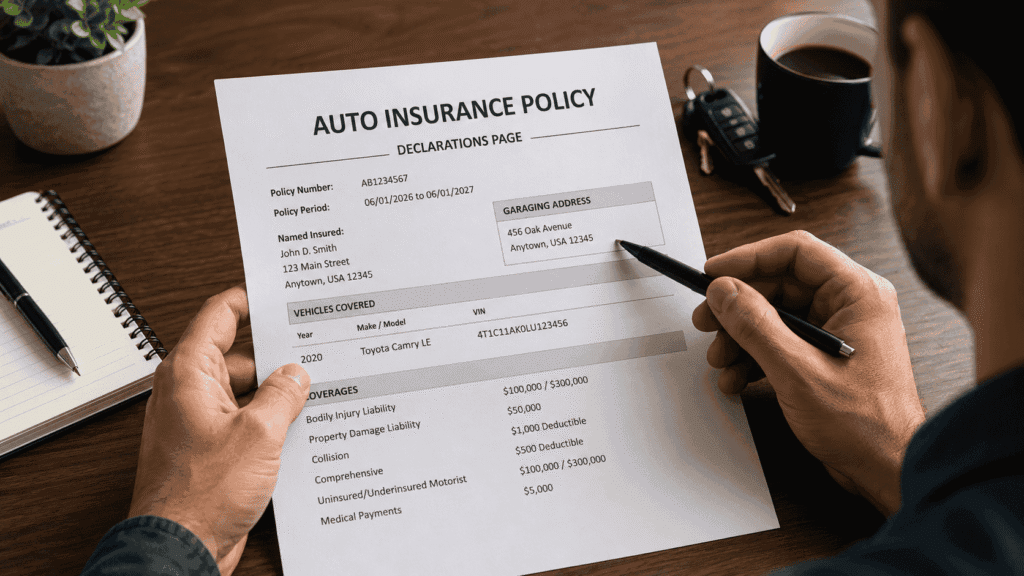
A wrong garaging address on your car insurance policy can create problems, but it does not automatically mean every claim will be denied. What matters is why the address is wrong, whether the difference affected the insurer’s risk or premium decision, and what your policy and state rules allow.
The garaging address generally describes where your vehicle is primarily kept. It can affect underwriting and pricing, which is why it is important to understand what a garaging address means on car insurance and keep it accurate. For the broader claim process, see our car insurance claims guide.
Quick Summary
- A wrong garaging address does not automatically cause a claim denial.
- An insurer may investigate whether the error was accidental, outdated, or intentional.
- The issue is more serious when the correct address would have affected underwriting or premium.
- Policy language and state law can affect what the insurer is allowed to do.
- If you notice an incorrect address, correct it before a claim whenever possible.
Why Does the Garaging Address Matter?
Insurers use many factors to evaluate auto insurance risk. Where a vehicle is primarily kept can be one of them because theft, traffic, accident frequency, repair costs, and other conditions can vary by location.
The National Association of Insurance Commissioners explains that an auto policy’s declarations or information page can include where the vehicle is garaged and recommends checking that policy information is correct.
If you are unsure what address is listed, start with your car insurance declarations page.
Can a Wrong Garaging Address Lead to a Claim Denial?
It can in some situations, but there is no universal rule that an incorrect address automatically voids coverage. During a claim investigation, an insurer may ask why the vehicle was regularly kept somewhere different from the location shown on the policy.
- Was the address outdated or entered incorrectly?
- Did the policyholder know the vehicle was primarily kept elsewhere?
- Would the correct location have changed the premium or underwriting decision?
- How long had the vehicle been kept at the other location?
- What does the policy require the insured to report?
- What does applicable state law allow?
Those questions matter because disputes involving inaccurate application or policy information often turn on whether the information was material, not simply whether a mistake existed.
What Is Material Misrepresentation?
In general terms, material misrepresentation refers to incorrect information important enough that it could affect an insurer’s decision to issue a policy, price the risk, or accept the coverage as written. The exact legal standard varies by state.
For example, the New York State Department of Financial Services has discussed principal garaging location as information an auto insurer may require an applicant to certify as accurate. That is a New York example, not a nationwide rule.
Accidental Mistake vs. Intentionally Using Another Address
You moved and forgot to update the policy
An outdated address may still need to be corrected and could affect premium or underwriting. If you recently moved, see when to change your car insurance address after moving and which policy details to review. Whether an outdated address affects a claim depends on the facts, policy language, and applicable state rules.
The vehicle is temporarily kept somewhere else
A temporary arrangement can be different from permanently garaging a vehicle elsewhere. Students, extended travel, or temporary housing can create questions about which location should be reported. Ask the insurer rather than guessing.
Another address was used to get a lower premium
Knowingly listing a location where the vehicle is not actually kept can be much more serious if the address changes the risk classification or premium. An insurer may investigate whether the information was materially inaccurate.
The California Department of Insurance, for example, identifies fraud or material misrepresentation among circumstances that can support cancellation or nonrenewal under California rules. Other states may use different standards.
What Happens During a Claim Investigation?
An insurer may verify information about the accident, drivers, vehicle, and policy. If the garaging address appears inconsistent, the company may ask for an explanation or documents showing where the vehicle was primarily kept.
A discrepancy does not mean an insurer can deny any claim for any reason. Claim handling, cancellation, rescission, and misrepresentation rules differ by state. If a claim is denied, review the written explanation and compare it with the policy. Our guide to why car insurance claims may be denied explains the broader issue.
What Should You Do If the Address Is Wrong?
- Review the declarations page. Check both mailing and vehicle-related address information.
- Identify where the vehicle is actually kept most of the time.
- Contact the insurer or agent. Explain the actual situation rather than choosing the address that gives the lowest price.
- Ask whether the correction changes the premium or underwriting.
- Keep written confirmation. Save updated policy documents for your records.
What If the Insurer Denies the Claim?
Start with the insurer’s written explanation. Identify the policy provision or application information it says is relevant and compare that reasoning with the facts.
If the disagreement continues, the NAIC directory of state insurance departments can help you locate your regulator. You can also review how to dispute an insurance claim decision.
Conclusion
A wrong garaging address can become a serious insurance issue when the correct location would have affected how the insurer evaluated or priced the risk. But an incorrect address does not automatically mean every claim will be denied.
The outcome can depend on whether the error was accidental or intentional, whether it was material, what the policy says, and what state law allows. The safest approach is to review your policy information and correct an inaccurate garaging address before a claim occurs.
Related
- What Is the Garaging Address on Car Insurance?
- What Is a Car Insurance Declarations Page?
- How to Dispute an Insurance Claim Decision
FAQ
Can my insurer deny a claim because I moved and forgot to change my address?
Possibly, but not automatically. The insurer may consider how long the address was wrong, whether the correct location affected underwriting or pricing, the policy language, and state law.
Is my mailing address the same as my garaging address?
Not necessarily. Your mailing address is where you receive correspondence. The garaging address generally describes where the insured vehicle is primarily kept.
Can changing my garaging address change my premium?
It may. Location can be one of the factors insurers use when evaluating risk and calculating premiums, subject to state rules.
Should I correct the address even if my premium increases?
Your policy information should accurately reflect the risk being insured. If the listed garaging location is wrong, contact your insurer or agent and explain the actual situation.