
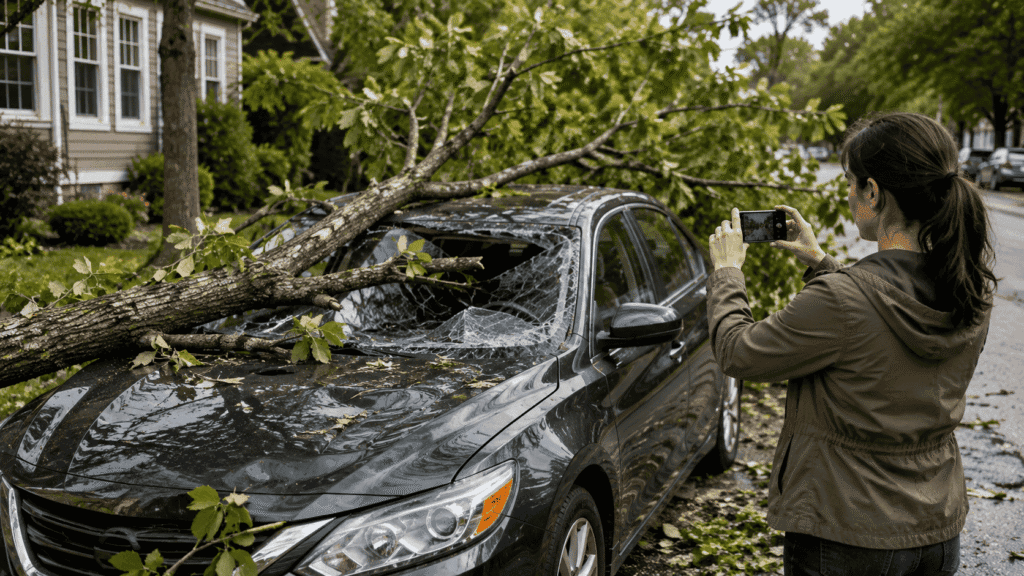
Does car insurance cover a fallen tree or branch on your car? Often, yes, if you have comprehensive coverage. A tree or branch falling onto a parked vehicle is generally treated as a non-collision loss, while hitting a fallen tree in the road may involve collision coverage instead.
The cause matters. A tree falling onto a parked vehicle is different from driving into a tree or a fallen trunk in the road, and those situations can involve different coverages and deductibles. For the broader picture, see what car insurance covers.
Quick Summary
- A tree or branch falling onto your vehicle is commonly handled under comprehensive coverage.
- Liability-only insurance generally does not pay to repair your own car after a tree falls on it.
- If you drive into a standing tree or a fallen tree in the road, collision coverage may be the relevant coverage instead.
- A comprehensive deductible may reduce the insurance payment.
- A neighbor owning the tree does not automatically mean the neighbor or the neighbor’s insurer pays for your car.
- Take photos before the tree or branches are moved when it is safe to do so.
When Does Car Insurance Cover a Fallen Tree or Branch?
When a tree, limb, or branch falls onto a vehicle, comprehensive coverage is usually the part of the policy that matters. The California Department of Insurance explains that vehicles damaged by fallen trees are generally covered under the comprehensive or other than collision portion of an auto policy.
The California Department of Insurance also identifies fallen-tree damage as generally covered by comprehensive, while the NAIC includes falling objects among losses comprehensive may cover.
Fallen tree vs. hitting a tree: which coverage applies?
The direction of the impact can change which coverage you check first:
- The tree hits your car: A branch breaks during a storm and lands on your parked vehicle. Comprehensive coverage is generally the starting point.
- Your car hits the tree: You lose control and strike a standing tree. Collision coverage is generally the starting point.
- Your car hits a tree already lying in the road: Because the vehicle collides with an object, collision coverage may apply rather than comprehensive.
The NAIC describes collision coverage as protection when your vehicle collides with an object such as a tree. For more examples, see collision vs. comprehensive insurance.
What if the tree belongs to your neighbor?
A tree coming from another property does not automatically mean the neighbor must pay. A storm can bring down a healthy tree without the owner having done anything wrong.
Texas DOI explains that a neighbor’s homeowners insurance might apply if the neighbor was at fault. Otherwise, your own comprehensive auto coverage may be the relevant path. If there were known problems with the tree before it fell, document the facts and let the insurers evaluate responsibility.
Does homeowners insurance cover a tree falling on your car?
For damage to the vehicle itself, comprehensive auto coverage is the coverage to check first. The Washington State Office of the Insurance Commissioner explains that comprehensive coverage protects a car from non-collision damage and specifically gives a tree falling on the vehicle as an example.
Do you pay a deductible for tree damage?
Comprehensive coverage usually has a deductible. For example, if a branch causes $2,400 in covered damage and your comprehensive deductible is $500, the deductible is applied before the insurer calculates its payment.
If repairs are below or close to the deductible, the claim may produce little or no payment. Review how a car insurance deductible works before comparing the estimate with your coverage.
What if the tree damage totals the car?
A large tree can damage the roof, pillars, glass, body structure, electronics, and other expensive components at once. If the damage is severe enough, the insurer may evaluate the vehicle as a total loss instead of approving normal repairs.
The decision is not based only on appearance. Vehicle value, repair cost, salvage considerations, insurer procedures, and applicable state rules can all affect the evaluation.
What should you do after a tree falls on your car?
Safety comes first. Stay away from power lines, unstable trees, hanging limbs, or other hazards. If the area is safe, document the scene before cleanup begins:
- Photograph the entire scene before the tree or branch is moved.
- Take closer photos of the roof, glass, body panels, wheels, and visible interior damage.
- Record where the tree came from if that is clear and safe to document.
- Check your declarations page for comprehensive coverage and the applicable deductible.
- Contact the insurer and ask what it needs before the tree is removed or repairs begin.
- Keep receipts for towing, temporary protection, cleanup, or other claim-related expenses and ask which ones may be covered.
Texas DOI advises consumers to photograph the damage before moving the tree or making repairs and to save receipts. For the broader sequence after reporting damage, see the car insurance claims process.
Simple examples
Example 1: A branch falls onto your parked car during a windstorm. Comprehensive coverage is generally the first coverage to check.
Example 2: You drive into a tree that is already lying across the road. Because the vehicle hit an object, collision coverage may be relevant instead.
Example 3: A neighbor’s tree falls onto your parked car. Ownership alone does not determine payment; your comprehensive coverage may apply while responsibility is evaluated separately.
Conclusion
Car insurance can cover a fallen tree or branch when comprehensive coverage applies under the policy. A tree falling onto the car is generally a comprehensive-type loss, while driving into a tree or fallen object may involve collision coverage.
After the event, focus on safety, photograph the scene before cleanup when possible, confirm the applicable coverage and deductible, and follow the insurer’s claim instructions.
Related
- What Does Car Insurance Cover?
- Collision vs Comprehensive Insurance: 9 Key Differences
- What Is a Car Insurance Deductible?
FAQ
Does liability insurance cover a tree falling on my car?
Liability-only insurance generally does not pay for damage to your own car from a falling tree. Comprehensive coverage is usually the coverage that applies to this type of loss.
Does comprehensive insurance cover a tree branch falling on a car?
It commonly can. Comprehensive coverage generally includes non-collision losses such as severe weather and falling objects, subject to the policy terms and deductible.
What if I hit a fallen tree in the road?
That may be treated differently because the vehicle collided with an object. Collision coverage may apply rather than comprehensive, depending on the circumstances and policy.
Does my neighbor have to pay if their tree falls on my car?
Not automatically. The answer can depend on why the tree fell and whether responsibility is established. Your own comprehensive auto coverage may still be the coverage used for the vehicle damage.
Should I move the branch before calling insurance?
Safety comes first. If the scene is safe, photograph the damage before the tree or branch is moved. If there are unstable limbs, power lines, or other hazards, stay away and use appropriate emergency or professional help.