
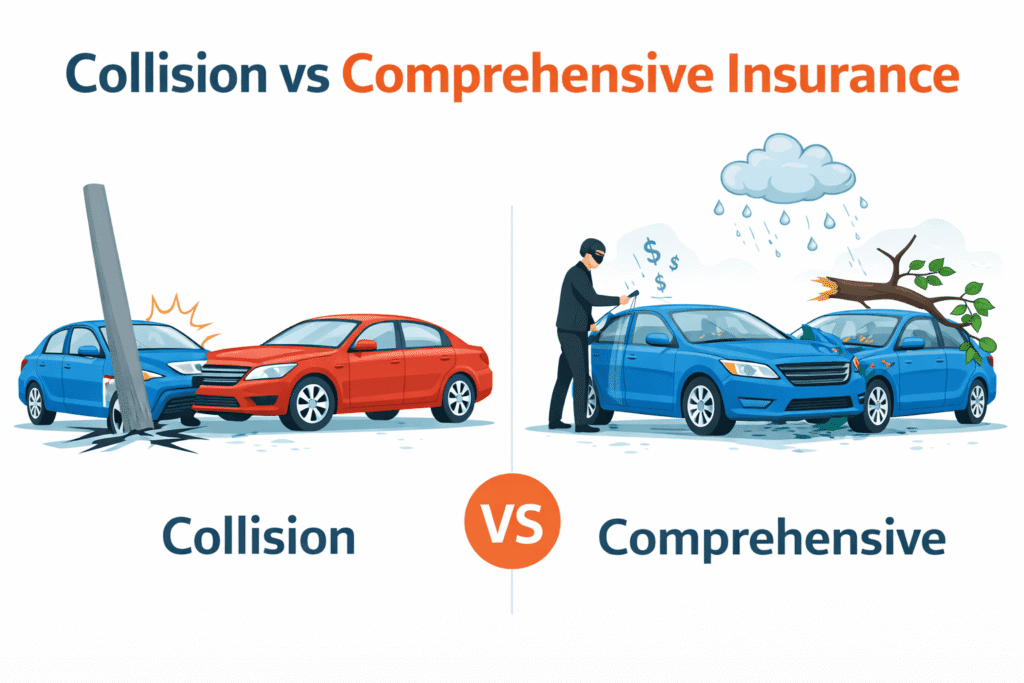
Collision vs comprehensive insurance mainly comes down to what caused the damage to your vehicle. Collision generally covers damage from crashes with another vehicle or object, while comprehensive generally covers non-collision events such as theft, vandalism, hail, fire, falling objects, and animal impacts.
Both coverages protect your own vehicle rather than damage you cause to others. For the broader picture, see what car insurance covers and our guide to car insurance claims.
Quick Summary
- Collision generally covers crash damage involving another vehicle or object.
- Comprehensive generally covers non-collision losses such as theft, vandalism, weather, fire, falling objects, and animal impacts.
- Both usually protect your own vehicle and commonly include a deductible.
- Neither replaces liability coverage for injuries or property damage you cause to others.
- Lenders or leasing companies may require both coverages.
Collision vs Comprehensive Insurance: What’s the Difference?
| Question | Collision | Comprehensive |
|---|---|---|
| Main purpose | Crash damage | Non-collision damage |
| Another vehicle | Generally yes | Generally no |
| Object or guardrail | Generally yes | Generally no |
| Theft or vandalism | No | Generally yes |
| Hail or falling object | No | Generally yes |
| Animal impact | Usually no | Generally yes |
| Deductible | Common | Common |
What Does Collision Insurance Cover?
Collision coverage generally helps pay to repair or replace your vehicle after crash-type damage. The National Association of Insurance Commissioners describes collision as coverage for damage caused when a vehicle hits another vehicle or object. For a deeper explanation, see what collision car insurance is and what it covers.
- Hitting another vehicle
- Hitting a pole, wall, guardrail, or similar object
- Single-vehicle crashes
- Damage when another vehicle hits your parked car and you use your own collision coverage
- Certain road-impact losses, such as pothole damage, depending on the facts and policy
For a specific road-hazard example, see how car insurance may cover pothole damage.
What Does Comprehensive Insurance Cover?
Comprehensive coverage generally applies to damage that is not caused by a collision with another vehicle or object. For a full explanation, see what comprehensive car insurance is and what it covers. Common examples include:
- Theft or attempted theft
- Vandalism
- Fire
- Hail, wind, or certain storm damage
- Falling objects, such as tree branches that damage your car
- Animal impacts, including situations such as hitting a deer
- Certain glass losses
For more detail on these losses, see car insurance coverage for theft and vandalism and windshield replacement coverage.
How Do Deductibles Work?
Collision and comprehensive commonly have separate deductibles. The deductible is the amount you are responsible for before the insurer pays the remaining covered loss, subject to the policy.
Your collision deductible does not have to be the same as your comprehensive deductible. Check the declarations page rather than assuming they match. For the basic concept, see what a car insurance deductible is.
Does Fault Matter?
Collision coverage can apply to covered damage to your vehicle even when fault is still being investigated. If you use your own collision coverage, your deductible may apply while your insurer handles the claim.
Comprehensive claims are usually less focused on driver fault because theft, hail, fire, falling objects, and animal impacts generally are not liability disputes between two drivers.
Can Either Coverage Lead to a Total Loss?
Yes. A vehicle can become a total loss after either a collision or comprehensive event when the damage, vehicle value, salvage value, policy terms, and applicable state rules support that result.
A total-loss settlement is generally based on the vehicle’s covered value rather than the amount you still owe on a loan. If you finance the vehicle, GAP insurance may be relevant when the loan balance exceeds the applicable settlement.
What Do Collision and Comprehensive Not Cover?
Neither coverage is intended to replace liability insurance. Liability coverage addresses covered injuries or property damage you cause to others, while collision and comprehensive generally focus on damage to your own vehicle.
They also generally do not cover routine maintenance, normal wear and tear, or ordinary mechanical breakdown. Exact exclusions and conditions depend on the policy.
Are Collision and Comprehensive Required?
Collision and comprehensive are generally optional from the standpoint of state financial-responsibility laws, but a lender or leasing company may require both while it has a financial interest in the vehicle. If the car is financed, see how insurance on a financed car can include lender requirements for physical-damage coverage, deductibles, and lienholder information.
The California Department of Insurance, for example, describes collision and comprehensive as separate optional physical-damage coverages while noting that lenders may require them. Requirements and policy terminology can vary by state and contract.
Do You Need Both Collision and Comprehensive?
You may need both collision and comprehensive if a lender or lease requires them. If the vehicle is paid off, the decision usually depends on the car’s value, the cost of each coverage, the deductibles, and whether you could afford to repair or replace the vehicle after a major loss.
- Could you afford to repair or replace the vehicle after a major crash?
- Could you absorb a theft, hail, fire, or vandalism loss?
- Does a lender or lease require both coverages?
- What deductibles could you realistically pay?
- How much is the vehicle worth compared with the cost of the coverage?
Drivers sometimes refer to liability plus collision and comprehensive as full coverage car insurance, but “full coverage” is not a standardized policy term.
Simple Examples
Example 1: You slide into a guardrail and damage the front of your car. That is generally a collision-type loss.
Example 2: A hailstorm dents the roof and hood. That is generally a comprehensive loss.
Example 3: You hit a deer at night. Animal impacts are generally handled under comprehensive rather than collision.
Conclusion
The main difference in collision vs comprehensive insurance is the cause of the damage. Collision generally covers crash-related damage to your own vehicle, while comprehensive generally covers non-collision events such as theft, vandalism, hail, fire, falling objects, and animal impacts.
Both commonly have deductibles and may be required by a lender even when state law does not require them. Check your declarations page to confirm whether your policy includes collision, comprehensive, both, or neither.
Related
- What Does Car Insurance Cover?
- What Is a Deductible in Car Insurance?
- Higher Deductible, Lower Premium: 9 Clear Facts
FAQ
Is comprehensive coverage the same as full coverage?
No. “Full coverage” is not an official policy term. People often use it for a policy that includes liability, collision, and comprehensive, but limits, deductibles, and exclusions still apply.
If someone hits my parked car, is that collision or comprehensive?
Damage caused by another vehicle is generally collision-type damage. Comprehensive generally applies to non-collision events such as theft, vandalism, weather, or falling objects.
Does comprehensive cover a cracked windshield?
It may, depending on how the damage happened, the policy wording, the deductible, and whether separate glass coverage applies.
Can you have comprehensive without collision?
Sometimes. They are separate coverages, although a lender or leasing company may require both.
Do older cars need collision and comprehensive?
It depends on the vehicle’s value, coverage cost, financing requirements, deductible, and whether you could afford to repair or replace the car yourself.