
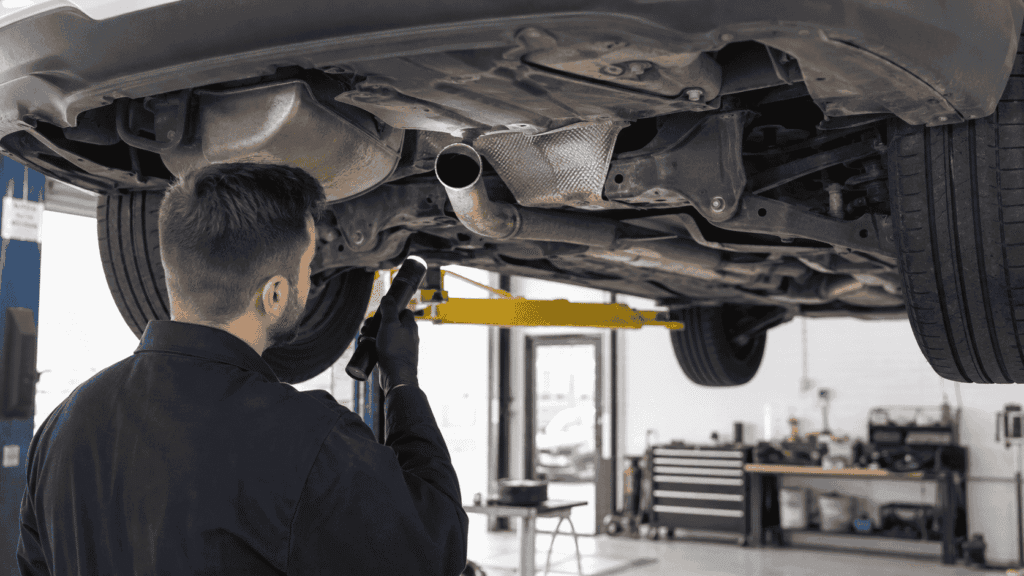
Catalytic converter theft can be easy to recognize: you start the car and suddenly hear a much louder exhaust sound than usual. Because the converter sits underneath the vehicle, thieves can remove it quickly and may damage nearby exhaust parts in the process.
In many cases, car insurance can cover catalytic converter theft, but the relevant protection is usually comprehensive coverage. Liability coverage generally does not pay for stolen parts from your own vehicle.
Whether a particular claim is paid still depends on your policy, deductible, documentation, and the facts of the loss. Here is what to check before deciding how to proceed.
Quick Summary
- Catalytic converter theft is usually handled under comprehensive coverage.
- A liability-only policy generally does not pay to replace stolen parts from your own car.
- Your comprehensive deductible normally applies to a covered theft claim.
- Damage caused while the converter was removed may be included in the same loss.
- Photos, a police report, and a detailed repair estimate can help document the claim.
Which Coverage Usually Applies?
Auto insurance contains separate coverages for different types of losses. Liability coverage pays for injury or property damage you cause to others. Collision generally applies when your vehicle hits another vehicle or object. Comprehensive generally applies to theft, vandalism, fire, and other covered non-collision losses.
The California Department of Insurance explains that comprehensive coverage includes losses such as theft and vandalism. That is why theft of a catalytic converter is usually considered a comprehensive issue rather than a collision claim.
Our guide to what car insurance covers provides a broader explanation of how the major parts of an auto policy work together.
What May Be Included in the Claim?
The stolen catalytic converter
The converter itself is the main part of the loss. Replacement cost varies by vehicle, emissions system, available parts, and repair requirements. Some vehicles also use more than one converter.
Damage caused during the theft
A thief may cut more than the converter. Oxygen sensors, wiring, exhaust piping, heat shields, or mounting points can also be damaged. When that damage is part of the same covered theft event, it may be handled as part of the same comprehensive claim.
Ask the repair shop for a detailed written estimate that identifies both the missing part and any related damage. That gives the adjuster a clearer picture of the full loss.
When Might Coverage Not Apply?
The most common issue is not carrying comprehensive coverage. Drivers with liability-only insurance generally do not have protection for theft of parts from their own vehicle.
The deductible can also affect whether the claim produces a meaningful payment. If the repair cost is close to the deductible, only a small amount may remain for the insurer to pay. If the problem is mechanical failure or normal deterioration rather than theft, comprehensive coverage would generally not be the relevant coverage.
Claim documentation matters as well. A delayed report or unclear evidence can make it harder to establish what happened. Our guide to why a car insurance claim may be denied explains other reasons a claim can become disputed.
How Does the Deductible Affect the Claim?
The deductible is the portion of a covered loss that remains your responsibility. For example, if a covered repair costs $2,400 and your comprehensive deductible is $500, the insurer would generally calculate its payment after subtracting that deductible. The example is only illustrative; actual claim payments depend on the policy and approved repair amount.
If the repair estimate is only slightly above the deductible, compare the potential insurance payment with the total repair cost before deciding whether to file. Our article on how a car insurance deductible works explains this calculation in more detail.
What to Do After Catalytic Converter Theft
- Document the vehicle. Take photos of the underside, the cut exhaust area, and any visible related damage.
- Report the theft to police. Keep the report number or other documentation provided.
- Get a detailed repair estimate. Ask the shop to identify every component damaged during the theft.
- Review your policy. Confirm that comprehensive coverage is listed for the vehicle and check the deductible.
- Report the loss to your insurer. Provide the information and documents requested for the claim.
If you need to understand the broader process, our guide to how car insurance claims work explains what generally happens after a loss is reported.
What Should You Check in Your Policy?
Start with the declarations page or coverage summary. Confirm that comprehensive coverage applies to the vehicle and note the deductible. You can also check whether you carry rental reimbursement if the vehicle will be unavailable while parts are ordered or repairs are completed.
Policy terms and claim procedures vary, so your insurer or agent can explain how your own coverage applies. If an unresolved claim-handling dispute develops, the NAIC directory of state insurance departments can help you locate your state regulator.
Conclusion
Catalytic converter theft is usually handled under comprehensive coverage when that protection is included on the vehicle. A covered claim may include the stolen converter and related damage caused during the theft, with the applicable deductible reducing the payment.
If the theft has already happened, document the damage, report the incident, obtain a detailed estimate, and review your comprehensive coverage before filing. The exact result will depend on your policy, deductible, documentation, and the facts of the loss.
Related
- Car Insurance for Theft and Vandalism
- How a Car Insurance Deductible Works
- How Car Insurance Claims Work
Frequently Asked Questions
Does liability insurance cover catalytic converter theft?
Generally no. Liability coverage normally pays for injury or property damage you cause to other people, not theft damage to your own vehicle. Comprehensive coverage is usually the relevant protection.
Do I need a police report for the claim?
Insurers may request police-report information for a theft claim, and a report creates an independent record of the incident. Check your policy and the claim instructions provided by your insurer.
Will insurance cover damage to the exhaust system too?
Related damage caused during the same covered theft may be included in the claim. A detailed repair estimate can help show which components were damaged during the incident.
Should I file a claim if the repair cost is close to my deductible?
It depends on the numbers and your circumstances. If the repair cost is only slightly above the deductible, the potential insurance payment may be small, so compare the estimate with the deductible before deciding.