
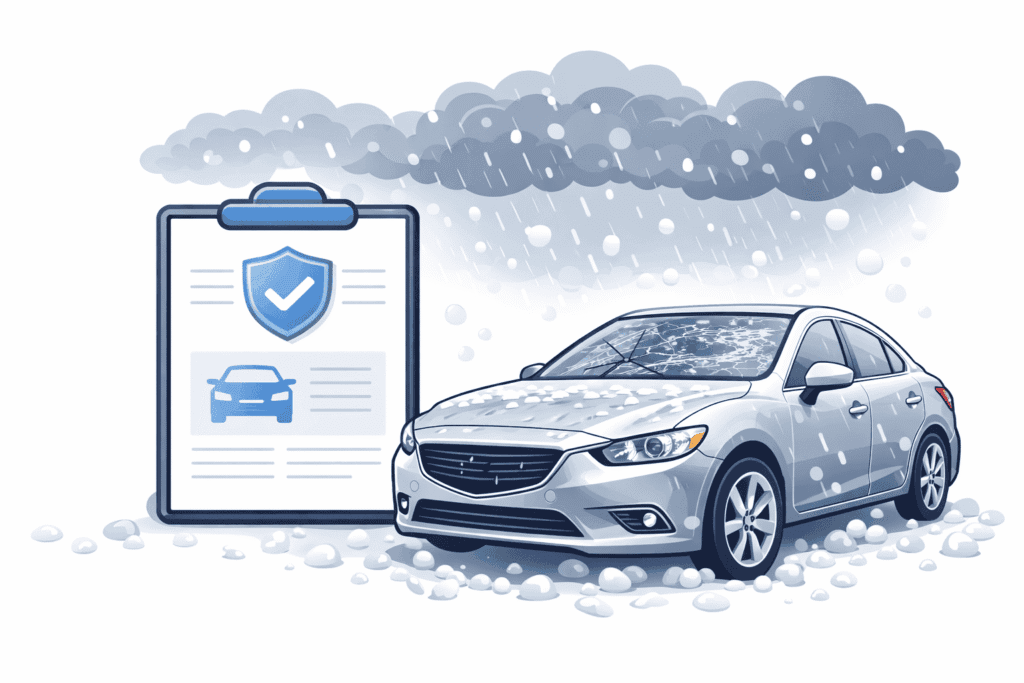
Hail can damage a car faster than many drivers expect. A storm may leave dents on the hood and roof, crack the windshield, or damage mirrors, trim, and glass in just a few minutes. That is why many people ask: does car insurance cover hail damage? In many cases, the answer is yes, but usually only under certain coverage.
Hail damage is often handled under comprehensive coverage, not liability coverage. Drivers who carry only liability are often surprised to learn that damage to their own vehicle from a hailstorm is usually not covered. Even when comprehensive is on the policy, the deductible, the extent of the damage, and the claim review can still affect the final outcome.
For the broader foundation, it helps to start with What Does Car Insurance Cover?. This guide focuses on hail damage specifically, when comprehensive coverage may apply, when it may not, what can affect the claim, and what to check in your policy before assuming insurance will pay.
Quick Summary
- Hail damage is usually tied to comprehensive coverage, not liability coverage.
- If you only carry liability, damage to your own car from hail is usually not covered.
- The deductible still matters, even when hail damage is covered.
- Hail claims may involve dents, cracked glass, trim damage, and wider repair questions.
- Your declarations page is usually the fastest place to confirm whether comprehensive coverage is listed.
Does car insurance cover hail damage?
Often, yes, but usually only if the vehicle has comprehensive coverage. Hail is generally treated as a non-collision event, which is why it is usually handled differently from crash damage. If comprehensive coverage is active on the vehicle, the insurer may review hail damage under that part of the policy.
If the policy includes only liability coverage, hail damage to your own car is usually not covered. Liability insurance is mainly designed to pay for damage or injuries you cause to other people, not weather-related damage to your own vehicle.
This is where many misunderstandings happen. Drivers often assume that having “car insurance” means every kind of damage is covered. In practice, the result depends on which coverages are actually listed on the policy.
Why hail damage usually falls under comprehensive coverage
Auto policies often separate vehicle damage into two broad categories:
- Collision coverage, which usually applies when your car is damaged in a crash with another vehicle or object
- Comprehensive coverage, which usually applies to other covered events such as hail, theft, vandalism, falling objects, flood damage, and certain weather-related losses
Because hail is a weather event rather than a crash, it usually falls under comprehensive rather than collision. If you want to compare those two more clearly, see Collision vs Comprehensive Insurance.
Still, “usually” does not mean “automatically.” The insurer may still review whether comprehensive coverage was active, whether the damage fits the storm event, and whether the policy terms or deductible change how much the claim may actually pay.
What hail damage may include
Hail damage can affect more than one part of the vehicle. Depending on storm severity and hail size, it may involve:
- the hood, roof, and trunk
- doors and side panels
- windshield and windows
- side mirrors
- paint, trim, and moldings
- sunroof or glass panels
Some damage is mostly cosmetic, such as small dents. Other damage may be more serious, especially when the windshield or windows crack and visibility or safety becomes part of the problem. This is one reason hail claims can vary so much from one vehicle to another.
When hail damage usually applies and when it may not
Hail damage may be covered in situations like these:
- The vehicle has comprehensive coverage.
- The storm event clearly caused the damage.
- The damage is reported within a reasonable timeframe.
- The insurer can connect the dents, cracks, or broken parts to the hail event.
Hail damage may not be covered, or may lead to a weaker claim result, in situations like these:
- You only carry liability coverage.
- The deductible is close to or higher than the repair cost.
- The insurer believes part of the damage existed before the storm.
- The claim includes old dents, unrelated wear, or prior unrepaired damage.
- The policy terms limit how part of the damage is handled.
This is similar to other non-collision losses. For example, flood damage coverage often follows the same basic logic: comprehensive may apply, but the policy details still control the final result.
What can affect whether filing a hail claim makes sense
Even when hail damage appears covered, filing a claim is not always a simple yes-or-no decision. A few practical factors can change whether using insurance really makes sense:
- Your deductible: if the repair cost is close to the deductible, the policy may not help much financially.
- The extent of damage: a few small dents are very different from widespread body and glass damage.
- The age and value of the vehicle: older cars may raise different repair questions than newer ones.
- Repair method: paintless dent repair and traditional body repair can produce different estimates.
- Glass damage: cracked windshields or side windows may create extra repair decisions.
That is also why it helps to understand how deductibles work in car insurance. Even when the hail event fits the policy, the deductible still affects how much the insurer may actually pay.
When hail damage is widespread across several panels, the question may shift from whether the loss is covered to whether the vehicle is still economical to repair. See when hail damage may be considered a total loss.
For official context, NAIC describes comprehensive coverage, California DOI describes auto claim documentation, and OPIC recommends keeping estimates and receipts.
Conclusion
So, does car insurance cover hail damage? Often yes, but usually only when the vehicle carries comprehensive coverage. Liability-only coverage generally does not help with hail damage to your own car.
Even when comprehensive applies, the deductible, repair cost, and claim facts can affect the final result. The best next step is to confirm your coverage, document the damage clearly, and review the policy before assuming the claim will work a certain way.
Related
- What Does Car Insurance Cover?
- Collision vs Comprehensive Insurance
- Does Car Insurance Cover Flood Damage?
FAQ
Is hail damage covered by liability insurance?
No. Liability insurance usually pays for damage or injuries you cause to others, not weather damage to your own vehicle.
Does comprehensive coverage always pay the full repair bill?
Not always. Payment can still depend on the deductible, policy terms, and the amount of covered damage.
Can hail damage include broken glass?
Yes. Hail can damage body panels and also crack or shatter the windshield or windows.