
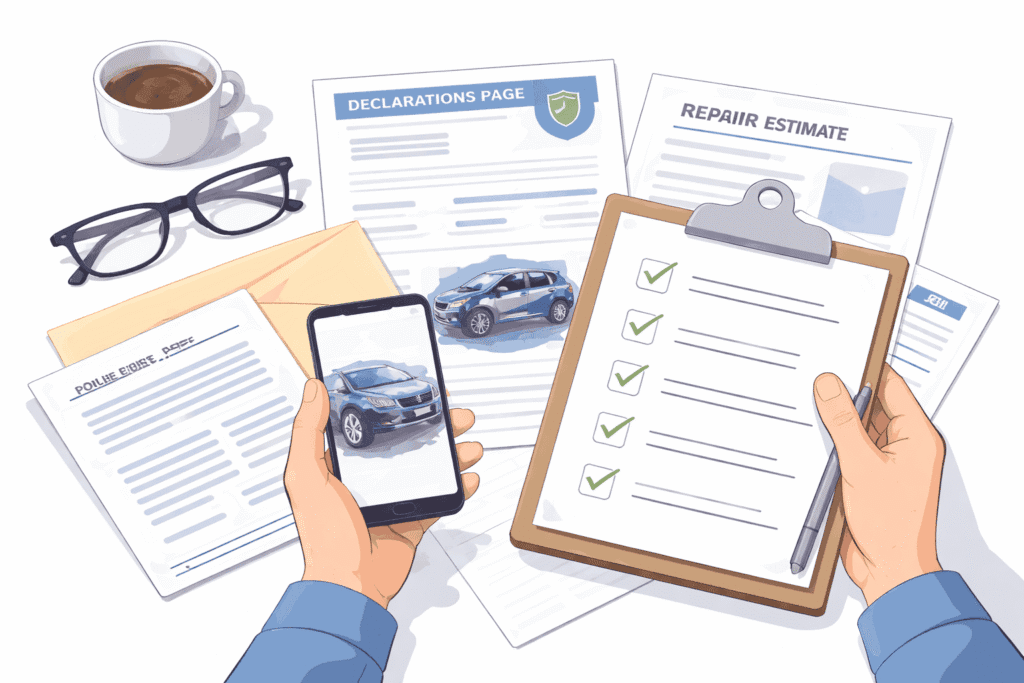
What documents help support a car insurance claim? Usually, the strongest files include clear photos, basic incident details, policy information, repair or damage records, and any reports tied to what happened. The exact mix depends on the type of claim, but the pattern is the same: the more clearly the documents explain the loss, the easier it is to understand what the insurer is reviewing.
For official context, OPIC recommends keeping estimates, receipts, emails, and claim documents.
Many drivers assume “filing the claim” is the main step, then only start gathering paperwork after questions come back. In practice, the documents often shape the pace of the claim from the beginning. Missing photos, unclear timelines, or incomplete records can slow things down even when the loss itself is real.
If you want the bigger picture first, it helps to read how the car insurance claims process usually works. This guide focuses on the documents that often help most, what each one is trying to prove, and how to keep the file organized without overcomplicating it.
Quick Summary
- Photos and videos of the damage are often the most important starting documents.
- Your declarations page helps confirm active coverages, deductibles, limits, and insured vehicles.
- Police reports, witness details, towing records, and repair estimates may matter depending on the claim.
- Medical records and bills become more relevant when injuries are involved.
- Receipts, timelines, and written communication can help support disputed or delayed files.
- Good documents help explain the loss, but they do not create coverage if the policy does not apply.
Which documents usually help most?
The best documents are usually the ones that answer the insurer’s basic questions: what happened, when it happened, what was damaged, who was involved, and which part of the policy may apply. In many claims, these are the records that matter most:
The National Association of Insurance Commissioners recommends documenting the scene, gathering driver and witness information, obtaining accident report details when police respond, and keeping records related to the claim. See the NAIC guidance on filing an auto insurance claim.
- Scene photos and videos: damage, vehicle position, road conditions, weather, debris, plate numbers, and the surrounding area.
- Basic incident notes: date, time, location, and a simple timeline of what happened.
- Driver and vehicle information: names, contact details, vehicle details, and any other involved parties.
- Your declarations page: useful for confirming active coverage, deductible, listed vehicle, and limits. If you are not sure where to find it, start with your car insurance declarations page.
- Police or incident report: sometimes helpful, especially when injuries, theft, road hazards, or disputed facts are involved.
- Repair estimate or inspection records: especially when visible damage does not tell the full story.
- Towing, storage, or rental records: these can matter when the claim includes related expenses.
- Medical bills or treatment records: more relevant when the claim involves bodily injury, MedPay, or PIP.
Not every claim needs every document. A small parked-car scrape is not documented the same way as a theft, flood claim, or injury file. What usually matters is whether the records fit the kind of loss being reviewed.
How these documents help in real life
Documents do more than show damage. They help the insurer compare the reported event with the policy. Photos can support timing and severity, the declarations page can confirm active coverage and deductibles, and estimates can show hidden damage found after inspection or teardown.
The useful records depend on the loss. A deer strike may rely on vehicle and roadway photos plus towing records, while hail damage may require weather timing and inspection records. When policy language is unclear, review how to read a car insurance policy before assuming a document proves coverage.
What to gather first, and what can come later
Start with evidence that may be difficult to recreate later: scene photos, videos, names, contact details, the date, time, location, and a short account of what happened. Add the claim number and policy information once the file is opened.
Repair estimates, police reports, towing or rental receipts, medical records, and written claim communication can be added as they become available. Keeping these records in one folder makes later requests easier to answer.
What to check before sending documents
Before sending records, make sure they are organized enough to tell a clear story. You do not need a perfect legal file. You do need a readable one.
- Use clear file names or one simple folder for photos, receipts, and estimates.
- Keep dates consistent across notes, reports, and uploaded files.
- Do not mix old damage photos with the current loss unless you label them clearly.
- Check whether your policy shows the vehicle, driver, and coverage you expected.
- Save copies of everything you upload or email.
- Keep written notes from calls if the claim becomes more complex later.
If you are unsure whether the loss even fits the policy, it may also help to step back and review what car insurance usually covers. Good documents can support a claim, but they do not change exclusions, deductibles, or missing coverage.
Common misunderstandings about claim documents
“More paperwork guarantees approval.”
No. Documents support the facts, but coverage, exclusions, deductibles, limits, and policy conditions still control the result.
“A police report is always required.”
No. Its importance depends on the claim, state rules, and whether other evidence clearly explains what happened.
“Everything must be submitted on day one.”
No. Many claims begin with basic evidence and add estimates, reports, medical records, or receipts as the file develops.
Conclusion
What documents help support a car insurance claim? Usually, the strongest file includes clear photos, a basic timeline, policy details, repair or loss records, and any reports or receipts tied to what happened. The exact mix depends on the claim, but the purpose stays the same: help the insurer understand the loss clearly and compare it to the policy.
The most useful mindset is not “send everything blindly.” It is “send the records that explain the event, the damage, and the policy context.” When those three parts line up, the claim usually becomes easier to follow from the start.
Related
- Car Insurance Claims Process: 9 Steps That Really Happen
- Can a Claim Be Denied Without a Police Report?
- How Long Does a Car Insurance Claim Take?
FAQ
What is usually the first document to check during a claim?
Your declarations page is usually the best starting point because it shows active coverages, deductibles, listed vehicles, and limits in one place.
Do I always need a police report to support a claim?
No. Some claims move without one, but a police or incident report may help more when the loss involves injuries, theft, disputed facts, or local reporting requirements.
Can photos and receipts help even if the damage looks minor?
Yes. Even smaller claims can become easier to understand when the file includes clear photos, dates, receipts, and short notes about what happened.
Can good documents guarantee claim approval?
No. Strong documents help support the facts, but the insurer still reviews coverage, deductibles, exclusions, limits, and the details of the loss.