
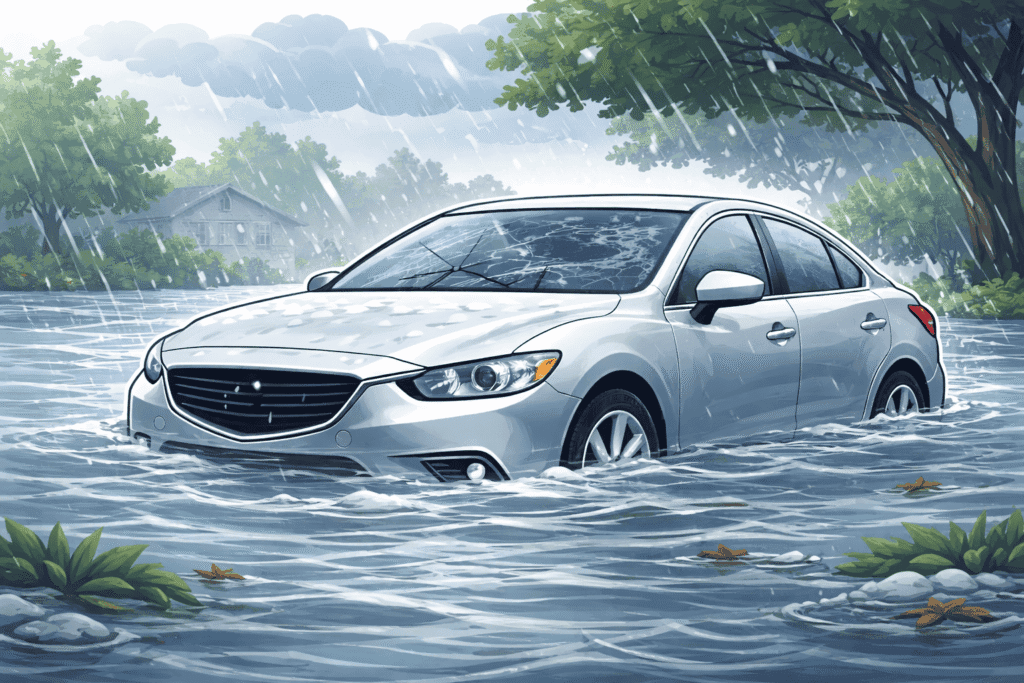
Floodwater can damage a car faster than many drivers expect. A road may look shallow at first, but water can reach the engine, electrical system, interior, and safety components in a short time. That is why many people ask: does car insurance cover flood damage? In many cases, the answer is yes, but usually only under certain coverage.
Flood damage is often handled under comprehensive coverage, not liability coverage. Drivers who carry only liability are often surprised to learn that their own flood-damaged vehicle is usually not covered. Even when comprehensive is on the policy, the final outcome may still depend on the deductible, the extent of the damage, and how the insurer evaluates the loss.
For the bigger picture, it helps to start with What Does Car Insurance Cover?. This guide focuses on flood damage specifically, when comprehensive coverage may apply, what can complicate the claim, and what to check before assuming the policy will pay.
Quick summary
- Flood damage is usually tied to comprehensive coverage, not liability coverage.
- If you only carry liability, damage to your own car from flooding is usually not covered.
- Even when comprehensive applies, the deductible and claim facts still matter.
- Flood claims can become expensive because water may affect electronics, the engine, the interior, and safety systems.
- Your declarations page is usually the fastest place to confirm whether comprehensive coverage is listed.
Does car insurance cover flood damage?
Often, yes, but usually only if the vehicle has comprehensive coverage. Flooding is generally treated as a non-collision event, which is why it is usually handled differently from crash damage. If the policy includes comprehensive coverage, the insurer may review the flood damage claim under that part of the policy.
If the vehicle has only liability coverage, flood damage to your own car is usually not covered. Liability insurance is mainly designed to pay for damage or injuries you cause to other people, not weather-related damage to your own vehicle.
This distinction is one of the most important parts of the answer. People often assume “I have car insurance” means every kind of damage is covered. In practice, the result depends on which coverages are actually listed on the policy.
Why flood damage usually falls under comprehensive coverage
Auto policies often separate vehicle damage into two broad categories:
- Collision coverage, which usually applies when your vehicle is damaged in a crash with another car or object
- Comprehensive coverage, which usually applies to other covered events such as theft, vandalism, hail, falling objects, and certain weather-related damage
Because flooding is generally treated as a weather-related or non-collision event, it usually falls under comprehensive rather than collision. If you want to compare those two more clearly, see Collision vs Comprehensive Insurance.
Still, “usually” does not mean “automatically.” The insurer may still check whether comprehensive coverage was active, whether the reported facts fit the flood event, and whether the damage appears connected to that event.
What flood damage may include
Flood damage can go far beyond wet carpet. Depending on how much water entered the vehicle and how long it remained there, the damage may affect:
- the engine or air intake system
- electrical wiring and control modules
- the transmission or drivetrain
- interior carpeting, seats, and trim
- sensors, cameras, and safety features
- mold, corrosion, or contamination inside the car
This is one reason flood claims can become expensive quickly. A car may look only lightly affected at first, but hidden electrical or corrosion damage can make the real problem much larger than the visible damage suggests.
When flood damage may be covered and when it may not
Flood damage may be covered in situations like these:
- The vehicle has comprehensive coverage.
- The flood or storm event clearly caused the damage.
- The loss is reported within a reasonable timeframe.
- The insurer can verify what happened and connect the damage to the event.
Flood damage may not be covered, or may lead to a weaker claim outcome, in situations like these:
- You only carry liability coverage.
- The claim involves pre-existing damage or old water intrusion.
- The deductible is close to the repair amount, leaving little practical benefit.
- The insurer concludes the damage is not clearly tied to the reported flood event.
- The vehicle may be considered a total loss instead of a repairable claim.
That does not mean every denied or limited flood claim is improper. It means the policy language, the facts, and the documentation all matter. Similar logic comes up in other weather-loss questions, such as whether car insurance covers hail damage.
What can affect whether a flood claim makes sense
Even when comprehensive coverage is present, filing a claim is not always a simple yes-or-no decision. A few practical factors can shape the outcome:
- Your deductible: if the damage is close to the deductible, insurance may provide limited financial help.
- The extent of water intrusion: shallow water exposure is very different from deep submersion.
- The vehicle’s value: older cars may reach total-loss territory faster than newer ones.
- Hidden damage risk: electronics and corrosion can create future issues even after cleanup.
- Total-loss review: severe flood damage may lead the insurer to value the car rather than repair it.
This is also why it helps to understand how deductibles work in car insurance. Even when the event is covered, the deductible still affects how much the insurer may actually pay.
What to check in your policy after flood damage
If your car was damaged by flooding, review these items first:
- Whether comprehensive coverage appears on the declarations page
- What deductible applies to comprehensive claims
- Whether the damage appears limited or widespread
- Whether you have photos, video, and timing details from the event
- Whether the insurer may view the damage as repairable or as a possible total loss
The declarations page is often the fastest place to confirm whether comprehensive coverage is even on the vehicle. That step alone can answer a large part of the question before you go deeper into the claim.
Bottom line
So, does car insurance cover flood damage? Often yes, but usually only when the vehicle carries comprehensive coverage. Liability-only coverage generally does not help with flood damage to your own car.
Even when comprehensive applies, the deductible, severity of the water damage, and claim documentation can affect the final result. The best next step is to confirm your coverage, document the damage carefully, and review the policy before assuming the claim will work a certain way.
Related articles
- What Does Car Insurance Cover?
- Collision vs Comprehensive Insurance
- Does Car Insurance Cover Hail Damage?
FAQ
Is flood damage covered by liability insurance?
No. Liability insurance usually pays for damage or injuries you cause to others, not flood damage to your own vehicle.
Does comprehensive coverage always pay for flood damage?
Not always. Comprehensive often applies to flood damage, but the claim can still depend on the deductible, the policy terms, and the facts of the loss.
Can flood damage lead to a total loss?
Yes. In some situations, water damage is severe enough that repairing the vehicle may not make financial sense compared with its value.
Does it matter how quickly flood damage is reported?
Yes. Prompt reporting and strong documentation usually make it easier for the insurer to review what happened and evaluate the claim accurately.
Where should you check first after flood damage?
Your declarations page is usually the fastest place to confirm whether comprehensive coverage is listed and what deductible applies.