
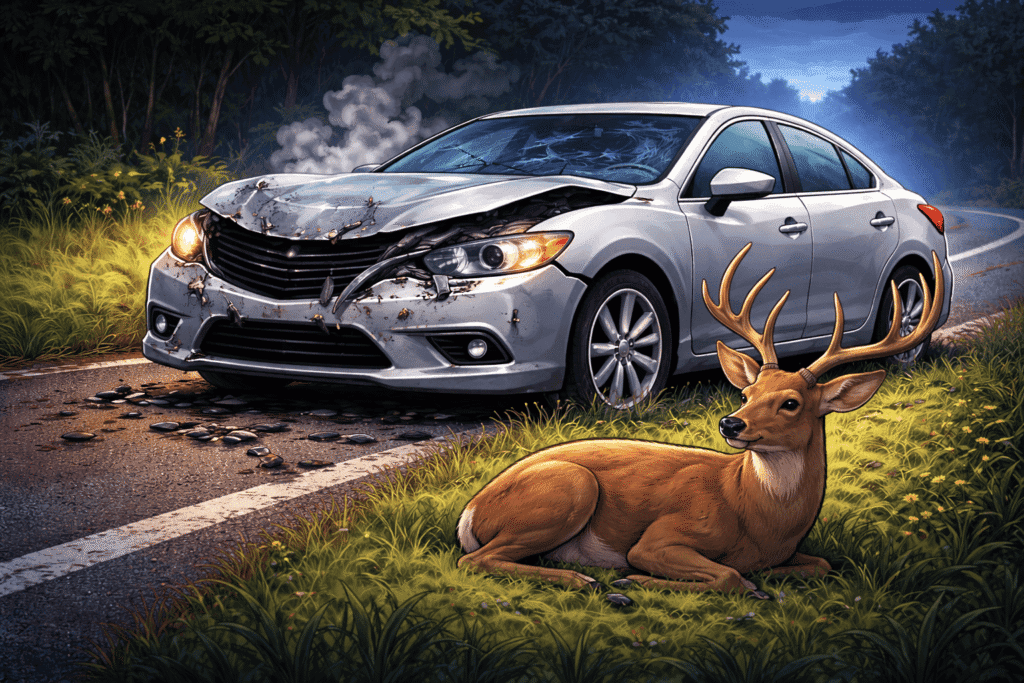
Hitting a deer can cause front-end damage, broken lights, windshield cracks, sensor problems, or even airbag deployment. So, does car insurance cover hitting a deer? Often yes, but usually only if the vehicle has comprehensive coverage.
A deer strike is usually treated as an animal-related loss rather than a normal crash with another vehicle. Drivers with liability-only insurance are often surprised to learn that their own vehicle damage may not be covered. For the broader coverage map, start with what car insurance covers.
Quick Summary
- Hitting a deer is usually handled under comprehensive coverage, not liability.
- If you only carry liability coverage, damage to your own car usually is not covered.
- Your comprehensive deductible can reduce or eliminate the claim payment.
- If you swerve and hit another object, the claim may be reviewed differently.
- Photos, prompt reporting, and policy details help the insurer classify the loss.
Why comprehensive coverage usually applies
Insurance policies usually separate damage to your own car into collision and comprehensive. Collision generally applies when your car hits another vehicle or object. Comprehensive applies to many non-collision events. The NAIC says comprehensive coverage pays for damage from events such as theft, hail, windstorm, flood, fire, or impact by an animal.
The Texas Department of Insurance similarly lists damage from hitting an animal as something most policies cover if you have comprehensive coverage. That is why the declarations page matters: it should show whether comprehensive is included and what deductible applies.
When insurance may not help
Insurance may not pay much, or may not pay at all, if you only have liability coverage, the repair cost is lower than the deductible, the vehicle had unrelated prior damage, or the facts do not support an animal-strike claim. Liability coverage is designed for damage or injuries you cause to other people, not repair costs for your own car.
The sequence of events also matters. If you directly hit a deer, comprehensive is usually the first coverage to check. If you swerve to avoid the deer and hit a tree, guardrail, ditch, or another vehicle, the insurer may review the loss under collision or another part of the policy. Compare that distinction with collision vs comprehensive insurance.
What damage a deer strike can cause
Deer damage can look small at first and become expensive after inspection. Common issues include bumper and grille damage, broken headlights, hood or fender damage, radiator problems, cracked glass, airbag deployment, and damage to cameras or driver-assistance sensors.
Those costs are why the deductible matters. If the repair is $900 and your comprehensive deductible is $1,000, filing may not produce a payment. If the damage is several thousand dollars, the same deductible may be less of a barrier. Review how car insurance deductibles work before deciding.
Two examples show the difference. A cracked headlight and small dent might cost less than the deductible, so the driver may choose not to file. A damaged radiator, hood, grille, and camera system could make a claim worthwhile because the repair bill may be far above the deductible.
What to do after hitting a deer
- Move to a safe location if the vehicle can be moved.
- Turn on hazard lights and check for injuries.
- Call local authorities if the road is unsafe, the vehicle is disabled, or a report is required.
- Take photos of the vehicle, road, animal evidence, and visible damage when safe.
- Do not approach an injured deer.
- Confirm comprehensive coverage and the deductible before filing or repairing.
For a more detailed claim checklist, see what to do after hitting a deer for insurance purposes. If the car is unsafe to drive, ask about towing coverage or approved repair steps before moving it far from the scene.
What to check in your policy
After a deer strike, check whether comprehensive coverage appears on the declarations page, what deductible applies, whether rental or towing coverage is included, and whether the vehicle has lender requirements. The Office of Public Insurance Counsel notes that hitting a bird or animal is a comprehensive claim, not a collision claim, in its auto insurance basics guide.
Also ask how a total loss would be handled if repairs are high relative to the car’s value. Hidden damage to sensors, cooling systems, or structural parts can change the claim after the first estimate. Keep repair invoices, tow receipts, and inspection notes together so the claim file tells a clean story.
Conclusion
Car insurance may cover hitting a deer, but the key question is whether you carry comprehensive coverage. A direct animal strike is usually a comprehensive claim, while liability-only coverage usually does not repair your own vehicle.
The best next step is to document the damage, check your declarations page, compare the repair estimate with your deductible, and ask your insurer how the policy classifies the loss before assuming it will pay. That keeps the decision practical instead of relying on the phrase “covered” without checking the numbers. It also helps you decide whether a small repair is worth filing.
Related
- What Does Car Insurance Cover?
- Collision vs Comprehensive Insurance: 9 Key Differences
- What Affects Car Insurance Cost? 11 Key Factors
FAQ
Is hitting a deer covered by liability insurance?
No. Liability usually pays for damage or injuries you cause to others, not animal-strike damage to your own vehicle.
Is hitting a deer comprehensive or collision?
A direct deer strike is usually comprehensive. If you swerve and hit another object, the claim may be reviewed differently.
Will my deductible apply after hitting a deer?
Often yes. If comprehensive coverage applies, the comprehensive deductible usually reduces the claim payment.
Can hitting a deer total a car?
Yes. A deer strike can lead to a total-loss review if repair costs are high compared with the vehicle’s value.