
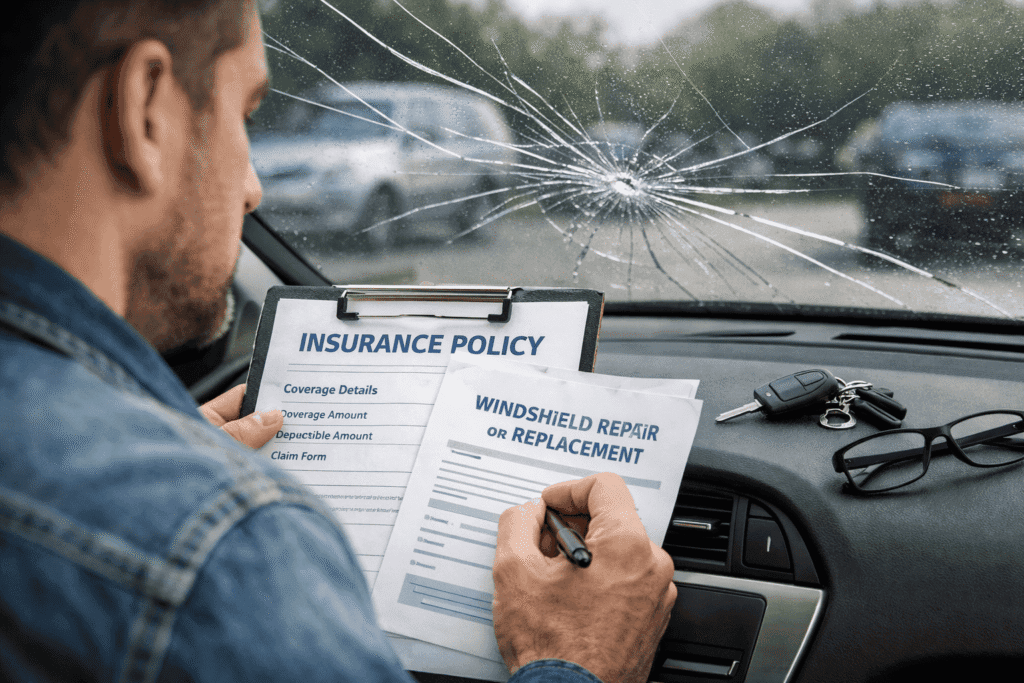
Does car insurance cover windshield replacement? It may when the policy includes comprehensive coverage and the damage was caused by road debris, hail, vandalism, a falling object, or another non-collision event. Collision coverage may apply when the windshield was damaged in a crash.
The result depends on the cause of damage, the active coverage, the deductible, state rules, and whether the glass can be repaired. For the broader framework, review what car insurance covers.
Quick Summary
- Comprehensive coverage commonly handles windshield damage caused by non-collision events.
- Collision coverage may apply when the glass was damaged during a crash.
- Liability-only insurance generally does not pay for damage to your own windshield.
- A deductible may apply, although some states or policy options treat safety glass differently.
- The insurer may review whether repair is appropriate before approving full replacement.
When does car insurance cover windshield replacement?
The National Association of Insurance Commissioners explains that comprehensive coverage may pay for broken glass, including windshield damage. Comprehensive generally addresses vehicle damage caused by events other than a collision, such as severe weather, vandalism, floods, theft, and falling objects. See the NAIC overview of auto insurance coverage.
Common examples include a rock striking the windshield, hail damaging the glass, a branch falling onto the vehicle, or vandalism. Coverage still depends on the policy, deductible, cause of loss, and state requirements.
If the windshield was damaged because the vehicle collided with another car or object, collision coverage may be the relevant part of the policy. Review collision vs comprehensive insurance for the distinction.
Which coverage may apply?
Comprehensive coverage
Comprehensive coverage may apply to glass damage from road debris, weather, falling objects, vandalism, theft-related damage, or impact with an animal. The deductible and any special glass provision can affect payment.
Collision coverage
Collision coverage may apply when the windshield is damaged during impact with another vehicle or object. The collision deductible that applies to other vehicle damage may also affect the claim.
Liability coverage
Liability insurance generally does not repair your own windshield. It is designed primarily to address injuries or property damage you cause to other people.
Repair or replacement: what changes?
A small chip may be repairable, while a long crack, damage in the driver’s viewing area, or severely shattered glass may require replacement. The decision can depend on the location, size, depth, and condition of the damage, along with safety and manufacturer requirements.
Replacement can involve more than the glass itself. Depending on the vehicle, the estimate may include moldings, sensors, cameras, or calibration work. Ask which items are included in the approved repair and whether the policy limits the glass type, labor rate, or shop payment.
How deductibles and state rules affect glass claims
A comprehensive or collision deductible may reduce the payment. If the replacement cost does not meaningfully exceed the deductible, the insurer may pay little or nothing. Review how a car insurance deductible works before deciding whether to file.
Glass rules are not identical nationwide. For example, the South Carolina Department of Insurance states that comprehensive coverage includes broken glass and that insurers in that state cannot impose a deductible for safety-glass repairs or replacements. This is a South Carolina rule, not a nationwide standard. See the department’s automobile insurance guidance.
Some policies may offer full-glass coverage, a lower glass deductible, or a separate endorsement. Confirm the specific terms on the declarations page and in the full policy rather than assuming the standard comprehensive deductible always applies. To compare the added premium, deductible, covered glass, and replacement terms, review whether glass coverage is worth it.
What to check before filing a windshield claim
- Confirm the cause of the damage.
- Check whether comprehensive or collision coverage was active.
- Review the applicable deductible and any glass endorsement.
- Ask whether the insurer requires photographs, inspection, or preauthorization.
- Confirm whether repair or replacement is being recommended.
- Ask whether sensors, cameras, or calibration are part of the estimate.
- Review shop-choice, glass-type, and payment provisions in the policy.
Start with the car insurance declarations page to confirm the active coverage and deductible. Then review the policy language for broken glass, safety glass, repair, replacement, and endorsements.
What to do after windshield damage
- Photograph the damage and the surrounding vehicle area.
- Record when, where, and how the damage happened.
- Avoid driving when visibility or vehicle safety is affected.
- Report the damage according to the policy instructions.
- Ask whether repair is possible before authorizing replacement.
- Confirm the deductible, approved amount, shop process, and any calibration requirements.
This overview of the car insurance claims process explains how documentation, inspection, and payment decisions commonly work. If the glass was broken during vandalism or theft, review how car insurance may cover theft and vandalism.
Conclusion
Car insurance may cover windshield replacement when the policy includes the coverage that matches the cause of damage. Comprehensive commonly handles non-collision glass damage, while collision may apply after a crash. Liability-only insurance generally does not repair your own windshield. Check the deductible, state rules, glass provisions, repair options, and any equipment or calibration requirements before authorizing work.
Related
- What Does Car Insurance Cover?
- Collision vs Comprehensive Insurance
- What Is a Car Insurance Deductible?
FAQ
Does comprehensive insurance cover windshield replacement?
It may. Comprehensive coverage commonly handles windshield damage caused by road debris, weather, vandalism, falling objects, and other covered non-collision events.
Does liability insurance cover my windshield?
Generally no. Liability coverage is primarily intended for injuries or property damage you cause to other people.
Does insurance cover windshield repair as well as replacement?
It may. The insurer may approve a repair when the damage can be fixed safely and may approve replacement when repair is not appropriate.
Do I have to pay a deductible for windshield replacement?
Possibly. The answer depends on the applicable coverage, policy provisions, glass endorsement, and state rules.
Can collision coverage pay for a damaged windshield?
It may when the windshield was damaged during a covered collision with another vehicle or object.