
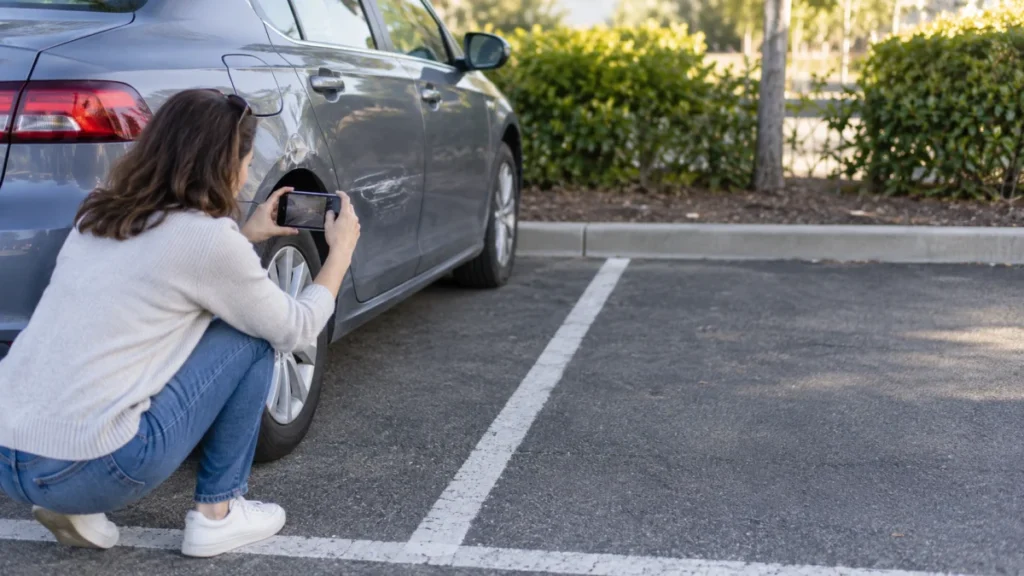
Does collision insurance cover hit and run damage? Usually, yes, when another vehicle hits your car and the driver leaves, subject to your policy and collision deductible. Uninsured motorist property damage may also apply in some states, but its availability and hit-and-run rules vary.
The first question is whether your car was physically damaged by a collision. CPA’s guide to how collision coverage works explains why the same coverage can apply whether you were driving or the car was parked.
Quick Summary
- Collision coverage commonly pays for hit-and-run damage to your vehicle, minus the deductible.
- UM/UIM property damage may be another option, depending on state law and the policy.
- Vehicle-damage coverage does not automatically pay injury claims or rental costs.
- Photograph the damage, look for witnesses or cameras, and report the incident promptly.
- Do not assume the same police-report deadline or deductible applies in every state.
Does collision insurance cover hit and run damage?
When drivers ask does collision insurance cover hit and run, the key issue is whether the damage resulted from a covered collision. If someone hits your parked car and leaves, or sideswipes you and disappears, the physical impact can support a collision claim even when the other driver cannot be identified. Collision coverage generally focuses on damage to your vehicle from a covered impact rather than on whether you were at fault.
The Texas Office of Public Insurance Counsel gives a clear state example: collision can pay for hit-and-run vehicle damage but not injuries. The applicable collision deductible usually applies. If repairs are below or only slightly above that amount, ask for an estimate before deciding whether to continue with the claim.
Could uninsured motorist coverage apply instead?
Possibly. Uninsured motorist coverage can include bodily injury protection, property damage protection, or both. A state may treat an unidentified hit-and-run driver as uninsured, but the policy may require physical contact, a prompt police report, witness information, or other proof.
Property-damage protection is often called UMPD coverage. It is not offered or used the same way everywhere. If you want to compare the two claim paths directly, see collision vs UMPD and how fault, deductibles, limits, and hit-and-run rules can differ. Washington’s Office of the Insurance Commissioner says UM/UIM may help with a hit-and-run or phantom vehicle and notes a 72-hour police-report rule for a phantom-vehicle claim in Washington. That deadline should not be presented as a national rule.
Collision and UMPD are not interchangeable
If both coverages appear available, ask the adjuster which one applies, what deductible each uses, and whether using one affects recovery under the other. Limits may differ. UMPD may have a separate limit or deductible, while collision generally pays covered repair costs up to the vehicle’s actual cash value after the collision deductible.
Injury coverage is a separate issue. Collision repairs your car; it does not pay medical bills. Depending on the state and policy, injuries may involve uninsured motorist bodily injury, PIP, MedPay, or health insurance. Rental reimbursement is also separate unless another applicable coverage includes loss-of-use benefits.
What to do immediately after a hit-and-run
- Move to a safe place and call emergency services if anyone is injured.
- Write down the other vehicle’s color, body type, plate details, direction, and any driver description you observed.
- Photograph the damage, road, debris, paint transfer, and surrounding area.
- Ask nearby drivers, businesses, homes, or parking facilities about witnesses or video.
- Contact police promptly and keep the report or incident number.
- Start the claims process and ask which coverage and deductible the insurer is reviewing.
Report only what you know. A partial plate, vehicle description, witness name, or camera location can be useful even when you did not see the driver clearly. Avoid guessing about speed, identity, or fault.
What if there was no physical contact?
A driver may swerve to avoid an unidentified vehicle and hit a guardrail without the vehicles touching. These “phantom vehicle” claims can face special proof and reporting rules. Collision may still cover the crash damage, while UM/UIM eligibility depends more heavily on state law and policy wording.
This is where photos, witnesses, a prompt report, and a precise timeline matter. A missing police report does not automatically decide every claim, but it can make proof harder. Review whether a claim can be denied without a police report for the broader evidence issue.
A simple parked-car example
Jordan returns to a parked car and finds $3,200 in side damage, paint transfer, and no note. The collision deductible is $750. If the loss is covered under collision, the simplified payment is $2,450. If Jordan also has UMPD, the insurer must determine whether that coverage applies in the state and whether it produces a different deductible or limit. Jordan should not assume both coverages pay the same damage twice.
Jordan should also record the parking location, the likely time window, nearby cameras, witness information, and any debris before moving the car. A property manager or camera owner may erase video quickly, so asking promptly can preserve evidence the insurer or police may need.
Conclusion
Collision insurance commonly covers hit-and-run damage to your car, including parked-car damage, after the deductible. UM/UIM may offer another path, but its rules vary. Document the scene, report the incident promptly, and ask the insurer to identify the coverage, deductible, limits, and evidence requirements in writing.
Related
- What Is Collision Car Insurance?
- Uninsured Motorist Coverage: What It Is and When It Helps
- Car Insurance Claims Process: 9 Steps
FAQ
Does collision cover a hit-and-run on a parked car?
Usually, if another vehicle caused the damage and collision coverage was active. The collision deductible generally applies.
Will uninsured motorist property damage cover a hit-and-run?
It may, depending on the state, policy definition, proof requirements, limits, and whether physical contact occurred.
Do you pay a deductible on a hit-and-run claim?
A collision deductible usually applies. UMPD may use a different deductible or rule, depending on the state and policy.
Does collision coverage pay for hit-and-run injuries?
No. Collision covers vehicle damage. Injuries may involve UM bodily injury, PIP, MedPay, or health insurance.