
If you are wondering what to do after flood damage to your car, the first priority is safety, not cleanup. Many drivers see water around or inside the vehicle and immediately think about starting it, moving it, or drying it out fast. In practice, the wrong first step can make the situation worse.
For official context, OPIC advises keeping estimates, receipts, emails, and other claim documents.
Flood damage can affect the interior, electronics, wiring, engine components, brakes, and more. Whether insurance may help often depends on your policy and the type of coverage you carry. If you want the broader coverage picture first, it helps to review what car insurance usually covers before judging what may happen in your case.
This guide explains what to do right away, what mistakes to avoid, how the claim process often works, and what to check before you repair, dry, tow, or settle anything.
Quick Summary
- Make sure you and everyone else are safe before dealing with the car.
- Do not start the engine if floodwater may have reached critical systems.
- Take photos and videos before moving or cleaning anything.
- Contact your insurer early and ask what documentation they want.
- Keep towing, storage, drying, and emergency cleanup receipts.
- Ask whether the damage may be repairable or heading toward a total loss review.
What to do first after flood damage to your car
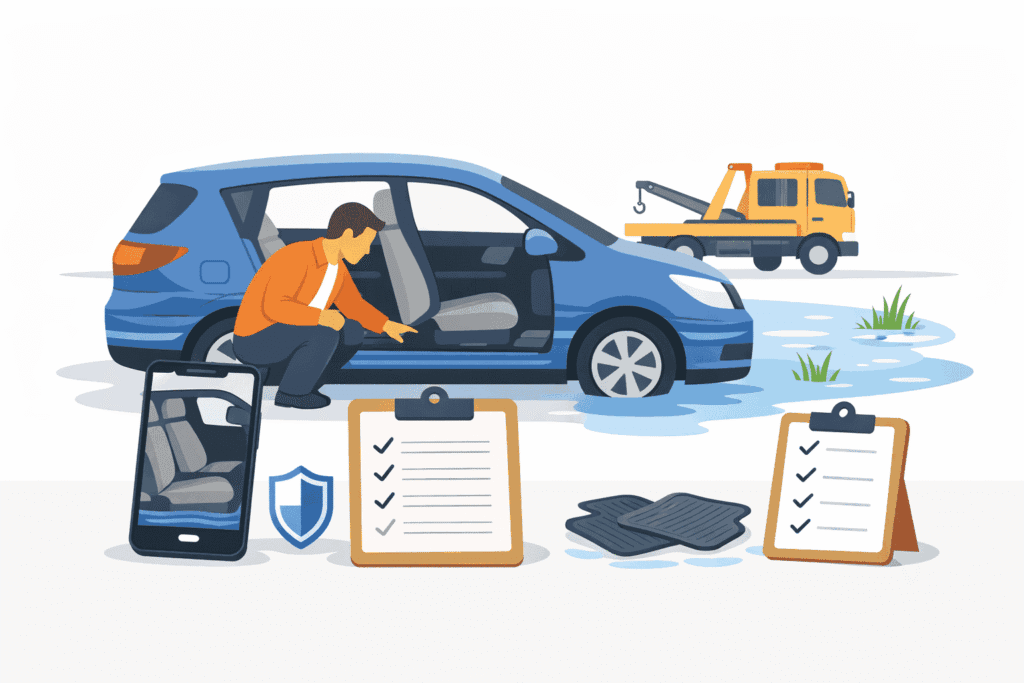
Start with the safest and simplest steps. If the area is still flooded, do not go back into dangerous water just to reach the car. Once it is safe, inspect the vehicle from the outside and document what you see before making changes.
- Check for immediate danger: standing water, downed wires, leaking fluids, unstable parking areas, or traffic hazards.
- Do not start the car right away: if water reached the engine bay, exhaust, or cabin floor, starting it may create additional problems.
- Take clear photos and video: capture water lines, soaked seats, wet carpeting, mud, dashboard warnings, and the surrounding scene.
- Move the car only if it is clearly safe to do so: otherwise, arrange towing instead of guessing.
- Call your insurer: ask what they want first, where the car should go, and what receipts you should keep.
Many drivers also remove personal items, documents, chargers, bags, and loose belongings from the vehicle. That is a smart step, but try not to throw away damaged materials too early if they may help show the extent of the loss.
How flood damage usually plays out in real life
Flood damage is not always obvious in the first hour. Sometimes the car still looks mostly normal from the outside, but the interior smells damp, warning lights appear later, or electrical features start failing over the next day or two. In other cases, the damage is immediate: soaked seats, muddy carpet, water in the trunk, or a vehicle that will not start at all.
What usually happens next is an inspection, either through your insurer’s process or through a repair shop or salvage-related evaluation, depending on the situation. This is why it helps to understand the car insurance claims process before approving work or assuming the outcome.
The National Association of Insurance Commissioners explains that comprehensive coverage generally applies to non-collision damage such as floods, severe weather, fire, theft, and vandalism. Whether a specific loss is covered still depends on the policy, deductible, exclusions, and claim facts. See the NAIC overview of what auto insurance covers.
If the interior was soaked, drying the car matters, but do it carefully. Open doors or windows only when the environment is secure. If possible, remove standing water, blot moisture, and reduce dampness while waiting for guidance. The goal is to prevent the condition from getting worse without interfering with the evidence of damage.
In more serious cases, flood damage may push the vehicle toward valuation instead of a simple repair estimate. Review when water damage may lead to a total-loss decision and how the insurer compares repair costs with the vehicle’s value.
Common questions after a flooded car
Should you clean the car before the insurer sees it?
Light cleanup to reduce worsening may be reasonable, but avoid deep cleaning, disassembly, or throwing things away too soon.
Should you drive it if it still runs?
Not automatically. A car can still move and still have water-related damage that creates later problems.
Does insurance cover flood damage?
It often depends on the policy and coverage in place. The claim outcome can also depend on the facts, documentation, and inspection results.
What paperwork should you keep?
Save photos, videos, tow invoices, emergency cleanup receipts, storage charges, inspection notes, and claim communications.
What to consider before you settle or move on
Before treating the issue as resolved, make sure you understand what was inspected, what was repaired, and what may still show up later. Flood damage can involve more than a wet interior. It may affect sensors, electronics, odors, corrosion risk, seat materials, insulation, and drivability.
- Confirm whether the insurer or shop documented all visible and hidden damage.
- Ask what part of the vehicle got wet and how far the water reached.
- Keep copies of every estimate, inspection note, and receipt.
- Review your deductible and coverage details before assuming what will be paid.
- Do not rush to close the issue if the car still shows warning lights, odor, or electrical problems.
A calm checklist-based approach usually works better than fast guesses. The key is to protect your safety, preserve evidence, and understand whether you are dealing with a short repair path or a larger damage scenario.
Conclusion
The best response after flood damage to your car is usually to slow down and handle the basics in the right order: stay safe, do not start the vehicle too quickly, document everything, contact your insurer, and keep records of every step. That gives you a cleaner path whether the car ends up being dried, repaired, inspected further, or evaluated for more serious damage.
Flood claims can feel chaotic, especially when the damage is not fully visible at first. A careful first response makes it easier to understand what happened, what your policy may require, and what to check before making the next decision.
Related
- What Does Car Insurance Cover?
- Car Insurance Claims Process: 9 Steps That Really Happen
- Total Loss in Car Insurance: How It’s Decided and Paid
FAQ
Can I start my car after flood damage if it seems fine?
Not necessarily. If water reached important systems, starting it too soon may create additional problems. Document first and get guidance when needed.
Should I tow a flood-damaged car?
If you are unsure whether it is safe to drive, towing is often the safer choice. Ask your insurer what they want and keep the receipt.
What photos should I take after flood damage?
Take wide and close shots of the outside, inside, water lines, soaked materials, dashboard warnings, trunk, engine area if visible, and the surrounding flood scene.
Can flood damage lead to a total loss?
Yes, it can. That depends on the severity of the damage, the vehicle’s value, and how the inspection and valuation process turns out.