
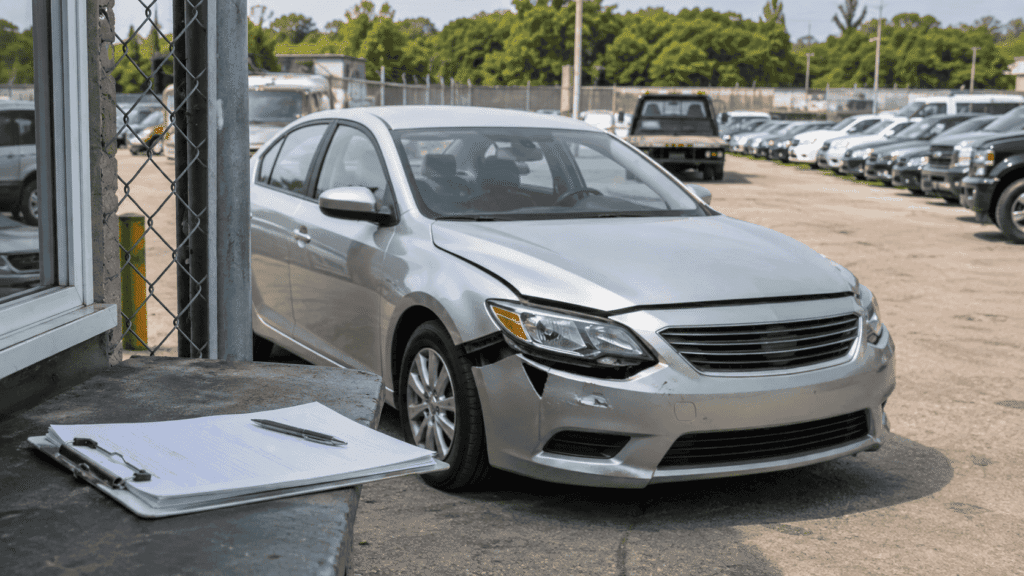
Who pays storage fees after a car accident? It depends on the claim, fault, coverage, who authorized the storage, and how long the vehicle remains there. Your insurer, another driver’s insurer, or the vehicle owner may end up paying some or all of the charges.
Storage charges can grow quickly while a claim is being inspected, disputed, repaired, or moved toward total loss. If your car is sitting at a tow yard or shop, ask in writing who authorized storage, what the daily rate is, and when the insurer expects the vehicle to move.
Quick Summary
- Storage fees are not automatically paid by insurance in every claim.
- Coverage may depend on towing, collision, comprehensive, liability, or state-specific rules.
- Fees can become disputed if the vehicle sits while the claim is unresolved.
- Moving the vehicle to a no-fee or lower-fee location can reduce risk.
- Get rates, authorizations, and insurer instructions in writing.
Why Storage Fees Come Up After a Crash
A damaged car may be towed from the crash scene to a storage yard, police-authorized lot, repair shop, salvage yard, or inspection location. Fees may include towing, gate, administrative, daily storage, release, or after-hours charges. Some are expected. Others become contested because the vehicle sat longer than necessary.
This is one reason the car insurance claims process is not only about repair estimates. Timing, authorization, inspection, coverage review, fault decisions, and total loss handling can all affect who is asked to pay.
Who Pays Storage Fees After a Car Accident?
In a covered first-party claim, your own policy may cover reasonable towing or storage charges, subject to limits and conditions. If another driver is legally responsible and that driver’s insurer accepts liability, storage may be considered as part of property damage handling. If liability is disputed, coverage is denied, or the vehicle remains in storage after reasonable movement was possible, the owner may be asked to pay some charges.
The Maine Bureau of Insurance gives a useful state-specific warning: an insurer may not be responsible for storage fees that continue to build while a disputed claim is being negotiated or litigated, and it recommends moving the vehicle to avoid additional charges.
That is Maine guidance, not a national rule. The practical lesson is broader: once you know fees are accruing, ask what needs to happen to stop them.
First-Party Claim vs. Other Driver’s Claim
If you use your own collision or comprehensive coverage, your insurer reviews the policy and claim facts. It may direct the vehicle to an inspection location, authorize movement to a repair shop, or ask for photos and documents. Your deductible, towing coverage, rental reimbursement, and policy limits may all matter.
If you claim against another driver’s insurer, that company may investigate fault before agreeing to pay. During that wait, storage fees can keep running. If the car is not drivable, ask whether the other insurer has accepted liability, whether it will authorize movement, and whether it may reimburse reasonable storage if liability is accepted later.
Repair Shop Storage vs. Tow Yard Storage
A tow yard may charge daily storage from the moment the vehicle arrives. A repair shop may charge storage if repairs are delayed, if the vehicle is waiting for insurer approval, if you have not authorized repairs, or if the car is ready but not picked up.
If you choose your own repair shop, ask how storage works before the vehicle is moved there. Some shops may waive storage while approved repairs are underway, while others may charge when a car sits without authorization or after a total loss decision.
The Maine Bureau of Insurance also notes, as state-specific guidance, that repair supplements can arise after work begins and that rental timing can change when a vehicle becomes a total loss. Those timing issues can overlap with storage disputes.
What Can Make the Answer Change
- The coverage being used and any towing or storage limit.
- Whether fault has been accepted, denied, or shared.
- Whether the tow was requested by police, the owner, the insurer, or a shop.
- Whether the vehicle could have been moved sooner.
- Whether storage was authorized, disclosed, and reasonable under state rules.
For example, Maine law requires certain motor vehicle liability policies to provide up to a stated amount for reasonable accident towing and storage charges when the insured vehicle is towed at a law enforcement officer’s request. That is a Maine rule, not a national rule, and other states may handle the issue differently.
What to Do Right Away
Call the tow yard or shop and ask for the daily rate, itemized charges, release requirements, and whether the vehicle can be moved. Then ask the insurer whether it has inspected the vehicle, whether it approves moving it, and where it should go next.
If the repair number is changing, storage may overlap with a repair estimate higher than insurance or a supplement review. Do not approve extra work, storage, or movement without understanding who may be responsible for the cost.
Save photos, tow receipts, storage invoices, estimate notes, emails, and claim messages. CPA’s guide to documents that support a car insurance claim can help you organize the file.
The Maine Attorney General advises consumers, as a Maine example, to ask towing companies for towing and storage charge information, preferably in writing.
Conclusion
Storage fees after a car accident can be paid by insurance in some situations, but they can also become the vehicle owner’s responsibility if coverage, fault, authorization, timing, or state rules do not support continued storage. The answer depends on the claim path and the facts.
Act quickly. Get the daily rate in writing, ask the insurer where the vehicle should go, and move the car when reasonable if fees keep building during a dispute.
Related
FAQ
Can a tow yard charge storage after an accident?
Yes. Many tow yards charge daily storage. State rules may govern disclosure, reasonableness, caps, or release procedures.
Will my insurer pay storage while fault is disputed?
Not always. Ask your insurer what your policy covers and whether the vehicle should be moved to stop additional fees.
Can the other driver’s insurer reimburse storage fees?
It may if liability is accepted and the charges are reasonable, but timing, proof, policy limits, and state rules can affect reimbursement.
Should I leave the car at the tow yard until the claim is settled?
Ask before leaving it there. If fees keep accruing during a dispute, moving the vehicle to a safe lower-cost location may reduce your financial risk.