
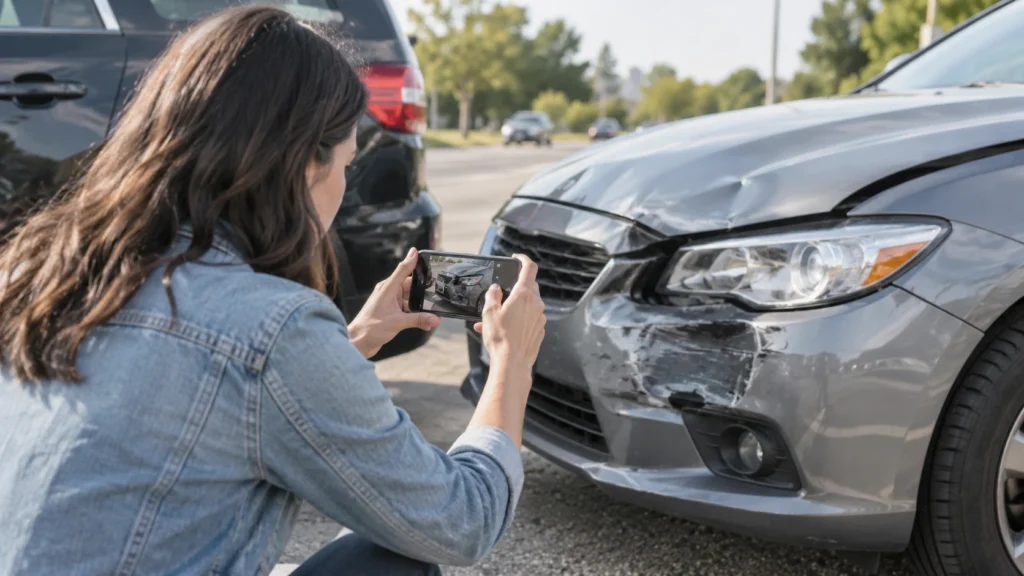
What happens if an uninsured driver hits you? Their lack of insurance does not automatically make your own insurer pay every loss. Payment depends on your state, your policy, whether the other driver was at fault, and which coverages you bought. Uninsured motorist coverage may help with injuries, while UMPD or collision may help with vehicle damage.
Call for emergency help when needed, report the crash as required, gather evidence, and notify your insurer promptly. Review what car insurance covers before assuming one coverage applies to every expense.
Quick Summary
- Document the driver, vehicle, scene, witnesses, and insurance status.
- Report the crash to police when required or when the other driver appears uninsured.
- UM bodily injury and UMPD are different coverages.
- Collision may pay for your car even when the other driver has no insurance.
- Deductibles, limits, and hit-and-run rules vary.
What Happens If an Uninsured Driver Hits You at the Scene?
- Move to safety and call 911 for injuries or hazards.
- Get the driver’s name, address, license, plate, and vehicle-owner information.
- Photograph vehicles, damage, the road, signs, and the wider scene.
- Collect witness contact information.
- Do not rely only on the other driver’s statement that they will pay.
The Washington Office of the Insurance Commissioner recommends calling police and collecting as much information as possible after an accident with an uninsured or underinsured driver. Some UM claims, especially hit-and-run or “phantom vehicle” claims, can have specific reporting requirements.
Which Coverage May Pay for Injuries?
Uninsured motorist bodily injury coverage may pay covered injury losses caused by an uninsured at-fault driver. Availability and requirements vary by state. PIP or MedPay may also pay certain medical expenses under their own terms, sometimes without waiting for the fault decision.
Do not assume the “UM” line on a declarations page covers vehicle repairs. Many states separate bodily injury protection from property-damage protection.
Which Coverage May Pay for Your Car?
UMPD coverage may pay for vehicle or other property damage caused by an uninsured driver, but it is not available or identical everywhere. Some states require the uninsured driver to be identified. Limits and deductibles can apply.
Collision coverage is another possible route. It generally applies to covered collision damage to your car regardless of the other driver’s insurance status, subject to the deductible. The comparison in Collision vs UMPD explains why the two paths are not interchangeable.
What to Document Before the Claim Moves Forward
When the other driver appears uninsured, documentation becomes especially important because the insurer may need to confirm fault, identity, and insurance status before deciding which coverage can respond.
- Photograph both vehicles, damage, license plates, and the wider accident scene.
- Keep the police report number and any written statement about the other driver’s insurance status.
- Save witness names, phone numbers, and any available video.
- Keep towing, storage, rental, repair, and medical records connected to the crash.
- Write down what the other driver said about insurance without relying on that statement as proof.
Do not assume that a missing insurance card automatically proves the driver is uninsured, or that an expired card proves there was no active policy. The insurer may verify coverage through the policyholder, vehicle owner, carrier records, or other claim information. Clear documentation helps the adjuster separate the coverage question from the accident facts.
If the other driver’s insurance status is still uncertain, keep following up until the claim file shows whether coverage was confirmed, denied, or unavailable. That distinction affects whether the next step is UMPD, collision, another first-party benefit, or direct recovery from the driver. Ask the adjuster to identify which coverage path is being evaluated and what information is still missing before assuming the claim has reached a final decision.
Will You Have to Pay a Deductible?
Possibly. Collision usually has the deductible shown on your policy. UMPD may have a different deductible or rule. Some states provide special treatment in certain uninsured-driver claims, but there is no single national answer. Ask which coverage is being used and which deductible applies before authorizing nonemergency repairs.
What If You Do Not Have Applicable Coverage?
You may need to pay for repairs, transportation, or some medical costs yourself and then seek recovery from the at-fault person. The Washington Office of the Insurance Commissioner explains that without applicable uninsured motorist, collision, or PIP coverage, you may have to pay those costs yourself and then try to recover them from the driver.
A legal judgment does not guarantee collection. For a serious injury, an approaching deadline, or a disputed liability case, consider state-specific legal advice. Keep every bill and record even if recovery looks uncertain.
Questions to Ask Your Adjuster
- Which coverage applies to injuries and which applies to the car?
- Must the uninsured driver be identified?
- What police-report deadline applies?
- Which deductible and limit apply?
- Will the insurer pursue the other driver?
Conclusion
What happens if an uninsured driver hits you depends on the state, the policy, fault, and the coverages you purchased. Preserve evidence and identify coverage by expense: injuries, vehicle damage, rental, and other costs may follow different paths. Report promptly and verify state-specific requirements.
Related
FAQ
Does uninsured motorist coverage always repair your car?
No. Bodily injury UM may not cover property damage. Look for UMPD or collision and check state rules.
Should you call police if the other driver has no insurance?
Reporting is often important and may be required by law or policy. Follow the rules where the crash occurred.
Can collision coverage apply when you are not at fault?
Yes, collision can cover damage to your car regardless of fault, subject to the policy and deductible.
Can you recover from the uninsured driver personally?
You may have a claim against the driver, but collecting can be difficult and legal deadlines apply.