
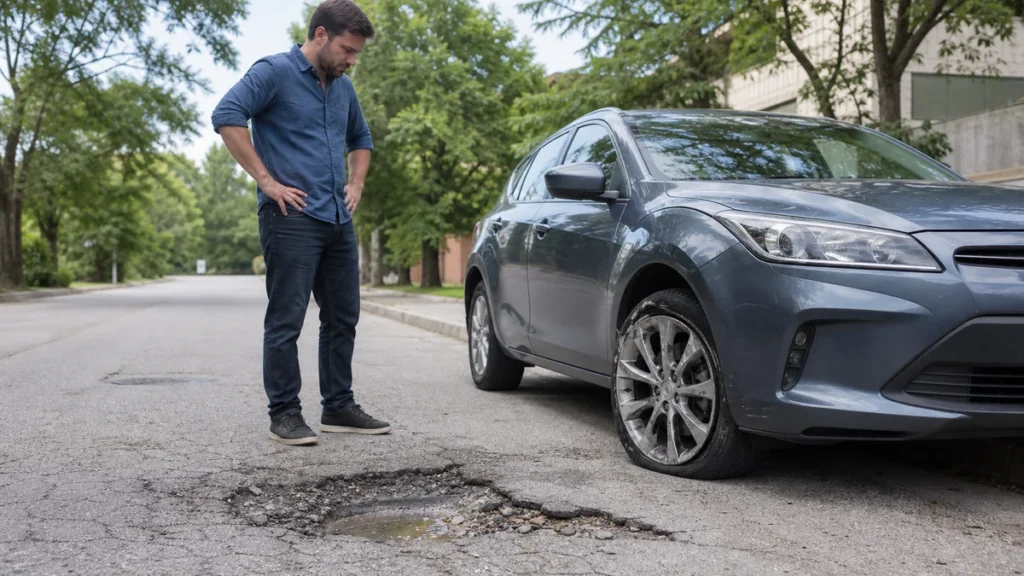
Car insurance may cover pothole damage if you have collision coverage, because hitting a pothole is usually treated as your car striking an object. Liability-only coverage normally will not repair your own vehicle, and comprehensive coverage is usually not the right category for the impact itself.
The practical question is whether the damage is worth claiming. A bent rim, suspension damage, steering problem, or alignment issue can become expensive, but a tire-only repair may fall below your deductible or be excluded as wear and tear.
Quick Summary
- Pothole impact damage is usually a collision-coverage issue, not comprehensive.
- Liability-only insurance normally does not pay for your own pothole damage.
- Tire-only damage, wear and tear, custom wheels, and deductibles can change the claim result.
- Photograph the road hazard, the vehicle damage, and the location if it is safe.
- Some agencies accept reimbursement claims, but payment is not guaranteed.
Which coverage applies to pothole damage?
The NAIC explains that collision coverage pays for damage to your car from a collision with another car, an object, a pothole, or flipping over. That is why pothole damage is usually analyzed under collision coverage.
This distinction matters because collision and comprehensive insurance cover different kinds of damage. Comprehensive is generally for non-collision events such as theft, hail, flood, fire, or animal impact. A pothole is a road impact.
What kinds of damage may matter?
A pothole can damage more than a tire or rim. A hard impact may also affect alignment, steering, suspension, wheel bearings, underbody parts, or sensors. If the car pulls, vibrates, leaks fluid, or shows warning lights, have it inspected.
Tire-only claims can be tricky. Some policies may not pay for ordinary wear, old tires, or damage that does not exceed the deductible. Custom wheels or aftermarket equipment may also need special coverage. The policy wording controls.
Coverage also depends on what your policy actually includes. A driver with liability-only coverage may have no first-party coverage for the damaged vehicle. If you are unsure where pothole impact fits in the broader policy, start with what car insurance covers and then check the collision line on your declarations page.
How the deductible changes the decision
Collision coverage usually has a deductible. If the repair cost is close to or below that amount, the insurer may pay little or nothing after the deductible is applied. That is the same claim math explained in car damage less than deductible.
If repairs cost less than your collision deductible, a claim may produce no payment. If a pothole also damages the rim or suspension and pushes the repair well above the deductible, filing may be more practical.
What to do after hitting a pothole
- Pull over only if you can do so safely.
- Photograph the pothole, road location, wheel, tire, rim, and visible damage.
- Get the tire, wheel, suspension, and alignment inspected.
- Keep the tow bill, repair estimate, invoice, and photos.
- Check your declarations page for collision coverage and deductible.
Those records can support either an insurance claim or a local reimbursement request. They also match the kind of proof described in documents that help support a car insurance claim.
Do not assume tire damage is automatically covered. Insurers may distinguish sudden impact damage from ordinary wear and may review tread condition, wheel damage, and impact evidence.
Aftermarket wheels may need additional coverage or documentation, so keep receipts and photos for custom equipment.
Can you ask the city or state to reimburse you?
Sometimes there is a local claims process, but reimbursement is not automatic. The North Carolina Department of Transportation says drivers can file property-damage claims for pothole damage, and that claims may turn on whether the agency knew about the pothole and had a reasonable chance to repair it.
Local rules can be stricter or looser. For example, the City of Houston says Texas law determines whether the city can pay for pothole-related vehicle damage and states that the city is not liable for property damage caused by street conditions. Treat city or state reimbursement as a separate route, not a guaranteed replacement for insurance.
A local reimbursement request is separate from your insurance claim. Agencies may ask for photos, estimates, location details, and proof they had notice of the hazard. Local rules and deadlines can still limit payment.
If the car feels unsafe after the impact, do not keep driving just to avoid a claim. A damaged tire sidewall, bent rim, steering vibration, or warning light can create a safety problem before it becomes an insurance question. Have the vehicle inspected and keep the findings in writing.
When paying out of pocket may be reasonable
Paying yourself may make sense when the damage is limited, the repair is below the deductible, the tire is already worn, or the claim could create more administrative burden than benefit. But do not ignore steering, suspension, alignment, or wheel damage just because the car still moves.
If you do open a claim, expect the insurer to compare the damage, coverage, deductible, and cause of loss. The broader car insurance claims process can help you understand what happens after reporting the loss.
A pothole claim can also be treated as a single-vehicle collision claim by the insurer. Before opening a formal claim for a repair only slightly above the deductible, ask how the insurer would record and classify the incident.
Example: When a Pothole Claim May Be Worth Filing
Imagine you hit a pothole at low speed and damage one tire. The tire shop quotes $240, and your collision deductible is $500. You may decide not to file. A month later, a harder impact bends a rim, damages a control arm, and requires alignment, bringing the estimate to $1,850. That second scenario deserves a closer look under collision coverage.
Conclusion
Pothole damage is usually a collision question, but coverage is only part of the decision. Check whether you have collision, compare the repair cost with the deductible, separate tire wear from sudden impact damage, and keep photos and repair records. If a city or state claim process exists, use it as an additional option, not a promise of reimbursement.
Related
FAQ
Does liability-only insurance cover pothole damage?
Usually no. Liability coverage generally pays for damage or injuries you cause to others, not damage to your own vehicle.
Is pothole damage comprehensive or collision?
It is usually collision because the car struck an object in the road. Comprehensive usually covers non-collision events such as theft, hail, fire, flood, or animal impact.
Will insurance pay for a damaged tire?
It depends on the policy, the cause, tire condition, deductible, and whether other covered damage occurred. Wear and tear is different from sudden impact damage.
Can pothole damage affect alignment or suspension?
Yes. A hard impact can damage wheels, steering, alignment, suspension, and related parts even when the first visible problem is a tire.
Can you get reimbursed by the city?
Possibly, if the responsible agency has a claim process and the facts meet local rules. Approval may require evidence that the agency knew about the pothole and had a reasonable opportunity to repair it.