
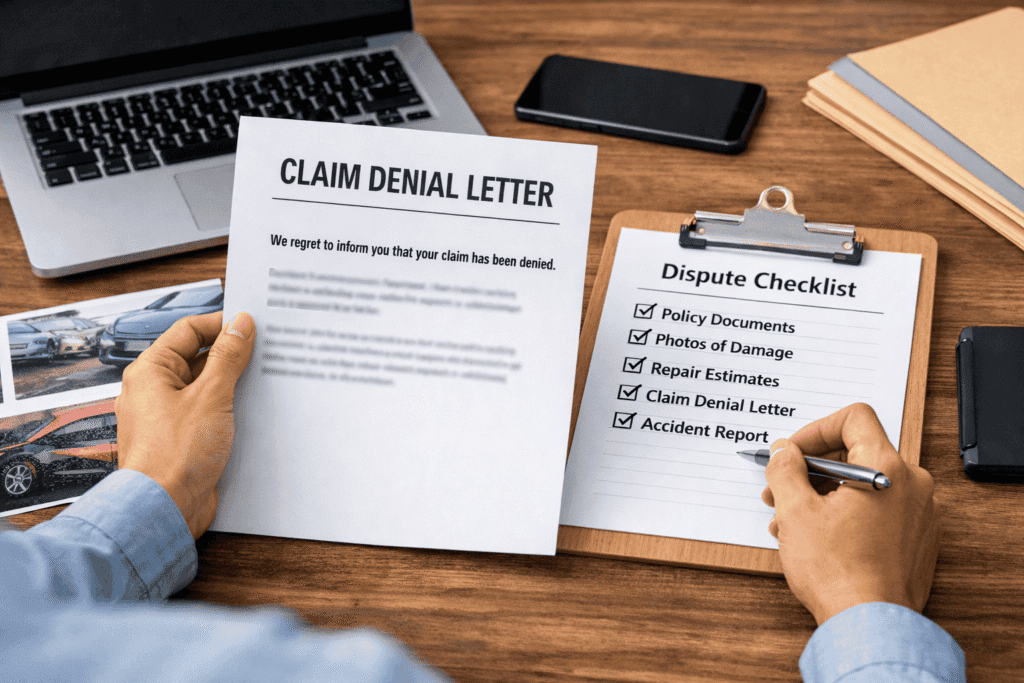
Dispute insurance claim decisions can feel confusing and stressful. Maybe your claim was denied (see common reasons insurers deny claims), the payment seems too low, or the insurer says the damage is not covered. In many cases, you are not stuck with the first answer. Most insurers have a process for reviewing decisions, and you can ask for a closer look.
For related context, see rights after a car accident.
Disputing a claim is not about arguing. It is about sharing clear facts, showing supporting documents, and asking the insurer to explain how the decision matches the policy. Sometimes the decision changes after new information is reviewed. Other times, you learn why the decision stands and what options you still have.
This article explains how to challenge an insurance claim decision step by step, in plain language.
Quick Summary
- Start with the written claim decision and the policy language the insurer cites.
- Gather documents that answer the exact reason for denial or underpayment.
- Keep dispute letters factual, organized, and tied to evidence.
- If the insurer will not resolve the issue, a state insurance department may be an option.
What it means to dispute an insurance claim
A claim dispute is a formal request to review an insurance decision. You might dispute:
- A denial (the insurer says the claim is not covered)
- A partial denial (some damage is covered, other damage is not)
- A settlement amount (you think the payment is too low)
- A fault or liability decision (who caused the accident)
- A repair method (repair vs. total loss, or the parts and labor used)
A dispute is different from reporting a claim. The claim has already been decided. A dispute asks the insurer to re-check the facts, the policy language, or both.
Example: Your car was damaged in a storm. The insurer says it is “wear and tear,” not storm damage. If you have photos showing new dents and records showing hail in your area at that time, you can submit that evidence and request a review.
How to dispute an insurance claim decision step by step
Disputes usually go faster and smoother when they are organized. Here is a practical step-by-step approach you can follow.
1) Read the decision carefully
- Look for the exact reason the insurer gave (denied, excluded, not enough proof, limits, deductible, missed deadlines, and so on).
- Identify what part you disagree with (coverage, cause of damage, estimate amount, timeline, liability).
2) Request the explanation in writing
If you received a phone call, ask for a written decision letter or email. You can also request:
- The specific policy section used to decide the claim
- Any photos, estimates, or notes the decision relied on
- A clear summary of what would be needed to change the decision (if anything)
3) Review your policy basics
Focus on the parts that usually control claim outcomes:
- Coverage type (liability, collision, comprehensive, medical payments, uninsured motorist)
- Exclusions (what the policy does not cover)
- Limits (maximum the policy can pay)
- Deductible (what you pay before coverage applies)
- Duties after a loss (deadlines and required cooperation)
4) Gather strong supporting documents
You want facts, not opinions. Helpful items often include:
- Photos and videos (with dates if possible)
- Repair estimates from licensed shops
- Tow invoices, rental receipts, and storage bills (if relevant)
- Police report number or copy (if there was one)
- Witness contact information (if available)
- Medical records and itemized bills (for injury claims)
- Emails, letters, or claim notes from the insurer
- A timeline you write: date, time, place, what happened, what you did next
When you request a claim review, clear documentation matters more than long explanations. Pick the strongest items and label them so an adjuster can review them quickly.
When you request a claim review, clear documentation matters more than long explanations. Pick the strongest items and label them so an adjuster can review them quickly. This guide explains which claim documents are usually most useful.
5) Ask for a reinspection or a supplemental review
If the issue is the amount or scope of damage, request:
- A reinspection by an adjuster, or
- A supplemental estimate (common when hidden damage is found after teardown)
Supplements are common in auto repairs. A shop may not see all damage until parts are removed. If new damage is related to the same event, it may be added to the claim.
6) Submit your dispute clearly
Use a short, structured message so it is easy to process:
If you don’t have your policy number handy, your car insurance declarations page (dec page) usually lists it along with your coverages, limits, and deductibles.
- Claim number and policy number
- Decision date
- What you disagree with (1–2 sentences)
- What you want reviewed (coverage, estimate line items, liability)
- A list of attached evidence
- A request for a written response by a reasonable date
Keep your tone calm and factual. If you can quote the policy section you believe applies, include it. That helps focus the review on the actual coverage language.
7) Escalate inside the insurer if needed
If the initial adjuster cannot resolve it, you can ask for:
- A supervisor review
- The insurer’s internal claims review or appeals team (names vary)
- A different adjuster or specialty unit (for complex losses)
8) Consider outside options (when appropriate)
If you still cannot reach a fair outcome, options may include (depending on your state and your policy):
- Filing a complaint with your state department of insurance
- Mediation, arbitration, or appraisal (if your policy includes it)
- Getting legal advice for serious disputes, especially injuries or large losses
Because insurance rules vary by state, it can also help to understand the basics of state requirements: Is Car Insurance Required by Law in the U.S.?
A complaint often triggers a review of whether the insurer followed rules and explained the decision clearly. It does not automatically guarantee a payout, but it can help move communication forward. If you reach that stage, see how to file a complaint against a car insurance company and what information to prepare.
For official context, California DOI describes the claim process, OPIC recommends keeping claim documents, and NAIC explains how consumers can contact insurance regulators.
Conclusion
Related
FAQ
Can I dispute a denied insurance claim?
Yes. Start with the denial reason, then submit policy language and evidence that address that reason.
Can I dispute a low settlement offer?
Yes. Provide estimates, photos, receipts, comparable values, or other documents that support your position.
Should I file a complaint with the state insurance department?
It may be appropriate after trying to resolve the issue with the insurer and keeping written records.