
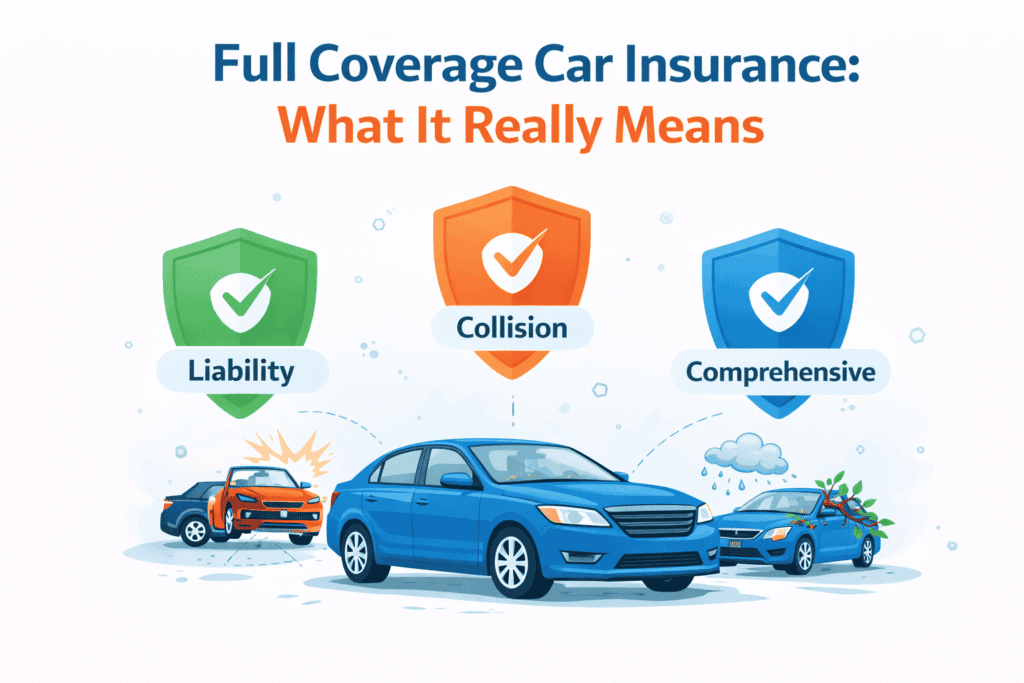
Full coverage car insurance is a phrase many drivers use to mean “I’m protected.” But “full coverage” is not a single official policy type, and it does not mean every loss is covered. If you’re starting from zero, this explainer helps: What Is Car Insurance?.
In practice, the phrase usually describes a package that combines liability, collision, and comprehensive coverage, each with its own limits, deductibles, exclusions, and rules. The details on your declarations page matter more than the label, especially after a claim when adjusters apply the actual policy language.
Quick Summary
- Full coverage is a common phrase, not a standardized insurance product.
- It usually means liability plus collision and comprehensive coverage.
- It still has limits, deductibles, exclusions, and claim conditions.
- State law usually focuses on liability or financial responsibility, not “full coverage.”
- Lenders often require collision and comprehensive when a vehicle is financed or leased.
What full coverage usually means
Full coverage car insurance usually means a policy that includes liability coverage, collision coverage, and comprehensive coverage. The Texas Department of Insurance auto guide explains that collision coverage pays to repair or replace your car after an accident, while comprehensive pays if your car is stolen or damaged by fire, flood, vandalism, or something other than a collision.
Some people also use “full coverage” to mean they added uninsured motorist, personal injury protection, medical payments, rental reimbursement, or roadside assistance. Those extras are not automatic. The only reliable check is your declarations page, where your coverages, limits, and deductibles are listed.
How it works in practice
Full coverage is not one switch you turn on. It works as separate coverages. Liability responds when you cause injury or damage to others. Collision may help repair your car after a crash. Comprehensive may help after theft, hail, fire, vandalism, falling objects, or animal strikes, depending on the policy. If you hit a guardrail, that is usually a collision question. If hail dents the hood while the car is parked, that is usually a comprehensive question.
That means two drivers can both say they have full coverage and still have different protection. One may carry low liability limits and a high deductible. Another may add uninsured motorist coverage, rental reimbursement, or gap coverage. The phrase alone does not tell you what the policy will pay.
What full coverage may not include
Even with full coverage, policies commonly do not cover routine maintenance, wear and tear, mechanical breakdowns not caused by a covered event, intentional damage, or vehicle use excluded by the policy. Full coverage also does not remove deductibles or dollar limits.
It also does not replace legal minimum requirements. For example, the California DMV explains that comprehensive or collision insurance does not meet vehicle financial responsibility requirements. Liability insurance is the part that compensates others for injury or property damage when required by state law. California’s insurance guide also separates liability from optional coverages and tells consumers to know their auto policy, including coverages, deductibles, vehicles, and policy dates. That is the practical way to translate “full coverage” into real coverage.
Why lenders often require it
If you finance or lease a car, the lender may require collision and comprehensive. The reason is practical: the vehicle secures the loan or lease, so the lender wants protection if the car is damaged, stolen, or totaled. The TDI guide notes that if you still owe money on your car, the lender can require collision and comprehensive coverage and may buy expensive lender-protecting coverage if you drop it. For the full financing-specific rules, see how insurance on a financed car can involve required coverages, deductible limits, lienholder information, and continuous coverage.
This is why many drivers first hear “full coverage” at a dealership or from a lender. It is often a financing requirement, not a separate state-law requirement. If the lender uses that phrase, ask exactly which coverages and deductibles are required.
Checklist before you rely on the phrase
- Confirm liability limits for bodily injury and property damage.
- Check whether collision and comprehensive are both listed.
- Review deductibles for collision and comprehensive claims.
- Look for uninsured motorist, medical payments, PIP, rental, roadside, or gap coverage only if you specifically bought them.
- Read exclusions for business use, delivery driving, racing, Mexico travel, or regular use of a non-owned vehicle.
- Ask whether the policy includes rental reimbursement, roadside assistance, gap coverage, or original equipment parts if those matter to you.
If you need help reading the numbers, start with car insurance deductibles and then compare the result with your policy limits.
Conclusion
Full coverage car insurance usually means broader protection than liability-only insurance, but it is still just a shortcut phrase. Your real protection depends on the coverages, limits, deductibles, and exclusions shown in your policy.
The safest approach is to avoid asking only for “full coverage.” Ask whether liability, collision, comprehensive, uninsured motorist, medical, rental, roadside, and gap coverage are included, and confirm each one on the declarations page. A short checklist before renewal can prevent the classic surprise: thinking a phrase covers a loss when the actual coverage was never purchased.
Related
- Liability vs Full Coverage: 9 Key Differences
- Collision vs Comprehensive Insurance
- What Does Car Insurance Cover?
FAQ
Is full coverage car insurance required by law?
Usually no. States commonly require liability or financial responsibility, while collision and comprehensive are usually optional unless a lender requires them.
Does full coverage pay for everything?
No. Deductibles, limits, exclusions, and policy conditions still apply. Maintenance, wear and tear, and non-covered use are common gaps.
Does full coverage include uninsured motorist coverage?
Not always. Some policies include it, some states require or require an offer of it, and some drivers reject it. Check your declarations page.
How can I confirm I have full coverage?
Look for liability, collision, and comprehensive on your declarations page, then review deductibles and any optional coverages you expect to have.