
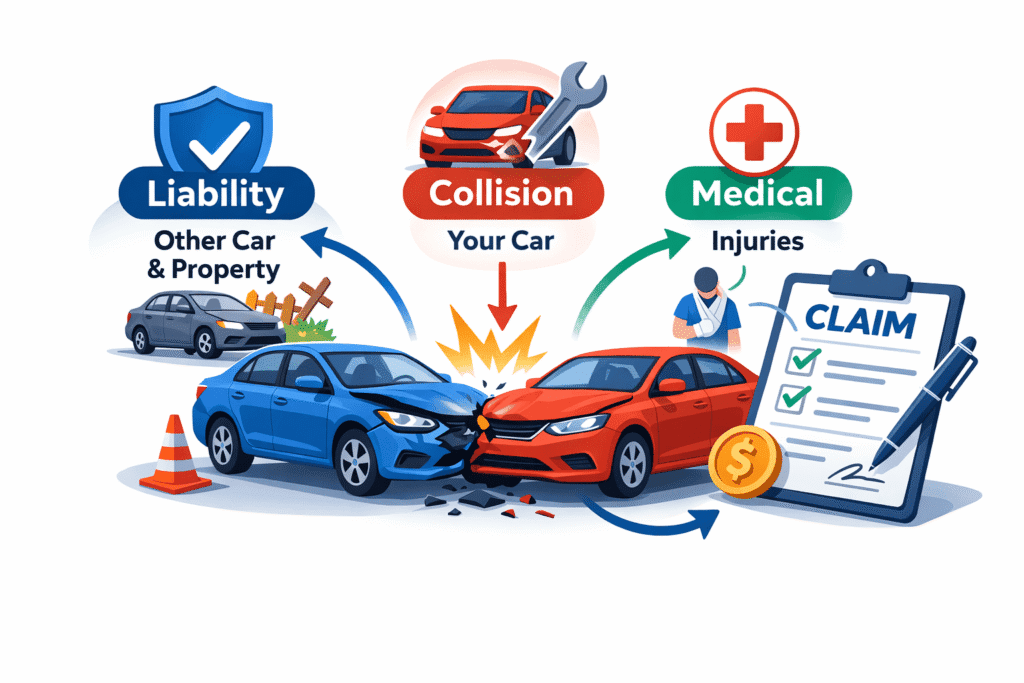
Does car insurance cover accidents? It may cover injuries, damage to another person’s property, or repairs to your own vehicle, but the result depends on the coverages listed on the policy and the facts of the crash.
For related context, see rights after a car accident.
Liability coverage generally addresses damage or injuries you cause to others. Collision coverage may help with damage to your own vehicle. Medical and uninsured-motorist protections may also apply, depending on the state and policy. For the broader framework, review what car insurance covers.
Quick Summary
- Liability coverage may pay for injuries or property damage you cause to other people.
- Collision coverage may help repair your own vehicle after a crash.
- PIP, MedPay, or uninsured motorist coverage may apply in some accident situations.
- Deductibles, limits, exclusions, fault rules, and policy conditions can affect payment.
- Document the accident and report it according to the policy and applicable state requirements.
When does car insurance cover accidents?
An auto policy usually contains several separate coverages rather than one general promise to pay for every accident. The National Association of Insurance Commissioners explains that common protections include liability, medical payments or personal injury protection, uninsured or underinsured motorist coverage, and coverage for damage to the insured vehicle. See the NAIC explanation of what auto insurance covers.
- Another person’s injuries: bodily injury liability may apply when you are legally responsible.
- Another person’s property: property damage liability may pay for covered damage you cause.
- Your vehicle: collision coverage may help after impact with another vehicle or object.
- Medical expenses: PIP or MedPay may apply, depending on the policy and state.
- An uninsured driver: uninsured motorist protection may apply to injuries or property damage under applicable rules.
How accident coverage is reviewed
- The accident is reported. The insurer receives the date, location, vehicles, drivers, and initial description of what happened.
- The active policy is checked. The declarations page shows which coverages, limits, vehicles, drivers, and deductibles were in effect.
- The facts are investigated. Photographs, statements, police information, witness details, and repair estimates may be reviewed.
- The loss is matched to a coverage. Liability, collision, medical, or uninsured-motorist protection may be considered.
- Limits, deductibles, and exclusions are applied. These provisions can affect whether the claim is covered and how much may be paid.
- A repair, payment, or coverage decision follows. The insurer should explain the decision according to the policy and claim findings.
The NAIC recommends beginning the claim process promptly and having insurance information, accident details, and supporting records available. See its guidance on filing an auto claim. This guide to the car insurance claims process explains the review in more detail.
Which coverages may apply after an accident?
Liability coverage
Liability coverage generally addresses injuries or property damage you cause to other people. It normally does not pay to repair your own vehicle. Review how bodily injury liability coverage works.
Collision coverage
Collision coverage may help repair or replace your own vehicle after impact with another vehicle or object. Road hazards can also lead to collision-type claims; see how car insurance may cover pothole damage. It commonly has a deductible. See the comparison of collision vs comprehensive insurance.
PIP or MedPay
Personal Injury Protection or Medical Payments coverage may help with medical expenses after an accident. Availability, benefits, and fault requirements vary by state and policy. Review PIP vs MedPay.
Uninsured or underinsured motorist coverage
Uninsured motorist coverage may apply when the responsible driver has no applicable insurance. Underinsured motorist protection may apply when the driver’s liability limits are insufficient for the covered loss.
What can affect coverage and payment?
- Active coverages: the policy must contain the protection that matches the loss.
- Fault and state rules: these may affect liability and injury-related claims.
- Policy limits: liability and other coverages may have maximum payment amounts.
- Deductibles: collision or other first-party coverage may require the insured to pay part of the covered loss.
- Driver and vehicle status: listed drivers, excluded drivers, permission, and vehicle use may matter.
- Exclusions and conditions: policy wording may limit coverage or require specific reporting and cooperation.
- Evidence: photographs, reports, statements, and repair documentation may affect the claim review.
Start with the car insurance declarations page to confirm the active coverages, limits, and deductibles. If a claim is denied, review the explanation and the applicable policy language. This guide explains when an insurer may deny an insurance claim.
For official context, California DOI describes auto claim documentation, NAIC explains common auto coverages, and OPIC recommends keeping claim records.
Report the crash, keep photos and estimates, and save claim messages in one place. Those records help the insurer connect the accident, damage, coverage, and payment decision without changing the basic claim facts. If another driver, passenger, or damaged property is involved, written records also help separate liability questions from vehicle-damage questions.
Conclusion
Car insurance may cover accident-related injuries, property damage, and vehicle repairs, but different parts of the policy handle different costs. Liability commonly addresses harm caused to others, while collision may cover damage to your own car. Medical and uninsured-motorist protections may also apply. Check the declarations page, document the accident, and review the limits, deductibles, exclusions, and state-specific rules involved.
Related
FAQ
Does car insurance cover accidents when I am at fault?
Liability coverage may pay for covered injuries or property damage you cause to others. Collision coverage may help repair your own vehicle if it is included on the policy.
Does liability insurance repair my own car?
Generally no. Liability insurance is primarily designed for damage or injuries you cause to other people. Your own vehicle commonly requires collision coverage after a crash.
Does full coverage mean every accident is covered?
No. Full coverage is an informal phrase. The policy still has limits, deductibles, exclusions, driver requirements, and other conditions.